

Texas Rangers Add 16 Forensic Investigators Funded by Senate Bill 1
Sixteen forensic investigators funded through the state budget now work crime scenes with the Texas Rangers, and DPS has published what they did in their first six months.


The Texas Department of Public Safety has added 16 forensic investigators to the Texas Ranger Division, a new program that places trained evidence specialists at crime scenes alongside Rangers statewide. The positions are funded through Senate Bill 1, the general appropriations bill the Legislature passed in 2025 and Gov. Greg Abbott signed that June, according to DPS.
DPS describes the investigators as non-commissioned personnel. The department stations them in each of the six Texas Ranger companies, where their training covers identifying, collecting, documenting and preserving forensic evidence. They also attend autopsies, take evidence to and from forensic laboratories, run Leica 3D scanners, process the scan data and write supplemental reports.
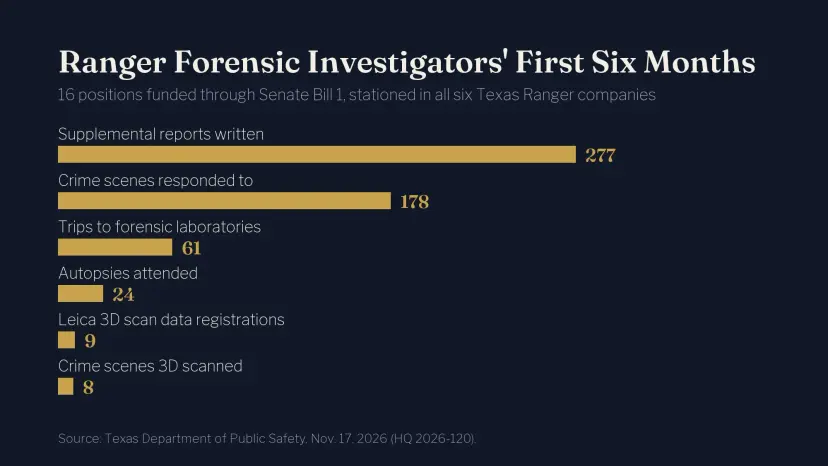
The first 10 investigators joined the department in March and completed six weeks of specialized training before working in the field. DPS hired six more in August, and their training is underway. In the program’s first six months, the department said in its Nov. 17 announcement, the investigators responded to 178 crime scenes, attended 24 autopsies, made 61 trips to forensic laboratories, ran 3D scans at eight crime scenes, completed nine scan data registrations and wrote 277 supplemental reports.
“Preserving evidence in a criminal investigation and thoroughly documenting all elements of a crime scene is meticulous work critical to the law enforcement profession,” said Texas Ranger Chief Jason Bobo. He said the investigators are “leveraging our ability to focus on core investigative duties.” According to DPS, the support leaves Rangers more time for interviews with victims, suspects and witnesses, for search and arrest warrants, for developing leads and for arrests.
The money came from a budget the Texas Legislature wrote in Austin, and a state agency had the first investigators trained and working crime scenes within months of it taking effect. DPS has also published a count of what those investigators did in their first half year, case work that Texas taxpayers can read for themselves. A state that pays for its own investigators and reports their work back to the people who fund them already governs its own public safety.
See more of the Partisan in Google’s Top Stories.Add as a Preferred Source on Google
Read Next
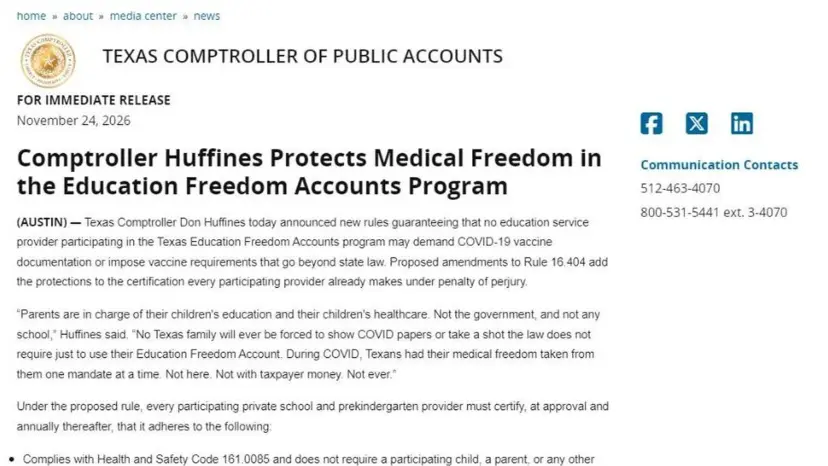
Huffines Proposes Rule Barring COVID Vaccine Demands by Education Freedom Account Schools
Proposed amendments to Rule 16.404 would add the state's COVID-19 vaccine documentation ban and school immunization exemptions to the certification providers sign under penalty of perjury.