What Happens to the Texas Power Grid If Texas Becomes Independent
ERCOT already runs about 90 percent of the Texas grid under Texas oversight. The Texas Nationalist Movement holds that independence keeps the operator and the regulator and ends the federal reach that remains.

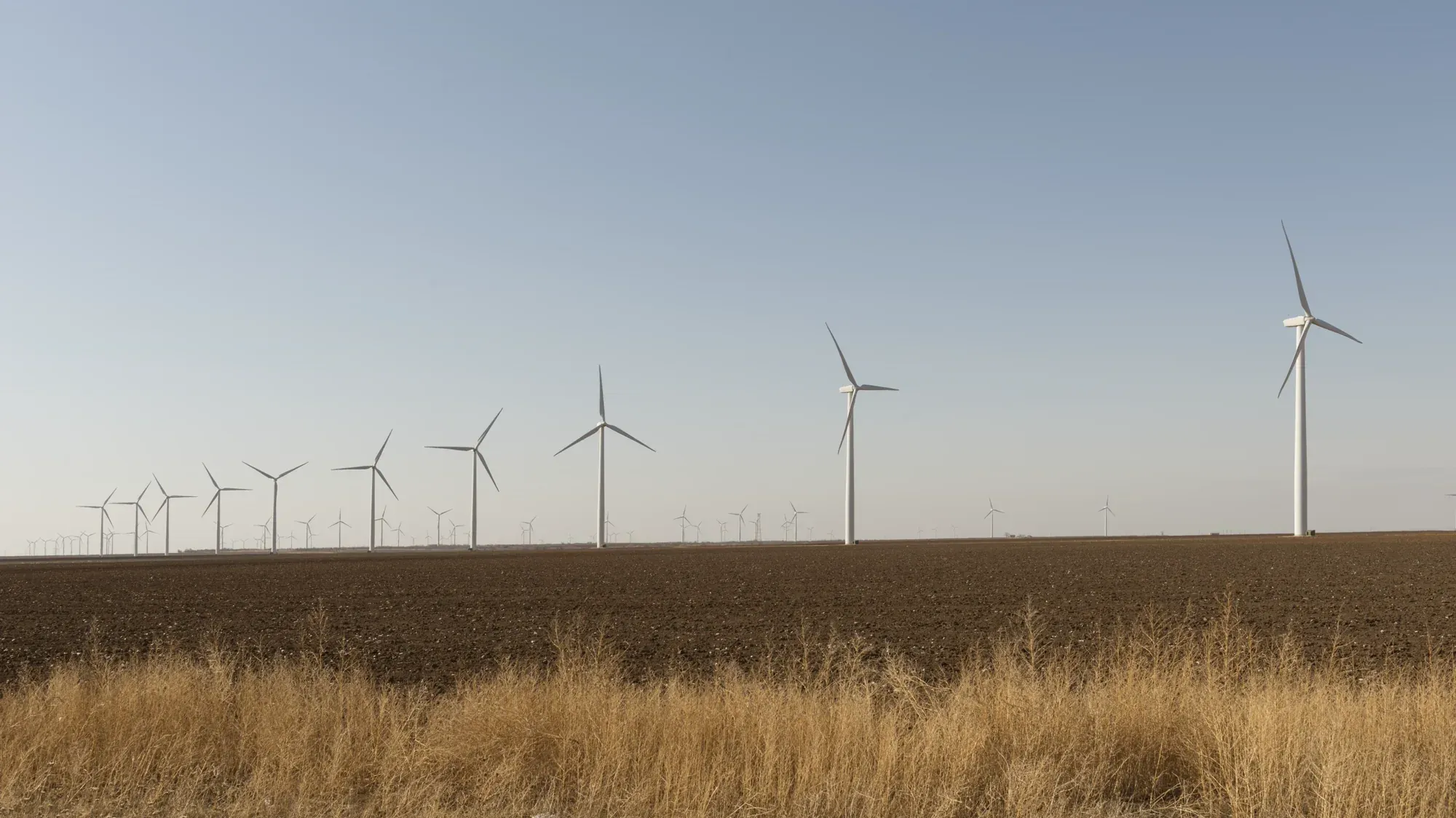

Texas already runs its own power grid. The Electric Reliability Council of Texas, or ERCOT, moves power to more than 27 million customers, about 90 percent of the state's electric load, under the oversight of the Public Utility Commission of Texas and the Texas Legislature. On July 22, 2026, it served a record of about 91,100 megawatts, a preliminary figure until final settlement.
The Texas Nationalist Movement's position is that independence leaves that grid, its operator and its regulator in place. In its FAQ's words, "The same operator and the same regulator that run the grid today keep running it, answerable to Texans." What independence removes is the federal reach that remains.
Where Washington's reach stops today
The Federal Power Act gives the Federal Energy Regulatory Commission authority over wholesale electricity sales in interstate commerce, and it excludes facilities used "only for the transmission of electric energy in intrastate commerce." Because ERCOT's grid is not synchronized with the rest of the union, its market falls outside that authority. The commission's own report on the 2021 winter storm describes ERCOT as running "a wholesale energy market which is not regulated by FERC."
The movement's August 2026 white paper, Data Centers on Texas Terms, describes both sides of the line. Inside ERCOT, Texas "can make many market-design and transmission decisions free of the federal rate regulation imposed on interstate power markets." Yet "Washington still reaches into environmental permitting, bulk-system reliability, and the grids outside ERCOT, and Texas works around those where it must." The reliability rules today are written by the North American Electric Reliability Corporation and enforced in Texas by the Texas Reliability Entity, a Texas nonprofit.
Independence would end each of those federal reaches. The movement's FAQ says federal rules on emissions and energy markets now shape the grid and the energy mix from outside, and that after independence reliability "gets decided in Texas too," with Texas free to invest in new plants and transmission on its own timetable.
The parts of Texas outside ERCOT
The El Paso area, Northeast Texas around Longview and Texarkana, and Southeast Texas around Beaumont are part of neighboring grids, though the Public Utility Commission still sets the retail rates of the utilities that serve them. The movement's position is that after independence Texas would move those regions onto ERCOT, and would keep adding generation so that the margin between production and demand grows.
The ties to other grids
ERCOT has two direct-current ties to the Southwest Power Pool, carrying 820 megawatts, and two to Mexico's grid operator carrying 400 megawatts, according to ERCOT, which has used such ties since the late 1980s. The Texas grid already trades power across one international border, with Mexico. A second border, with the United States, would change the paperwork for those ties. It would not change the wires.

The strongest objection: Winter Storm Uri
The serious objection is the February 2021 storm. At the worst point ERCOT "had to shed 20,000 MW of firm load," more than 4.5 million people in Texas lost power, and the Texas Department of State Health Services confirmed 246 deaths related to the storm. The critics' argument is that a grid with few ties to its neighbors is more exposed, and that independence would make it more so.
The federal investigation located the failure in the power plants. The joint report by the federal commission and its reliability corporation found that of the generating units that failed during the storm, "75 percent were caused by either freezing issues (44.2 percent) or fuel issues (31.4 percent)." It also noted that the neighboring grids were short of power themselves, and that more imports into ERCOT "likely would have decreased the amount that MISO and SPP would have been able to import."
The repairs since then have been made in Texas. In 2021 the Legislature passed Senate Bill 3, which requires generators in the ERCOT region to prepare for weather emergencies, has ERCOT inspect them and allows penalties of up to $1,000,000 per violation. In 2023 Texas voters approved the Texas Energy Fund to finance new power plants through state loans and grants.
Nuclear plants and pipelines
Texas has two commercial nuclear stations, Comanche Peak near Glen Rose and the South Texas Project in Matagorda County. Texas became an Agreement State in 1963 and already licenses and regulates radioactive materials under its own authority. Power reactors remain under the Nuclear Regulatory Commission. The movement's answer is that an independent Texas would extend that program into a reactor regulator of its own, with no gap in oversight while the plants keep running. Canada set up its own by statute, the Canadian Nuclear Safety Commission.
Pipelines that cross between Canada and the United States run under a treaty. The 1977 transit pipelines agreement bars either government from measures "impeding, diverting, redirecting or interfering with in any way the transmission of hydrocarbons in transit." Texas would bring a large stake to the same kind of negotiation. It produces more than two-fifths of the crude oil and more than a quarter of the marketed natural gas in the United States, by the Energy Information Administration's 2025 figures.
Texas produces and consumes more electricity than any other state, as the movement's FAQ notes, and it already runs the grid that carries it. Under the movement's plan, the remaining rules for that grid would be written in Texas as well.
See more of the Partisan in Google’s Top Stories.Add as a Preferred Source on Google
Read Next

Can Texas Afford to Be Independent?
Texas is the world's eighth-largest economy by output. The Texas Nationalist Movement's 2026 report Can Texas Make It? finds that Texans already pay enough, at today's tax rates, to cover the full cost of...