

Settlement Bars Federal Agents From Cutting Texas Border Wire for 30 Years
A 30-year settlement bars federal agents from cutting Texas' border wire in the Del Rio Sector, and requires Texas to get written DHS consent before moving its own wire.


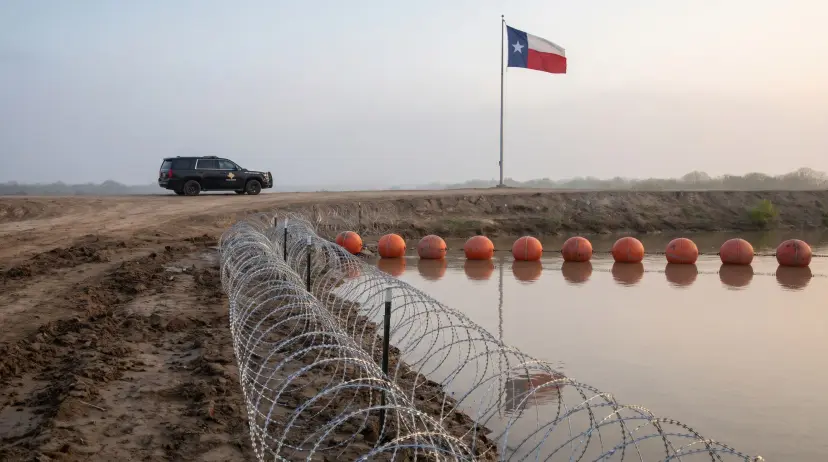
Federal border agents may not cut, damage, destroy, remove or otherwise interfere with Texas’ concertina wire on land outside federal ownership in the Del Rio Sector for the next 30 years, under a settlement the Texas attorney general’s office announced Thursday. The agreement ends the lawsuit Texas filed in October 2023 after Border Patrol agents cut wire the state had strung along the Rio Grande.
The settlement covers land the United States does not own within 25 miles of the border in the Border Patrol’s Del Rio Sector, which the map attached to the agreement shows taking in 228 miles of the boundary with Mexico. It binds the Department of Homeland Security (DHS), U.S. Customs and Border Protection and the Border Patrol, down to their employees and contractors. Under the federal rules of civil procedure, it also binds the successors of every named party in their official capacity, which includes the governor’s office Gina Hinojosa takes over in January.
Agents may still cut or move the wire when it is “objectively necessary” to give emergency aid to someone facing serious injury or death, to apprehend and process someone under federal immigration law, to respond to serious and immediate threats to officers or the public, or to reach and repair federal border infrastructure in an emergency. When they do, they must notify Texas in writing within 72 hours and explain what they did. Where feasible, they must also patch the wire until the state can repair it. Federal work that is not an emergency, such as building new barrier, requires coordination with the state in advance.
The restrictions also run the other way. Texas “will not undertake or authorize any Restricted Acts without the prior written consent of DHS,” the agreement says, except to give emergency aid or answer an immediate threat to public safety. The restricted acts are the same ones barred to federal agents: cutting, damaging, removing or otherwise interfering with the state’s own wire. For 30 years, Texas will need written permission from a federal department to take down or move wire it owns on land the federal government does not own.
The agreement adds that nothing in it limits federal agents’ authority under federal immigration law to enter private land, except dwellings, within 25 miles of the border to patrol it. It “shall be construed or interpreted in a manner consistent with Federal law.”
Texas signed on November 18, through David Bryant of the attorney general’s office and Trevor W. Ezell, general counsel to Gov. Greg Abbott. Associate Attorney General Stanley E. Woodward Jr. signed for the federal defendants. The parties must now ask the U.S. District Court in Del Rio to dismiss the case, Texas v. U.S. Department of Homeland Security, No. 2:23-CV-00055, with prejudice and to keep jurisdiction to enforce the deal. If the court does not enter that order within 60 days, the settlement “shall be terminated and of no further legal effect.” Neither side admits liability. Before Texas can go to court over a violation, it must notify the federal government, which then has five business days to investigate and five more to fix the problem.
The case reached the Supreme Court, which lifted an injunction that had stopped agents from cutting the wire over the dissent of four justices, according to the attorney general’s office. The Fifth Circuit Court of Appeals later issued a preliminary injunction protecting the wire near Eagle Pass. Attorney General Ken Paxton said the settlement “ensures that concertina wire will remain in place to protect our southern border.”
The lawsuit began as a dispute over who controls a barrier Texas built on land Washington does not own. The settlement keeps the wire up, and it places the state’s own decisions about that wire under a federal department’s written consent, to be read in line with federal law and enforced in a federal courtroom in Del Rio. A governor who wants to move that barrier before 2056 will have to ask Washington first.
See more of the Partisan in Google’s Top Stories.Add as a Preferred Source on Google
Read Next
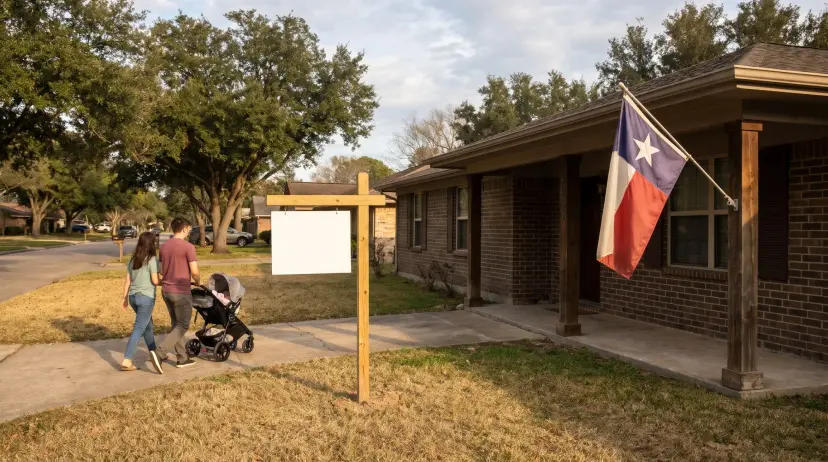
Houston Home Prices Fell in October, but the Monthly Payment Went Up
Houston's median home price fell 3 percent in October, but the monthly payment rose $134.79 as mortgage rates climbed after the Federal Reserve's September increase. Half of Texas renters remain cost-burdened.