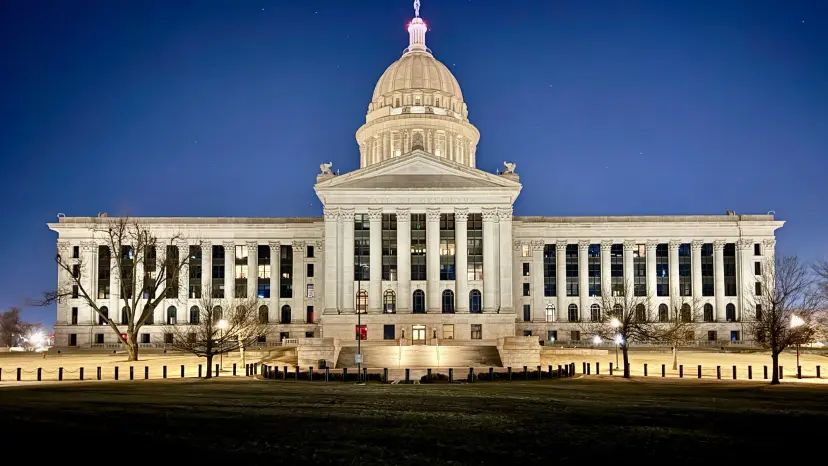


Full Fifth Circuit Rules House Broke the Quorum Clause Passing 2023 Spending Law
The full Fifth Circuit ruled 9 to 8 that the House could not count 226 proxy members toward a quorum, keeping the Pregnant Workers Fairness Act blocked against Texas as an employer.

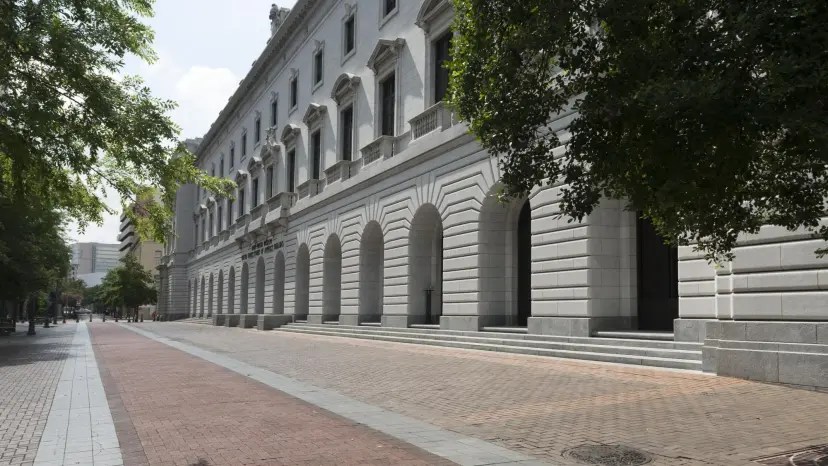

The full U.S. Court of Appeals for the Fifth Circuit ruled 9 to 8 on November 20 that the U.S. House of Representatives violated the Constitution’s Quorum Clause when it passed the Consolidated Appropriations Act of 2023, the $1.7 trillion spending law approved in December 2022. The House reached a quorum that day only by counting members who were absent from the chamber and had recorded their presence through another member acting as their proxy. “‘Proxy presence’ does not count,” Judge Cory Wilson wrote for the majority.
Texas brought the case. The state asked the courts to bar the federal government from enforcing one part of the law against it: the Pregnant Workers Fairness Act, which requires employers with 15 or more employees to make reasonable accommodations for workers’ known limitations related to pregnancy and childbirth. A federal district court ruled for Texas in February 2024. A three-judge panel of the Fifth Circuit reversed in 2025, the full court vacated that decision and reheard the case, and Friday’s ruling affirms the district court. The injunction covers the act’s enforcement against Texas as an employer. The 1978 Pregnancy Discrimination Act, which bars employers from treating pregnancy as grounds for discrimination, was not part of the case.
The House adopted its proxy rule in May 2020, early in the COVID-19 pandemic, and kept it in force through the December 2022 vote. The final vote on the spending law was 225 to 201, with one member voting present. Of the 427 members who recorded a vote, 226 did so by proxy, according to the Congressional Record cited in the opinion. Fewer than half the House’s members were physically present. Rep. Chip Roy of Texas objected from the floor that the bill was “moving off the floor without a physical quorum present.” The presiding officer, Rep. G.K. Butterfield, answered that “a quorum was, indeed, present” because proxies were counted under House rules.
The majority read the clause, which says “a Majority of each shall constitute a Quorum to do Business,” to require members in the room, as the Supreme Court held in 1892 in United States v. Ballin. Wilson wrote that the House’s broad power to make its own rules does not reach that far: “the Quorum Clause’s constraints on congressional power cannot be circumvented by congressional fiat.” He rejected the argument that the pandemic justified the rule, quoting a 1917 Supreme Court decision that an emergency “may not call into life a power which has never lived.”
Judge James Graves wrote the main dissent for seven judges, and Judge Catharina Haynes dissented separately. Graves wrote that Texas was “attempting to veto Congress’s protections for pregnant workers and new parents while retaining millions in federal funding,” and that the majority had added a requirement the clause’s text does not contain. He also asked why, if the whole law was passed unconstitutionally, the remedy should reach “only one small sliver” of it.
Critics of the ruling have pressed the same point. The same law carries the Electoral Count Reform Act, which governs how Congress counts presidential electoral votes, and the SECURE 2.0 Act on retirement plans. Writing on the Election Law Blog, Derek Muller argued that the decision’s logic “will quickly empower any litigant to seek relief in the Fifth Circuit on a range of matters codified in the Act.” The majority answered that its judgment “extends no further than affirming the relief awarded by the district court.”
Under Supreme Court Rule 13, the Justice Department has 90 days from the judgment, until February 18, 2027, to ask the Supreme Court to take the case.
The Texas Constitution sets its own bar for the Legislature. Article III, Section 10 provides that “Two-thirds of each House shall constitute a quorum to do business,” and lets a smaller number compel absent members to attend.
The federal rule binds Texas through a different process. To show that a law reaching into its own workplaces was never validly passed, Texas had to sue in federal court and, after losing before a panel, win by a single vote among 17 judges. The remedy covers one provision of a $1.7 trillion law and one employer, the State of Texas, and every other provision still applies to Texans while nine justices in Washington decide whether to take the question up. Under the Texas Constitution, that question is settled by rules Texans wrote, in a Capitol that sits in Austin.
See more of the Partisan in Google’s Top Stories.Add as a Preferred Source on Google
Read Next
Chase Outage and FAA Ground Stop Show How Little Texas Controls
A software bug at JPMorgan Chase stalled banking in Texas three days after a federal network failure stopped every departure. Texans depend on systems run by a few companies and agencies, and have no...