

Texas Supreme Court Declines Cities’ Appeal Over 2023 Preemption Law
The Texas Supreme Court denied review in the cities' challenge to House Bill 2127, leaving in place a ruling that they lacked standing. No appellate court has ruled on the law's constitutionality.

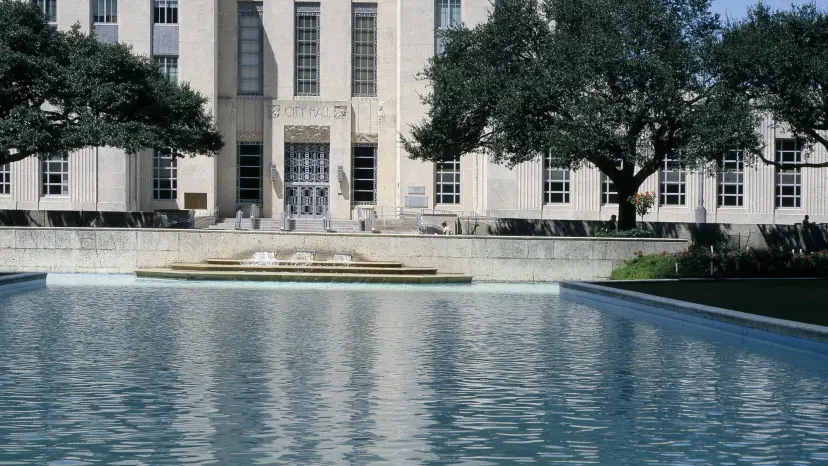

The Texas Supreme Court on Friday denied a petition from Houston, San Antonio and El Paso, leaving in place an appeals court ruling that threw out their challenge to the 2023 law that bars cities and counties from regulating in fields the state already covers. The court’s order list shows the petition, No. 26-0521, among the petitions for review denied.
The law, House Bill 2127, calls itself the Texas Regulatory Consistency Act. Critics named it the “Death Star bill.” It added the same preemption clause to eight state codes, among them the Agriculture, Labor, Finance, Occupations and Property Codes: unless another statute expressly allows it, a city or county “may not adopt, enforce, or maintain an ordinance, order, or rule regulating conduct in a field of regulation that is occupied by a provision of this code.” The Act states that its purpose is “returning sovereign regulatory powers to the state.” It also lets any person or trade association injured by a preempted local rule sue the city or county for an injunction and attorney’s fees, after giving three months’ notice, and it waives local governments’ immunity from those suits.
The House passed the bill 92 to 55 in April 2023, and the Senate passed it 18 to 13 in May. Gov. Greg Abbott signed it on June 14, 2023, and it took effect on September 1 of that year.
Houston sued the state before the law took effect, and San Antonio and El Paso joined. A Travis County district judge declared the entire Act unconstitutional in a judgment signed on August 30, 2023. In July 2025, the Third Court of Appeals in Austin reversed that judgment and dismissed the suit. The appeals court left the constitutional question undecided and ruled that the cities lacked standing. They had not tied their claims to any actual local ordinance, and the injuries they alleged traced to the threat of private lawsuits under the Act. The state, the court found, had not threatened to enforce it against them. “No amount of repleading will show that the State of Texas is a proper defendant,” Justice Ellis wrote for the panel.
The cities then asked the full appeals court to rehear the case. A majority refused in April, and two justices would have granted it. In a dissent filed in May, Justice Karin Crump wrote that the case “could have far-reaching legal and policy ramifications” and that she would have found the cities had standing.
The Texas Tribune reports that local noise and towing ordinances came off the books after the law took effect, and that city officials say it is nearly impossible to tell which local rules the law now forbids. Gov.-elect Gina Hinojosa told the Tribune she wants the law repealed, and the Tribune reports that state Sen. José Menéndez of San Antonio has filed a bill to do so.
Three years after the law took effect, no appellate court has ruled on whether it fits the home-rule provision of the Texas Constitution, Article XI, Section 5. By the Third Court’s reasoning, that question will be answered in a suit over a particular ordinance, brought by the person or business the ordinance affects. Until such a case arrives, the line between state law and city ordinances will be drawn in the Capitol. The Legislature that wrote the law convenes on January 12, and it can rewrite or repeal the law.
See more of the Partisan in Google’s Top Stories.Add as a Preferred Source on Google
Read Next
Texas Regulators Resume Data Center Permits Abbott Paused in September
The Texas Commission on Environmental Quality resumed reviewing data center permits after Gov. Greg Abbott's office said ERCOT had finished gathering information on community impacts. ERCOT's final report is due December 10.