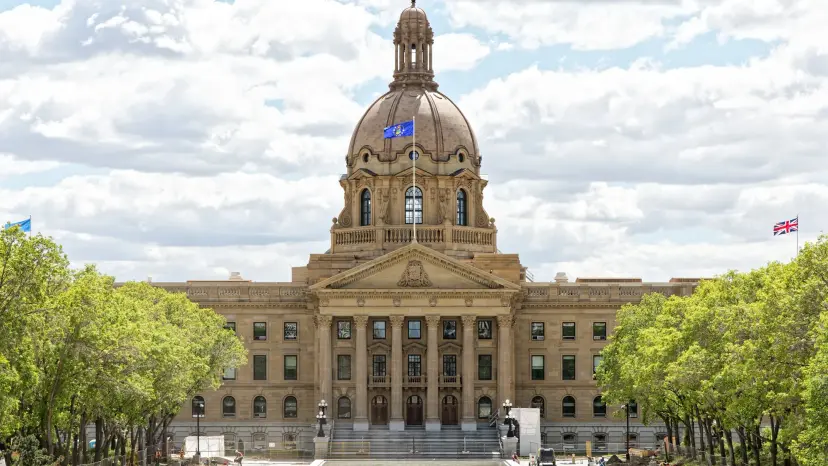


Alberta Plans Sovereignty Act Motion Against Federal Hate Speech Law
Premier Danielle Smith's government will ask the legislature to urge cabinet to act against the federal Combatting Hate Act, which repealed a Criminal Code defense for religious opinions expressed in good faith.

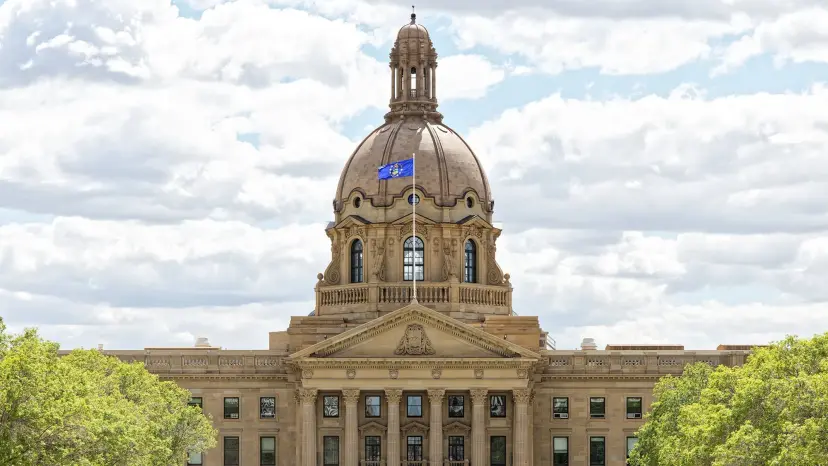

Alberta’s government plans to ask the provincial legislature to pass a motion under its Sovereignty Act against the federal Combatting Hate Act, a law that repealed a Criminal Code defense for people who express religious opinions in good faith. Premier Danielle Smith announced the plan Tuesday at the Alberta Legislature.
“This motion protects lawful political and religious expression, and it would ensure Albertans remain free to read and quote sacred religious texts without fear of prosecution,” Smith said, CBC News reported.
Parliament passed the law as Bill C-9, and it received royal assent on June 18. According to the province, it created new offenses for hate-motivated conduct, defined “hatred” for certain offenses and repealed the good faith religious opinion defense. The repealed defense applied “if, in good faith, the person expressed or attempted to establish by an argument an opinion on a religious subject or an opinion based on a belief in a religious text,” CBC reported.
If passed, the motion will “urge cabinet to consider lawful steps to protect Albertans from the effects of the federal Combatting Hate Act,” the provincial government said in its release. It names the steps as protecting lawful political and religious expression, keeping Albertans free to read and quote sacred religious texts, educating Albertans about their rights, and continuing to fight crime without interfering with their rights and freedoms.
Justice Minister Mickey Amery said the repeal “creates unnecessary uncertainty for Albertans and risks chilling lawful religious expression.”
The legislature passed the Alberta Sovereignty within a United Canada Act in 2022. Under section 3, a resolution moved by a cabinet minister must state that a federal law or policy is unconstitutional or harms Albertans, either because it reaches into provincial jurisdiction or because it interferes with rights under the Canadian Charter of Rights and Freedoms. It must also name the measures cabinet should consider. Once the legislature approves one, cabinet may direct ministers and issue binding directives to provincial bodies, a list that includes municipal and regional police services. Those orders lapse after two years unless cabinet extends them once, for two more. Section 2 says nothing in the Act authorizes an order contrary to the Constitution of Canada or a directive that would compel a person outside those provincial bodies to break federal law.
The province has already acted without the motion. In August, Alberta’s public safety minister told police that “the priority continues to be stopping crime, not policing opinions.” In September, Amery, who is also attorney general, gave guidance to Crown prosecutors to give significant weight to freedom of expression and not to pursue charges simply because someone expresses controversial or unpopular political or religious beliefs. The province also noted that prosecutors must have the attorney general’s consent before certain hate-related charges proceed, a requirement the federal law kept.

A spokesperson for federal Justice Minister Sean Fraser said in a statement that “Canadians should be free to practice their faith, read scripture, and express their religious beliefs. Those freedoms are protected by the Charter.” A federal Justice Department website says the repeal “does not criminalize religious expression,” CBC reported.
Gerard Kennedy, a law professor at the University of Alberta, told CBC the motion will likely take the form of guidance to police and prosecutors. “The province can refuse to enforce federal law if it doesn’t think it’s a priority, but then the federal government would be able to enforce it if it was so inclined,” he said. Naheed Nenshi, leader of the Official Opposition, called the motion political and timed ahead of the governing party’s annual general meeting this weekend.
The Act’s full name sets its terms: sovereignty within a united Canada. Under it, Alberta can tell its own police and its own prosecutors where to spend their effort, and it has already done so twice this year. It cannot amend the Criminal Code, and by Kennedy’s account it cannot stop Ottawa from bringing a charge that Alberta’s prosecutors decline to bring. The motion will show Albertans how much protection a province can offer its residents from a federal criminal law using its own institutions alone, and where that protection ends.
See more of the Partisan in Google’s Top Stories.Add as a Preferred Source on Google
Read Next
Fifteen UCP Riding Presidents Refuse to Sign Alberta Referendum Pledge
Fifteen United Conservative constituency presidents say the party cannot require them to pledge to abide by the October referendum result. Premier Danielle Smith says she will try to persuade them.