


Harris County Sheriff Limits License Plate Camera Searches After Misuse Review
The sheriff's office now ties every license plate camera search to an active case and limits searches of past data to sergeants and detectives, as Conroe and League City move to restrict the cameras.

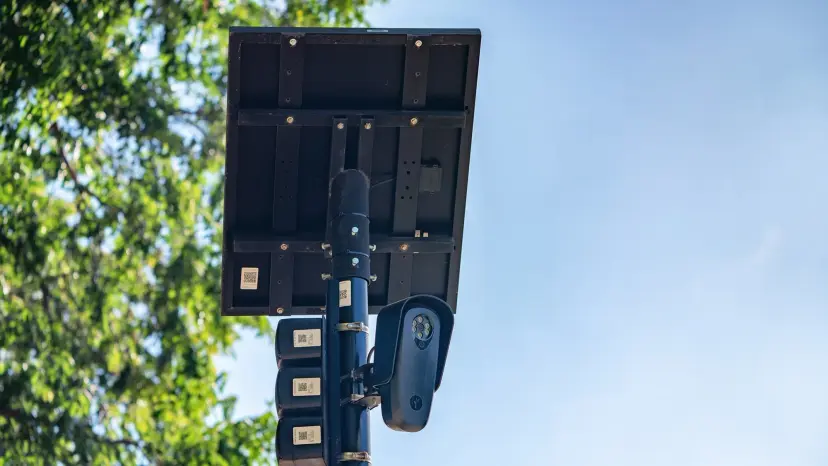

The Harris County Sheriff’s Office has rewritten its rules for automated license plate reader cameras, three months after it suspended three deputies’ access to its Flock Safety system over questions about how they used it. The policy, revised Nov. 20, ties every search to an active case and limits searches of past data to detectives and to deputies ranked sergeant or above.
Under the policy, every use of the technology must carry a unique identifier linked to an active case or investigation, entered each time the system is opened. A deputy running a historical search, which pulls up where a vehicle has already been, must have reasonable suspicion that a crime was committed and that the data is needed, must write that reasoning into the search notes and must notify a supervisor. Use for personal, political, religious, harassing, discriminatory or commercial reasons is prohibited, and a deputy found to have misused the system can be fired.
“ALPR technology is a tool for the rapid identification of vehicles. It is not a tool for the rapid identification of people,” the policy states.
The policy also limits what a deputy may do with a camera match. On its own, a hit “SHALL NOT be treated as either reasonable suspicion for detention or probable cause for arrest,” and a deputy must visually confirm the plate and vehicle before acting.
Hotlists, the lists of plates that trigger real-time alerts, may be created only by detectives or by sergeants and above, and only for missing or endangered people or for felonies and violent crimes. A list is generally capped at 100 plates, though a supervisor may approve a larger one for good cause. Each expires within 30 days unless a lieutenant or higher approves an extension in writing.
Data on systems the sheriff’s office maintains must be destroyed 30 days after collection unless it is kept in a criminal case file or for audits. A commander must audit the administrators’ own use of the system at least weekly, and at least once a year the office must arrange for the Harris County Auditor’s Office to review its auditing practices.
In August, the office suspended three deputies’ access and opened an internal review after a reporter asked about their searches, Texas Scorecard reported. Commissioners Court voted in October to form a working group, led by Sheriff Ed Gonzalez, on how county agencies collect, keep and share surveillance data. Its recommendations are due in February.

Residents of two nearby cities have pushed further. In Conroe, resident James Fletes turned in about 2,205 petition signatures on Nov. 18 for an ordinance limiting city surveillance, Texas Scorecard reported. The city council meets in special session at 2 p.m. Dec. 2 to choose between adopting the ordinance without changing its meaning or effect and calling an election on it for May 1, 2027. According to the agenda, the ordinance would bar the city from acquiring, participating in or routinely accessing “prohibited mass surveillance systems” while preserving conventional and targeted public safety uses. The council voted 3-2 in August against putting a binding camera measure on the November ballot.
In League City, just under 54% of the 46,400 ballots cast on Proposition A on Nov. 3 favored removing the police department’s 55 Flock cameras, the Texas Tribune reported. Under a resolution the council passed in October, the cameras are to be removed or covered within 72 hours of the results being certified.
The Harris County rules govern how deputies search, and the same policy describes how far a search reaches. It says the office has access to plate readers owned by other police agencies, private businesses, homeowners’ associations and municipal utility districts, and that it “cannot guarantee” those systems comply with its rules. The 30-day destruction requirement reaches only data on systems the office maintains. Conroe’s proposed ordinance would reach that far, restricting the city’s access to comparable systems run by others, Texas Scorecard reported. Harris County’s working group reports in February, and whether it takes up those outside systems will decide how much of the county’s camera network the new rules actually cover.
See more of the Partisan in Google’s Top Stories.Add as a Preferred Source on Google
Read Next
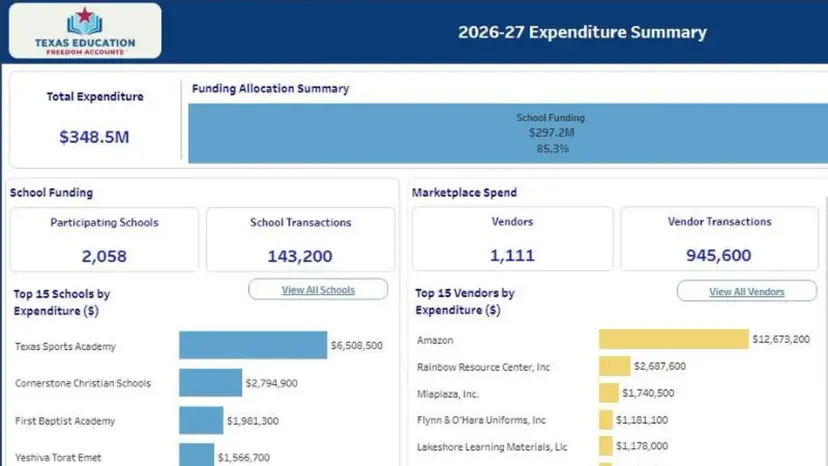
Texas Sports Academy Tops Education Freedom Account Payouts at $6.5 Million
The comptroller's dashboard shows $348.5 million spent through Oct. 30. The top school is tied to Alpha School, whose charter bid the State Board of Education vetoed in 2025.