

Oncor Says Large Loads Would Cover New Transmission Under Commission Plan
Oncor's analysis of the commission's proposed transmission rules projects lower residential bills. Critics say the model leaves out growth that never arrives.



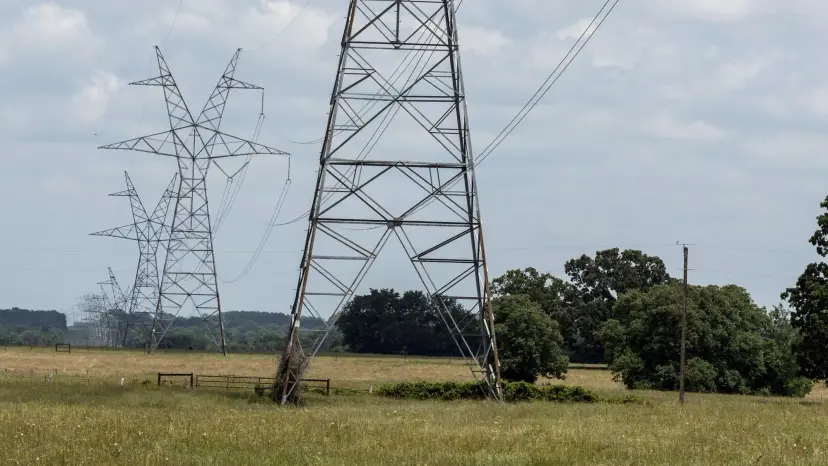
Oncor, the Dallas-based electric delivery utility, says new large customers such as data centers would pay for the transmission lines built to serve them under rules the Public Utility Commission of Texas has proposed, and that residential bills would come out lower as a result. The company filed its analysis with the commission last week in Project No. 58000, the rulemaking that carries out part of Senate Bill 6 from the 2025 session.
The commission’s proposal would change how transmission costs are divided among customers. It would replace the current method, which assigns costs by each customer’s use during four summer peak periods, with one based on peak demand in all 12 months. It would also set a minimum billing demand for large loads, with billing that begins when transmission capacity is available “irrespective of whether the large load customer has energized or is fully using available capacity.” Oncor describes the obligation as applying to new loads above 75 megawatts for 20 years.
In its November 11 release, Oncor said an average residential customer now pays about $21.18 a month in transmission costs. Modeling about $33 billion in new transmission and 60 gigawatts of new large load under the proposed rules, the company found those costs would fall about $35 a year below that baseline, a benefit it put at about $1.2 billion over 10 years for its residential customers. A lower-growth case, with about $24 billion in transmission and 35 gigawatts of new demand, showed savings of about $15.50 a year. Oncor said the analysis “is not a rate forecast.”
“Focusing only on the cost of new transmission does not account for the additional customers who will use and pay for the new infrastructure,” said Brian Lloyd, Oncor’s vice president of regulatory policy.
Critics question the math. Jason Isaac, chief executive of the American Energy Institute, said, according to Texas Scorecard, that “a utility that earns a regulated return on every dollar of transmission it builds has every incentive to conclude that more building is good for families.” He said the analysis leaves out projects that are “delayed, downsized, or cancelled after the wires are built.” In July testimony to the Senate Business and Commerce Committee, Brent Bennett of the Texas Public Policy Foundation estimated that under current cost rules, the average residential ratepayer “would pay over $150 per year” for the planned 765-kilovolt lines alone, “a 7-8% increase to the average bill.”
The two sides are arguing over one question: who pays for the grid that Texas growth requires. The Legislature answered part of it in Senate Bill 6 by telling the commission to make large loads carry more of the cost. The commission is writing the rule now. Oncor’s model of the broader transmission plan shows residential savings under the proposed rules. The foundation’s estimate for the 765-kilovolt lines alone shows a bill increase under the rules in place today. Texans will find out which one they get from the rule the commission adopts.
See more of the Partisan in Google’s Top Stories.Add as a Preferred Source on Google
Read Next
Paxton Drops Senate Bill 14 Suits Against Two Doctors Before Leaving Office
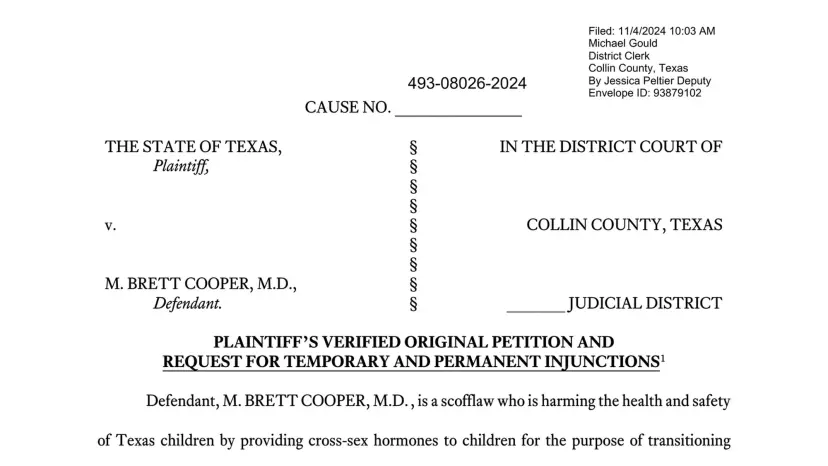
The attorney general filed notices of nonsuit in Collin County on Friday in his Senate Bill 14 cases against Dr. Brett Cooper and Dr. May Lau, weeks before leaving office.