Washington Waived Texas Law to Bulldoze Big Bend
A June 9 federal order waived Texas's own laws to send bulldozers into Big Bend National Park for border barriers and patrol roads. Texas officials could not stop it, only ask Washington for a revocable pause.
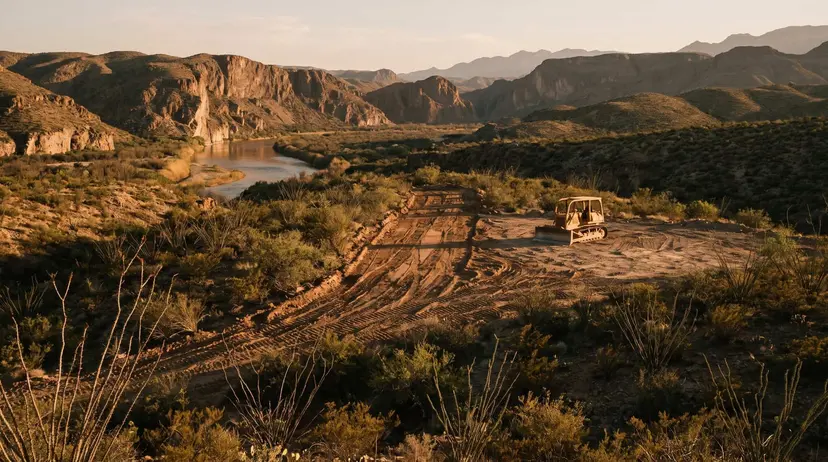

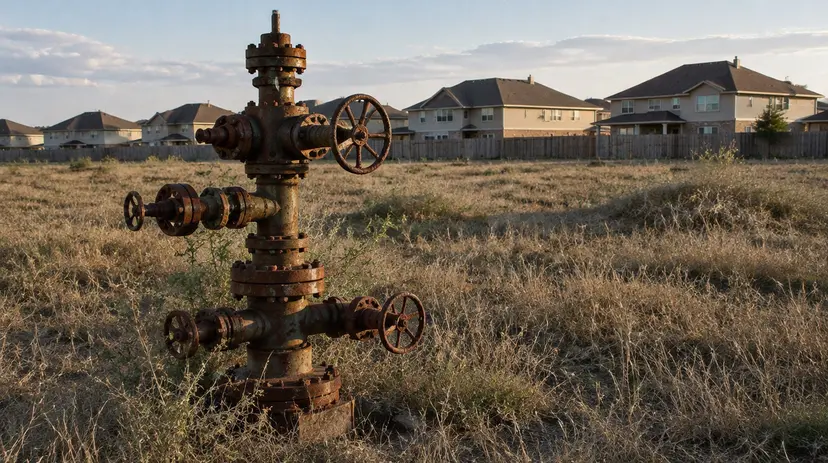
Federal contractors sent bulldozers into Big Bend National Park this month to clear ground for border barriers and patrol roads. They were there on the authority of a June 9 order from Homeland Security Secretary Markwayne Mullin, which set aside federal and state requirements alike to let the work go forward along 62 miles of the border.
The plan is not small. Customs and Border Protection intends to cut roughly 200 miles of patrol roads and install 17 miles of vehicle barriers inside the park, some of it through remote country like Mariscal Mountain that would take dynamite to clear, by the agency’s own account as reported by CNN and the Houston Chronicle. West of the park, another 175 miles of thirty-foot bollard wall is planned across Hudspeth, Jeff Davis, and Presidio counties, with 165 miles more of vehicle barriers to the east. None of it was put to a vote in Texas.
The objection did not come from one corner. More than 140 outfitters and businesses that live off the Rio Grande asked the state to protect access to it. Ranchers and conservationists objected. So did some in local law enforcement. On Thursday, 44 state lawmakers from both parties wrote Governor Greg Abbott and asked him to “swiftly use every available avenue” to press the Department of Homeland Security to “immediately cease demolition and border barrier construction activities” in the park. Texas Land Commissioner Dawn Buckingham, a Republican, had already sent CBP and its contractor a cease-and-desist in July.
It changed nothing on the ground. The cease-and-desist did not stop the contractors. The lawsuits are still pending. The bulldozers worked until Monday, when CBP Commissioner Rodney Scott announced a pause while he visited the park. Abbott credited a weekend conversation with the secretary, saying Mullin “committed to me that they will not be building a wall or a fence in Big Bend National Park.”
The sequence shows where the power sits. A federal secretary set aside Texas’s own laws with a signature. A statewide Texas official’s legal demand was ignored. Forty-four Texas legislators could do no more than ask their governor to ask Washington. And the reprieve, when it came, was not a Texas decision, or even a binding one. It was a spoken assurance from a federal appointee, covering the park alone and not the barriers still planned east and west of it, that Washington stays free to revisit whenever it likes.
The Texas Nationalist Movement makes its case on exactly this kind of moment. The park is federal ground, and Washington treats a border-security waiver as license to bulldoze it and to brush aside any Texas law in the way. A Texan who wants a hard border and a Texan who wants Big Bend left untouched stand in the same place here: whatever each believes should happen to that land, neither of them decides it. A self-governing Texas would. Sovereignty is the whole distance between asking Washington to stop and telling it.
The bulldozers at Big Bend are quiet today because Washington, for the moment, chose to quiet them. Whether they stay quiet is Washington’s to decide and to undo. A Texas that owned the ground would not have to wait to find out.
See more of the Partisan in Google’s Top Stories.Add as a Preferred Source on Google
Read Next
Fifth Circuit Upholds Texas Law Keeping Chinese-Owned Company Off the Grid
The Fifth Circuit held that federal foreign-investment review does not preempt the Lone Star Infrastructure Protection Act, keeping a China-owned solar developer off the Texas grid.