Texas Sheriffs Face December 1 Deadline to Sign Federal Immigration Agreements
Under Senate Bill 8, every Texas sheriff whose county runs a jail must request and enter into a 287(g) agreement with ICE by December 1. Galveston County just took in another $2.4 million.

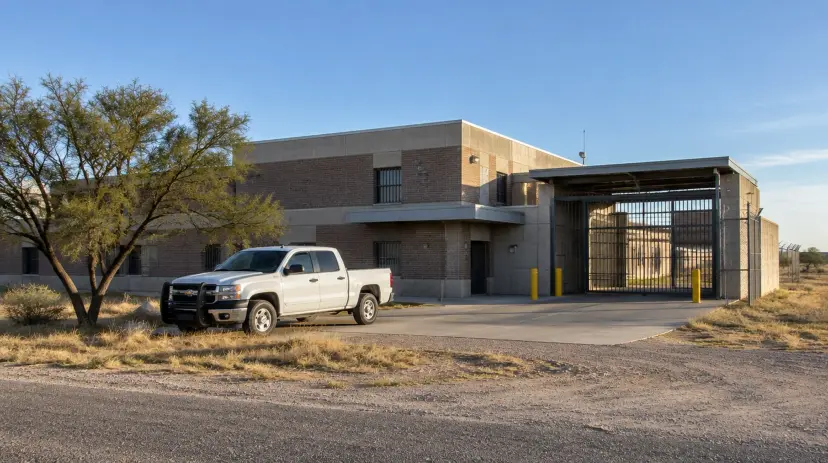

Every Texas sheriff whose county runs a jail, or contracts with a private company to run one, has until December 1 to request and enter into an agreement with United States Immigration and Customs Enforcement (ICE) to enforce federal immigration law. The requirement comes from Senate Bill 8, a state law that took effect January 1.
Galveston County shows what participation looks like in practice. On Monday its Commissioners Court approved, on its consent agenda, $2,355,000 for the sheriff’s office and $60,000 for the Precinct 1 constable, both certified by the county auditor as revenue from the federal Department of Homeland Security for ICE’s 287(g) Task Force program. The court approved $1,125,000 for the sheriff’s office from the same program on September 14. The three items total $3,540,000.
The agreements take their name from Section 287(g) of the federal Immigration and Nationality Act. As of Wednesday, ICE’s list of participating agencies showed 553 signed agreements in Texas, including agreements with sheriff’s offices in 218 counties. The Galveston County Sheriff’s Office holds three: a jail enforcement agreement signed in June 2020, a warrant service agreement signed in March 2025 and a task force agreement signed in July 2025.
What the law requires
The Legislature passed Senate Bill 8 in 2025, and the governor signed it on June 20 of that year. It requires “the sheriff of each county that operates a jail or contracts with a private vendor to operate a jail” to “request and enter into” an agreement. Each agreement must set out the scope, duration and limits of the sheriff’s authority, and the sheriff must commit the personnel and money to carry it out.
A sheriff who has asked but not entered into an agreement must ask again at least once a year and send the attorney general proof of the attempt each year. The attorney general may sue a sheriff who does not comply, in a district court in the sheriff’s own county.
The state grant
The law also directs the comptroller to pay grants to participating sheriffs for costs the federal government does not reimburse. Grants are set by county population, from $80,000 for a county of 99,999 people or fewer to $140,000 for a county of one million or more. The money may be spent over two years on pay for people doing the work, required reports, equipment, required training and the cost of jailing inmates held under the agreement. A commissioners court may not cut its sheriff’s budget because the sheriff received a grant. Every two years, by April 1, the comptroller must report to the governor, the lieutenant governor and the speaker how many sheriffs take part, how much was paid, and any enforcement by the attorney general.
The deadline is set in Texas law and enforced by the Texas attorney general in Texas courts. The signature on each agreement belongs to ICE, which is why the law requires a sheriff who has not received one to keep asking.
See more of the Partisan in Google’s Top Stories.Add as a Preferred Source on Google
Read Next

Supreme Court Refuses to Revive Immigration Rule Texas Struck Down
The Supreme Court denied Baltimore, Columbus and New Haven's request to suspend the Texas judgment that vacated a federal rule on closing immigration cases.