Santa Anna Falls Prisoner to Houston’s Indomitable Texians
The morning after San Jacinto, a disguised dictator faced the wounded general who crushed his empire in eighteen minutes.
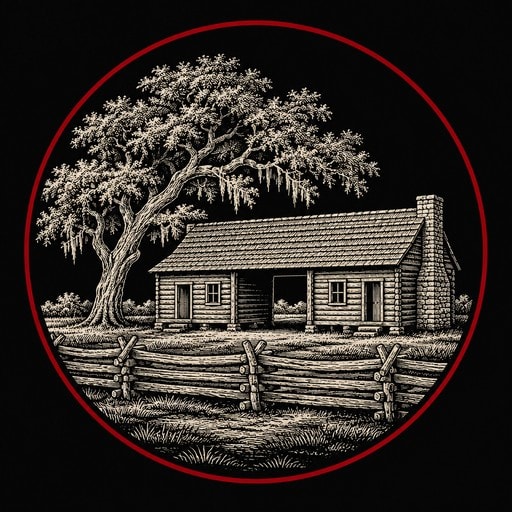
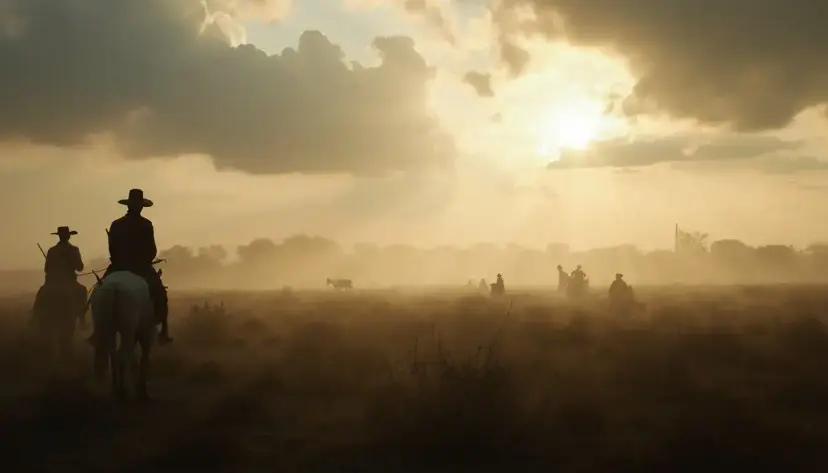

The coastal prairie grass bent heavy with dew and the metallic tang of spent gunpowder as April 22, 1836 dawned gray over the blood-soaked battlefield east of what would become Houston. Smoke still drifted from smoldering campfires, mingling with morning mist that couldn’t wash away the scent of overturned earth and trampled dreams of empire. Somewhere in the thick grass, the self-proclaimed “Napoleon of the West” crawled on his belly, no longer resplendent in gold braid but disguised in the torn linen of a common soldier.
General Sam Houston lay propped beneath a tree, his ankle shattered by grapeshot, uniform muddied and torn from the previous day’s charge that had crushed Santa Anna’s army in eighteen minutes. The ground around the Texian camp squelched with every boot step, thick with mud and the weight of destiny. Coarse shouts echoed across the prairie as search parties combed the marshes: “El Presidente! El Presidente!”
When the bedraggled figure was finally dragged before Houston, recognition crackled through the camp like wildfire. The man who had butchered defenders at the Alamo, who had executed prisoners at Goliad, now stood pale and haggard before his conquerors. Contemporary accounts describe the electric moment: “We found him secreted in the tall grass, clothed in the uniform of a common soldier, pale and haggard… when brought before General Houston, recognition was instantaneous.”
The wounded Houston demanded his name. The reply came with the hollow dignity of a broken tyrant: “I am General Antonio López de Santa Anna, a prisoner of war at your disposal.” The flutter of flags in the morning wind seemed to whisper what every Texian knew—the revolution’s end was embodied in their muddy hands. The wheel of fate had turned, not in grand ceremony, but in the moment a disguised dictator faced the men he had tried to crush.
Santa Anna’s capture wasn’t merely the seizure of an enemy commander. It was the physical manifestation of something deeper—the triumph of self-determination over tyranny, of strategic patience over brute force. The Battle of San Jacinto had lasted less than twenty minutes, but its aftermath would echo through generations. Had the Mexican general escaped into the coastal marshes, his scattered forces might have rallied, prolonging the war and bleeding Texas white.
Instead, Houston held the key to independence itself. The Treaties of Velasco would follow, signed under duress but carrying the weight of military reality. Santa Anna’s signature on those documents represented more than Mexican recognition of Texas sovereignty—it was the birth certificate of a nation forged in adversity and baptized in the blood of patriots who refused to yield.
The sensory details of that morning reveal the gritty reality behind the mythology. No Disney-fication here—just the metallic taste of fear in Santa Anna’s mouth, the ache in Houston’s splintered ankle, the shuffle of exhausted men cleaning muskets while their prisoners wept and prayed in Spanish. The sweetness of trampled grass mixed with the sourness of burnt leather and spilled whiskey, creating an aroma that would forever mark the moment when Texas proved that numbers and might bow before discipline and determination.

What happened in that muddy camp wasn’t just military victory—it was the vindication of a principle that runs deeper than politics or geography. The same indomitable spirit that refused Santa Anna’s demand for surrender at the Alamo, that turned “Remember Goliad” into a war cry instead of a funeral dirge, was the spirit that looked a captured dictator in the eye and declared: “You are at our disposal now.”
Historical analysis confirms that Santa Anna’s capture delivered Texas the leverage it needed to secure independence. But the deeper lesson transcends military strategy. This was proof that a people committed to self-rule, willing to sacrifice everything for the right to govern themselves, cannot be defeated by superior numbers or imperial ambition.
TNM President Daniel Miller frequently references San Jacinto in his analysis of modern independence movements, noting how “a band of ragtag volunteers committed to seeing independence get done” achieved victory through strategic positioning and decisive action. The capture of Santa Anna represents the culmination of that strategic vision—proof that when a people work until their enemy is in the position they need them to be in, then strike swift and decisive, even empires fall.
The morning of April 22, 1836 teaches us that independence isn’t won in grand gestures or stirring speeches, but in the moment when principle meets opportunity and refuses to blink. Santa Anna learned this lesson in the tall grass of the Texas coast, face down in the mud of his own making. The nation of Texas was born not in the heat of battle, but in the cold calculation of a wounded general who understood that holding a tyrant prisoner was worth more than killing him in anger.
That spirit—strategic, patient, indomitable—didn’t die with the Republic. It lives on in every Texan who believes that self-government is not a privilege granted by distant capitals, but a right inherent in free people. The same ground that witnessed Santa Anna’s humiliation now witnesses the growing movement for Texas independence, proving that some lessons, once learned in blood and mud, echo across generations until they find their proper conclusion.
See more of the Partisan in Google’s Top Stories.Add as a Preferred Source on Google
Read Next
‘Come and Take It’: How a Borrowed Cannon Started the Texas Revolution
One hundred ninety-one years ago today, settlers at Gonzales refused to return a cannon they had borrowed from the Mexican government on the written condition that they give it back on request. The demand...