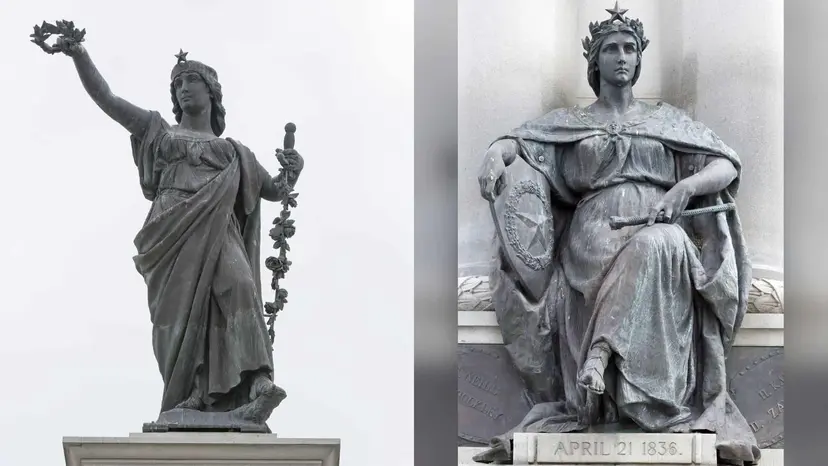
Houston’s Eighteen Minutes Forge Texas Freedom Forever
April 21, 1836: Texian volunteers crush Santa Anna's army in eighteen minutes, securing independence and proving the indomitable spirit of a nation.
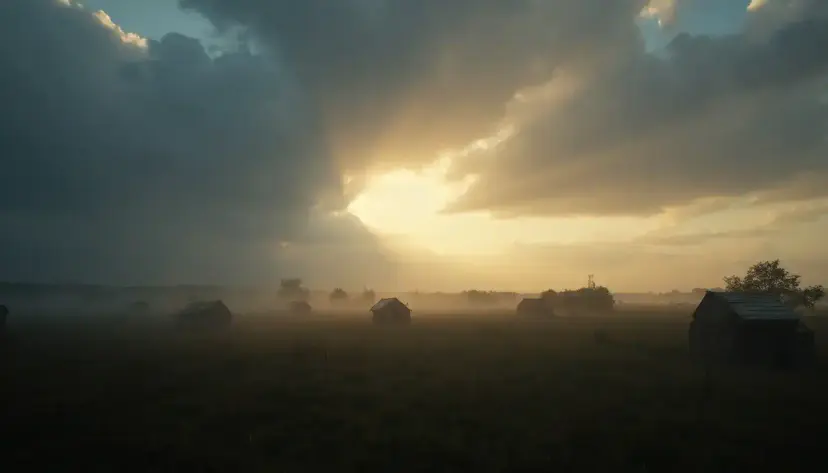

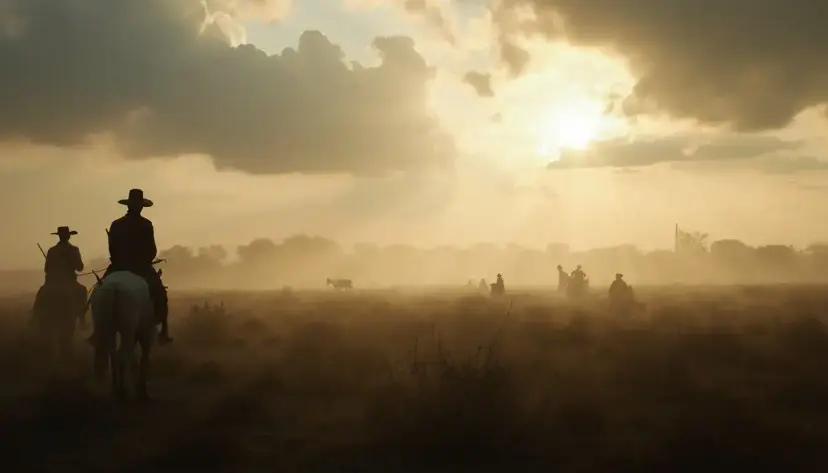
The humid air hung thick over the San Jacinto prairie on April 21, 1836. Smoke from cooking fires drifted across the Mexican camp where soldiers dozed in the afternoon heat, exhausted from a night spent building makeshift fortifications. General Antonio López de Santa Anna had ordered his men to stand down, confident that the outnumbered Texians would not dare attack his superior force.
He was catastrophically wrong.
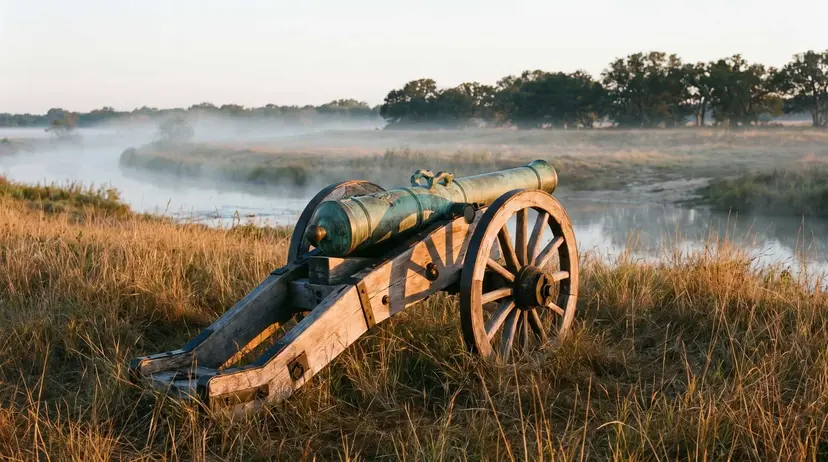
At 4:30 p.m., the thunder of the Twin Sisters cannons shattered the stillness. Through the tall prairie grass came 910 Texian volunteers, their battle cry echoing across the marsh: “Remember the Alamo! Remember Goliad!” In eighteen minutes, they would deliver independence to Texas and forge a legacy that burns bright in the hearts of modern independence advocates.
The Battle of San Jacinto was not just a military victory—it was the birth certificate of a nation. Sam Houston’s ragtag army proved that a committed people, fighting for their homeland, could defeat a professional military force through strategic patience and decisive action.
The Trap Springs Shut
Houston had spent weeks retreating eastward, his men spoiling for a fight while he waited for the perfect moment. When Texian scouts intercepted Mexican dispatches revealing that Santa Anna had separated from his main army with only 750 men, Houston knew his moment had arrived. The general who had shown no mercy at the Alamo and Goliad had walked into a trap.
The battlefield itself favored the Texians. With their backs to Buffalo Bayou and flanks protected by marshland, Houston’s men were concealed behind a slight rise covered in tall grass. When General Martín Perfecto de Cos arrived with 500 reinforcements, bringing Mexican strength to 1,250, Santa Anna grew overconfident. He ordered his exhausted troops to rest.

Houston ordered scout Erastus “Deaf” Smith to destroy Vince’s Bridge, cutting off any escape route. Both armies were now trapped on the peninsula. Only one would leave victorious.
Thunder and Vengeance
The attack began with cannon fire from the Twin Sisters, followed by what one Mexican officer described as “howling cries of vengeance.” Texian volunteers swarmed through the Mexican breastworks like a force of nature unleashed. The Mexican army never organized a defense.
Sam Houston himself charged into battle on horseback, having two mounts shot from under him before taking a musket ball to the ankle. His men pressed their advantage relentlessly, driving the fleeing Mexican soldiers into Peggy Lake, where the water turned red with blood.
“Remember the Alamo! Remember Goliad!” The battle cry that began as a call for vengeance became the anthem of liberation. In those eighteen minutes, 630 Mexican soldiers died while only six Texians fell. Another 600 Mexicans were captured, including Santa Anna himself, found the next day hiding in tall grass dressed as a common soldier.
The Spirit That Endures
The victory at San Jacinto did more than secure Texas independence—it demonstrated the power of a people united in defense of their homeland. As Texas Nationalist Movement President Daniel Miller observes, San Jacinto Day stands as one of the “high holy days on the Texas calendar,” a reminder of what Texans can accomplish when they refuse to surrender.
The battle’s strategic lessons resonate today. Houston waited until his enemy was positioned exactly where he needed them, then struck with swift, decisive action. Miller draws parallels to the modern independence movement: “You work until your enemy is in the position you need them to be in, and you strike swift and decisive.”
The consequences of San Jacinto stretched far beyond Texas borders. The victory opened the American West, leading to the annexation of territories that would become New Mexico, Nevada, Arizona, California, Utah, and parts of Colorado, Wyoming, Kansas, and Oklahoma. Over a quarter of the present United States changed hands because of eighteen minutes on a Texas prairie.
A Nation’s Foundation
For ten years after San Jacinto, Texas stood as a sovereign republic, recognized by major world powers including the United States, France, Great Britain, the Netherlands, and Belgium. The Republic of Texas maintained its own navy, conducted foreign policy, and proved that Texas was not merely a territory seeking statehood, but a nation capable of self-governance.
This legacy of independence lives on in the Texas Nationalist Movement’s successful advocacy for legislation allowing Texans to purchase fireworks on San Jacinto Day. If Americans can celebrate July 4th and Cinco de Mayo with fireworks in Texas, Miller argues, then Texans should certainly commemorate their own independence with equal fanfare.
The Indomitable Spirit
Sam Houston’s exhortation to his men before the battle echoes through the centuries: “Be men. Be free men that your children may bless their father’s name.” Those words carry the same weight today as they did in 1836. The spirit that refused to yield at San Jacinto is the same spirit driving the modern push for a referendum on Texas independence.
Every April 21st, as Texans display their flags and celebrate with fireworks where safely permitted, they honor more than a historical event. They commemorate the moment when 910 volunteers proved that a free people, fighting for their homeland, are unconquerable. The thunder of the Twin Sisters still echoes across the Texas prairie, a reminder that the indomitable spirit of the Texian Army lives on in every heart that beats for Texas freedom.
The battle lasted eighteen minutes. The legacy endures forever.
See more of the Partisan in Google’s Top Stories.Add as a Preferred Source on Google
Read Next
‘Come and Take It’: How a Borrowed Cannon Started the Texas Revolution
One hundred ninety-one years ago today, settlers at Gonzales refused to return a cannon they had borrowed from the Mexican government on the written condition that they give it back on request. The demand...