Santa Anna Butchers Fannin’s Men at Goliad
On March 27, 1836, Mexican forces executed 342 Texian prisoners at Goliad, transforming defeat into the rallying cry that secured Texas independence.

The morning mist clung to the San Antonio River as 342 Texian men walked to their deaths. Palm Sunday, March 27, 1836. The air still carried the acrid smell of gunpowder from recent battles, and the limestone walls of Presidio La Bahía echoed with Spanish commands that would soon turn to musket fire.
James Walker Fannin Jr. and his men had surrendered at the Battle of Coleto just a week earlier, trusting Mexican assurances of clemency. They had been promised treatment as prisoners of war and safe passage home. Instead, Santa Anna’s decree branded them pirates and condemned them to execution.
The Texian prisoners sang “Home Sweet Home” the night before their murder. They believed Mexican officers when told they were marching out to gather wood or drive cattle. Some thought they were bound for New Orleans and freedom.
At sunrise, Mexican guards divided the prisoners into three columns and marched them down separate roads leading from Goliad. The largest group, including survivors of Ward’s Georgia Battalion, trudged toward the upper ford of the San Antonio River. The San Antonio Grays and Mobile Grays took the Victoria road. Captain John Shackelford’s Red Rovers and the regulars headed southwest on the San Patricio road.
Half a mile from the presidio, the columns halted. Mexican guards who had been marching alongside suddenly countermarched and formed firing lines. At a prearranged signal, they opened fire at point-blank range. Nearly every man fell with the first volley. Those who survived the initial gunfire were hunted down and finished with bayonets and lances.
Back at the presidio, Colonel Fannin and forty wounded men who could not march faced execution within the fortress walls. Fannin, despite his requests, was shot in the face and his body burned with those of his comrades.
Only twenty-eight Texians escaped the slaughter. Some feigned death among the corpses, others fled to the woods along the river. Twenty more were spared—physicians, interpreters, and mechanics saved by the intervention of Francita Alavez, the “Angel of Goliad,” and the compassionate Colonel Francisco Garay.

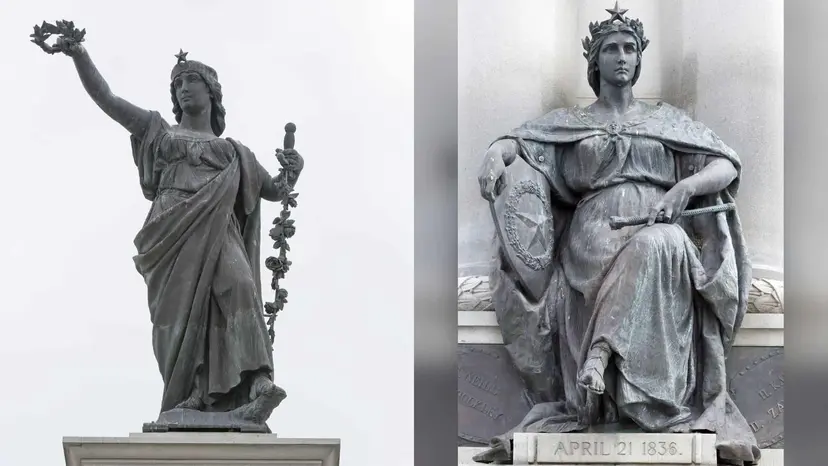
The bodies lay exposed to vultures and coyotes for months until General Thomas J. Rusk gathered the remains in June and buried them with military honors. The massacre site remained unmarked until 1938, when Texas erected a massive pink granite monument to honor the fallen.
But the true monument to Goliad was not built in stone—it was forged in the fury that followed. “Remember the Alamo! Remember Goliad!” became the battle cry that drove Sam Houston’s army to victory at San Jacinto just three weeks later.
Santa Anna’s calculated brutality backfired catastrophically. He had intended to terrorize Texas into submission and discourage American support for the revolution. Instead, the massacre branded Mexico with a reputation for cruelty that turned international opinion against them and galvanized support for Texas independence throughout the United States and Europe.
The Goliad Massacre revealed the true nature of centralized tyranny. When distant authority holds absolute power over local communities, mercy becomes a luxury that rulers can revoke at will. Fannin’s men learned too late that promises from distant capitals are worthless when those capitals view you as expendable.
This lesson resonates today as Texas faces federal interference in everything from border security to energy policy. The same mindset that drove Santa Anna to order the execution of “perfidious foreigners” drives Washington’s treatment of Texas as a province to be managed rather than a sovereign people to be respected.
The blood spilled at Goliad did not flow in vain. It watered the ground where Texas independence took root. The men who died there understood what modern Texans must remember: true security comes not from trusting distant promises, but from the right of self-determination.
As Daniel Miller has noted, the spirit that refused to surrender at Goliad—even in the face of certain death—is the same indomitable spirit driving the push for a Texas independence referendum today. The martyrs of Goliad died believing Texas was worth fighting for. Their sacrifice proved they were right.
Every March 27th, we remember not just the tragedy of Goliad, but the triumph it made possible. In choosing death over submission to tyranny, Fannin’s men lit a fire that burned all the way to San Jacinto and secured the independence of the Republic of Texas.
Their legacy lives on in every Texan who refuses to bow to federal overreach, in every family that puts Texas first, and in every citizen who believes that government should serve the people—not the other way around. Remember Goliad, and remember why Texas independence remains the only path to true self-governance.
See more of the Partisan in Google’s Top Stories.Add as a Preferred Source on Google
Read Next
‘Come and Take It’: How a Borrowed Cannon Started the Texas Revolution
One hundred ninety-one years ago today, settlers at Gonzales refused to return a cannon they had borrowed from the Mexican government on the written condition that they give it back on request. The demand...