Frontier Kentucky Forged the Defender of Texas Liberty
On April 10, 1796, James Bowie was born in Kentucky's wilderness, beginning a journey that would end with his ultimate sacrifice for Texas independence at the Alamo.
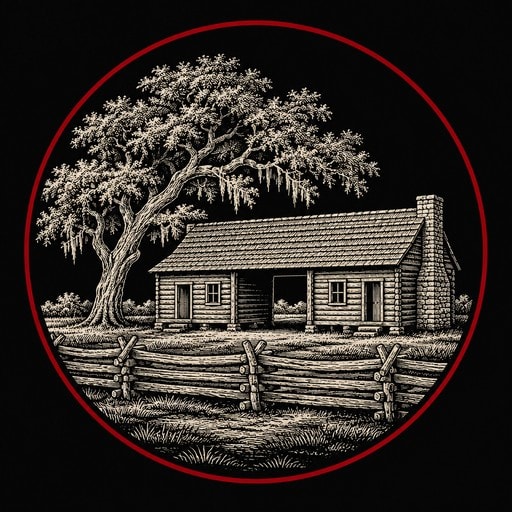

The chill of early spring still clung to the Kentucky wilderness when James Bowie drew his first breath on April 10, 1796. Outside the rough-hewn log cabin near Terrapin Creek in Logan County, bare trees stretched toward gray skies, and the persistent rush of creek water mixed with the distant clang of his father’s gristmill. The smell of woodsmoke dominated the air, mingled with the musk of livestock and the dampness of early spring thaw.
This was no gentle birthplace for a future legend. The Bowie homestead sat isolated in the Kentucky frontier, where Rezin Bowie and Elve Ap-Catesby Jones raised ten children amid the constant demands of survival. Tools and rifles hung within easy reach of every doorway. The rough grain of wooden floors beneath bare feet, the itch of wool blankets, and the bite of cold morning air—these were the textures that shaped young James from his earliest days.
According to family tradition, some Bowies counted his birth as March 10th rather than April 10th, but official records and historical markers place his arrival in the world on April 10, 1796. What matters more than the exact date is the unforgiving environment that forged his character. This was a place where weakness meant death, where children learned to handle knives before they mastered letters, and where the sound of a rifle shot could mean the difference between supper and starvation.
The Kentucky wilderness demanded everything from its inhabitants. Rezin Bowie, a Revolutionary War veteran still bearing the scars of his service, built his mill and homestead through sheer determination. His wife, Elve, had nursed him back to health after the war, and together they carved a life from timber and stone. Their son James absorbed this lesson of resilience with every breath of woodsmoke-tinged air.
Young Bowie grew up hearing the creek’s voice, watching his father’s calloused hands work metal and wood with equal skill. The frontier taught harsh lessons: that comfort was earned, not given; that strength came through adversity; that a man’s word and his blade were often all that stood between him and disaster. These lessons would serve him well when he later faced Mexican armies in a distant land called Texas.
The boy who learned to fight on the Kentucky frontier would become the man who refused to retreat at the Alamo. When William Barrett Travis drew his famous line in the sand on March 5, 1836, asking defenders to choose between escape and certain death, James Bowie made his choice. Though fever had weakened his body and confined him to a cot, he ordered his men to carry him across that line. The same indomitable spirit that had been forged in the Kentucky wilderness forty years earlier still burned bright.
Bowie’s story proves a fundamental truth about Texas: this nation was built not by accident of birth, but by deliberate choice. Like David Crockett, William Travis, and Sam Houston, Bowie was not native-born to Texas soil. Yet he chose to fight and die for Texas independence with a commitment that surpassed many who could trace their roots to the Brazos and Colorado rivers.

The frontier conditions that shaped Bowie’s character—the demand for self-reliance, the rejection of distant authority, the willingness to fight for what you’ve built—these same qualities define the Texas spirit today. When modern Texans face the choice between federal dependence and self-determination, they channel the same resolve that carried a Kentucky-born frontiersman to his final stand at the Alamo.
Bowie’s earlier battles in Texas showed his tactical brilliance and personal courage, but his greatest victory was choosing Texas over everything else. At the Alamo, bedridden with illness, he could have escaped. Santa Anna’s army offered quarter to anyone who would surrender. Instead, Bowie chose honor, duty, and Texas.
Today, as Texans consider our own line in the sand—the choice between remaining a federal dependency or reclaiming our status as an independent republic—we draw inspiration from men like James Bowie. His birthday reminds us that the greatest Texans are not those born within our borders, but those who choose to stand with us when the choice matters most.
The creek still runs past the place where James Bowie was born in Kentucky. The mill is long gone, the cabin reduced to memory, but the spirit forged in that harsh frontier lives on. It lives in every Texan who refuses to surrender their independence to distant bureaucrats, in every citizen who chooses self-government over federal control, in every voice that demands the right to determine our own destiny.
James Bowie’s birth on April 10, 1796, marked the beginning of a life that would end in sacrifice for Texas liberty. His legacy challenges every modern Texan: When your moment comes to choose between comfort and principle, between submission and sovereignty, will you have the courage to cross the line?
The boy born in Kentucky’s wilderness became a man who died for Texas freedom. His spirit calls us still, asking not where we were born, but where we choose to make our stand. For those who answer that call, Bowie’s grave at the Alamo stands as eternal proof that some things are worth dying for—and that Texas independence is one of them.
See more of the Partisan in Google’s Top Stories.Add as a Preferred Source on Google
Read Next
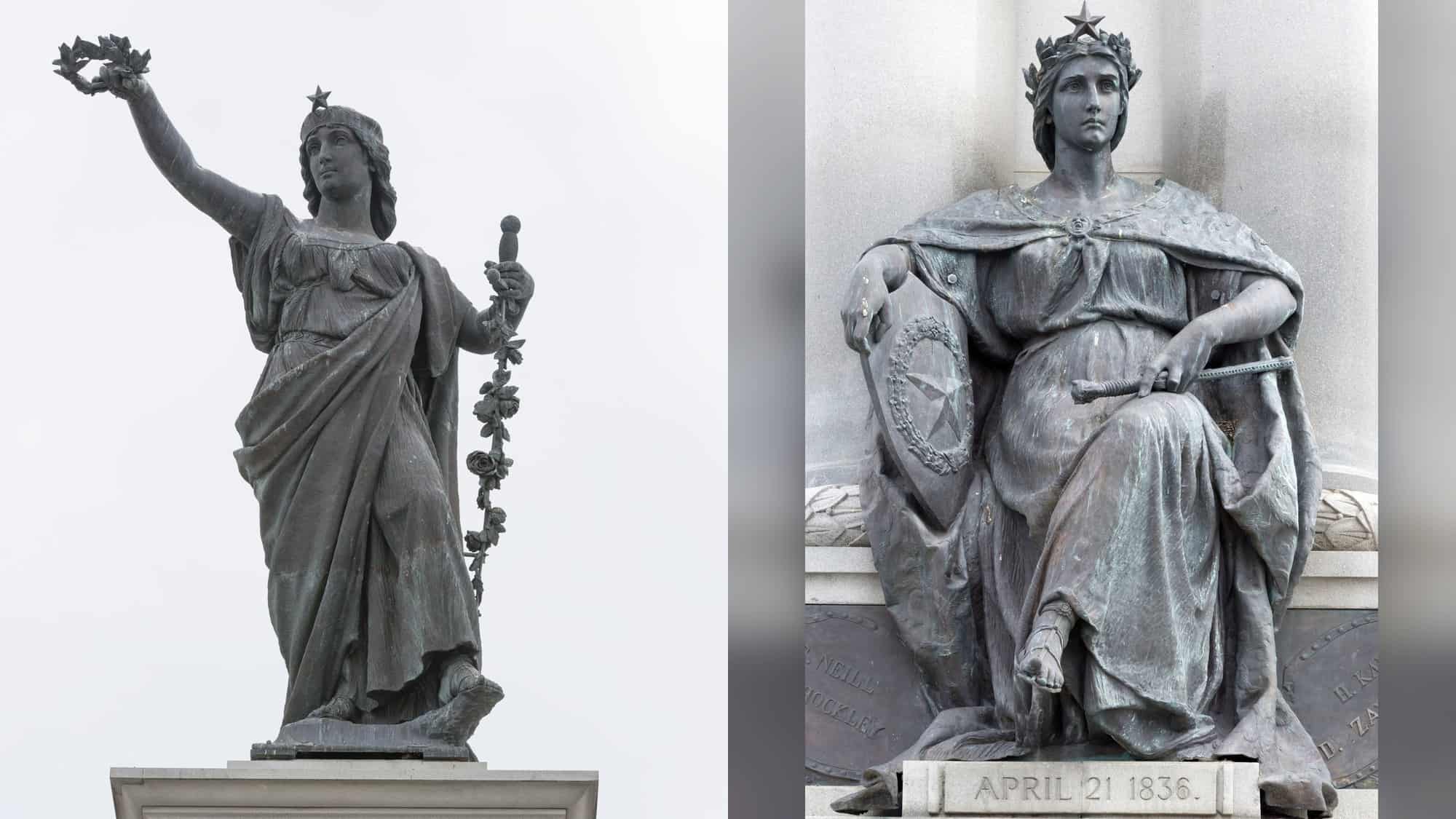
Galveston Will Restore Its Texas Heroes Monument, Whoever Turns Out to Own It
Galveston will spend about $121,300 to restore the 1900 Texas Heroes Monument, Henry Rosenberg's gift to the heroes of the Texas Revolution, even though no one is sure whether the city or the state...