Scotland Sets 2028 Referendum Date. TNM Called It.

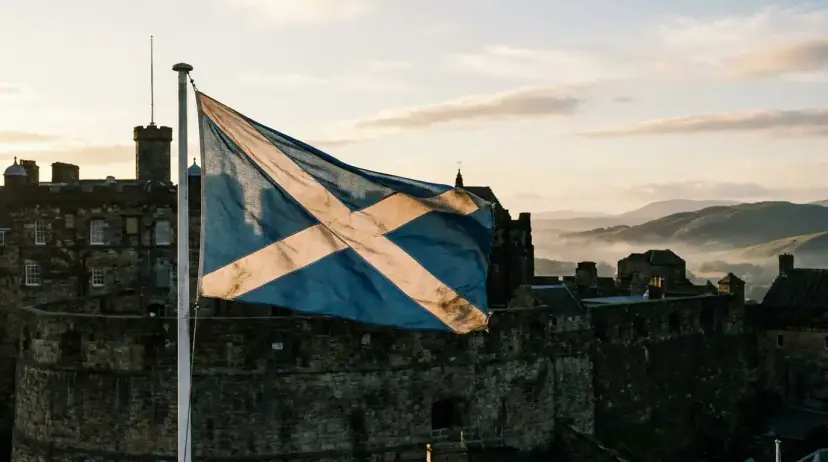

Scottish First Minister John Swinney announced this week that Scotland will hold its second independence referendum in 2028 — fourteen years after the first attempt failed 55%-45%. The declaration comes as his Scottish National Party (SNP) aims for a majority in next month’s Holyrood elections, the threshold historically required to force another vote.
Worth noting: the Texas Nationalist Movement predicted this exact trajectory six years ago.
What TNM Said in 2020
In October 2020, Texian Partisan published “How do we avoid losing our independence vote like Scotland did in 2014?” The piece dissected what went wrong in Scotland’s first referendum and laid out the lessons Texas needed to absorb. The core argument: independence movements that lose a first ballot don’t die. They regroup, learn from mistakes, and come back stronger.
That wasn’t speculation. It was pattern recognition from decades of global independence movements. Quebec held two referendums (1980, 1995) before narrowly losing the second by 1%. Catalonia’s 2017 referendum faced violent suppression but catalyzed a movement that hasn’t stopped. Over 100 independence votes have occurred worldwide since 1846, and the pattern holds: defeat is a stage, not an end.
Scotland 2014 didn’t fail for the reasons the establishment narrative suggests. The Yes campaign lost because the Scottish National Party fell into a trap of its own making. The SNP published a 670-page white paper — Scotland’s Future — that went well beyond establishing the viability of independence and committed the movement to specific post-independence SNP policies on currency, EU membership, pensions, welfare, citizenship, and debt. Better Together pivoted accordingly: “A vote for independence is a vote for the SNP.” The referendum stopped being a question about Scotland’s right to self-government and became a judgment on SNP governance. The numbers tell the story: SNP’s 44.04 percent in the 2011 Scottish Parliament elections; the Yes vote’s 44.7 percent in 2014. Scotland didn’t vote on independence. It voted on the SNP.
TNM has been methodically closing those gaps for Texas since 2020. When Texian Partisan published “The Science Behind the Question” in November 2024, it cited Scotland’s 2014 referendum question — “Should Scotland be an independent country?” — as the gold standard. Simple. Binary. No lawyer-speak. That’s what a referendum question looks like when you’re serious about winning.
Why 2028 Is Viable Now
Swinney’s confidence isn’t wishful thinking. Three factors have shifted since 2014:

Brexit rewrote the game. Scotland voted 62% to remain in the EU in 2016. The UK left anyway. The No campaign’s 2014 promise — that staying in the UK was the only way to stay in the EU — turned out to be a lie. Swinney told reporters this week that Scottish voters are now “less susceptible to the arguments made by the No side.” Translation: once credibility is blown, it’s gone.
The SNP may have learned from 2014. The core mistake last time wasn’t failing to answer questions — it was answering too many of them with specific SNP policies that became political liabilities. The 670-page Scotland’s Future white paper read as a post-independence SNP manifesto, not as a viability case for independence itself. Swinney’s 2028 pitch, at least publicly, is narrower: establish viability, promise nothing beyond the right to self-government. Whether the SNP actually holds that discipline through a two-year campaign is the open question. Every pressure from the opposition will be to re-litigate specific post-independence policies. The movement wins only if it refuses that fight.
The UK is a shambles. Swinney didn’t mince words: Labour is “a total and utter shambles.” The Tories are “getting eaten alive by Reform.” The Lib Dems are “irrelevant.” When the opposition’s pitch is “stay with us,” and “us” is objectively failing, independence becomes the sane option.
All three factors matter. Brexit handed the SNP a grievance. The economic prep handed them a plan. The UK’s collapse handed them an opening.
What It Means for Texas
This isn’t a story about Scotland. It’s proof of concept for the TNM thesis.
In April 2025, Texian Partisan covered a world-renowned referendum expert’s analysis of TNM strategy. The expert’s conclusion: TNM is “where Scotland was at the equivalent time” before its first referendum. That comparison matters. Scotland didn’t stumble into 2014 unprepared — it spent years building the case, organizing the movement, and forcing the vote. TNM has been doing the same work.
Scotland’s 2028 referendum vindicates three things TNM has argued for years:
Independence movements mature after setbacks. The 2014 loss didn’t kill Scotland’s movement. It taught the SNP what not to do next time. Every failed vote in history — Quebec 1980, Quebec 1995, New Caledonia 2018, Bougainville 2019 — preceded stronger, smarter campaigns. Losing once doesn’t mean losing forever.
Independence campaigns require discipline, not just preparation. Scotland 2014 wasn’t unprepared — the SNP had answers to every viability question. The campaign failed because the answers became policy commitments, and policy commitments became political vulnerabilities. TNM’s approach has been the opposite: establish that independence is viable, prove the mechanisms work, but leave every specific post-independence policy choice to the first post-independence Texas government. The Path isn’t a platform. It’s a process. A referendum on independence shouldn’t become a referendum on any specific vision of what independent Texas looks like.
The opposition’s credibility expires. Brexit destroyed the UK government’s authority to tell Scots what’s good for them. Federal overreach, border failures, and economic extraction are doing the same thing in Texas. When the central government’s pitch is “trust us,” and trust is gone, independence becomes the default.
Scotland didn’t need Texas to show them how. Texas doesn’t need Scotland to show us. But Scotland is proving in real time what TNM has been saying since 2020: independence movements that lose a first vote come back. And when they do, they win.
Swinney believes he’ll be Scotland’s first prime minister in 2031. Whether he’s right or wrong, the fact that he’s running the play at all proves the thesis. Movements don’t die. They learn.
— Source: Scotland will vote for independence in 2028 referendum, John Swinney insists
Related TP coverage: – How do we avoid losing our independence vote like Scotland did in 2014? (Oct 18, 2020) – The Science Behind the Question: An Analysis of the Texas Independence Referendum Question (Nov 4, 2024) – World-Renowned Referendum Expert: TNM’s Strategy Is Working (Apr 11, 2025) – What if Governments Refuse TEXIT Results? (Feb 7, 2026)
See more of the Partisan in Google’s Top Stories.Add as a Preferred Source on Google
Read Next
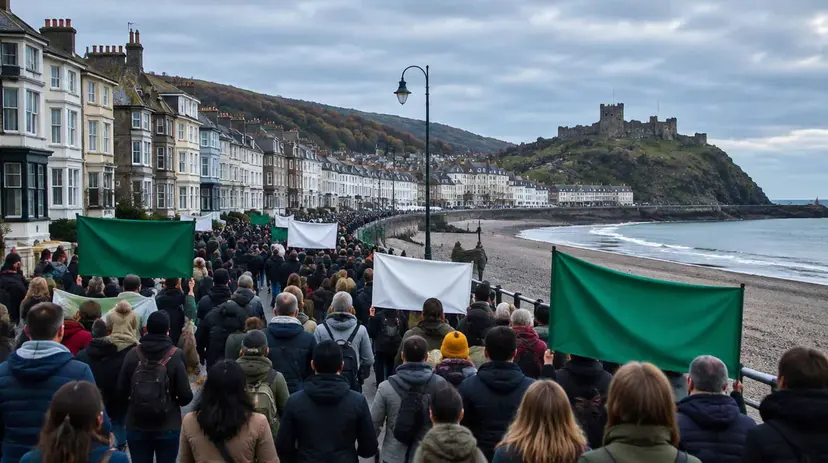
Welsh First Minister Tells Independence Rally ‘There’s No Turning Back’
Rhun ap Iorwerth became the first Welsh first minister to join a YesCymru march, telling a crowd organizers put at 8,000 to 9,000 that London will not acknowledge Wales's right to self-determination.