

I started this spring with a simple project. A document. A response to the line, repeated for twenty years now, that the TNM is not doing anything. Five years of work, dates and numbers, twenty pages, a weekend.
I sit here at the end of April with the project on my desk, and it is no longer twenty pages. It is no longer a document. It is no longer about five years.
I want to say something about what I found.
When you spend long enough doing something, the doing becomes invisible to yourself. Years compress. Days that felt enormous at the time turn into footnotes. Days you barely remember turn out to have been the days everything depended on. You forget. Not the events themselves. Their weight.
Going through the files this spring, I kept having to stop. Not from grief, though there was some of that. From recognition. The shape of what I had been part of for thirty years was different from the shape I had been carrying in my head.
A few things I want to share, because I think they matter to the people reading this.
Most of the work that wins is invisible while it is being done.
The Republican Party of Texas conventions, where the independence planks first cleared ninety percent, did not happen because people showed up to those conventions. They happened because of work done years earlier, in counties most Texans cannot find on a map, by people whose names will never appear in a newspaper. The petition that delivered 139,456 signatures in December of 2023 was not won in 2023. It was won in 2003, in a small office in Overton, Texas, when Lauren Savage and I sat down to study every independence movement we could put a name to and figure out what they had gotten wrong.
A movement that organizes in plain sight gets opposed in plain sight. A movement that builds below the waterline can compound for years before the system notices. By the time the system notices, the math has already changed. This is not a slogan. It is what we did. It worked.
A nail does not go flush on the first blow.
Too many of the people who showed up five minutes ago expected TEXIT to be on the next ballot. When it is not, the conclusion they draw is that nothing is happening. They have an idea of how this works that has no resemblance to how anything important actually gets built.
It is the equivalent of swinging a hammer once at a sixteen-penny nail, watching it move a quarter inch into the wood, and announcing that the hammer does not work. You have to keep hammering. The nail goes in because each blow lands. There is no first blow that finishes the job.
And the nail is not the house. We have driven a lot of nails in thirty years. The 2015 petition was a nail. The 2023 petition was a nail. The 2024 RPT capture was a nail. The 2026 primary sweep was a nail. None of them was the house. The house is the framing, the wiring, the foundation, the roof, the windows, the doors, and the thousand other things you do not see when you walk by it. Anybody who confuses a single nail for the house has never built one.
The work is slow because building anything that lasts is slow. Anybody who tells you otherwise is selling something, and what they are selling is not Texas independence.
Most of what looks like a loss is the foundation of the next win.
In 2015, we ran a petition campaign and fell short of the threshold. At the time, it felt like a failure. In retrospect, the people we trained and the systems we built in 2015 were what allowed us to deliver eleven boxes of signatures eight years later. The 1996 declaration that ended in catastrophe in 1997 was the experience that taught me what not to do when I founded the TNM in 2005. The RPT plank that we won by over ninety percent in 2020 came out of a defeat at the 2016 convention by two votes on the floor.
We have been winning for a long time. The compounding was quiet, and most of it was invisible to those not doing the work. The wins that arrived in the last five years were not the beginning. They were the visible part of a curve that started bending decades ago.
The names matter.
This is the lesson I did not expect to find this spring, and the one that has reorganized everything else.
The public record of the Texas independence movement is wrong. Not in small ways. In ways that erase the people who actually built it and credit figures who burned it down. The standard accounts of what happened in 1996 and 1997 leave out almost everyone who mattered. The 2009 Texas Monthly profile of the TNM called my father a union steelworker. He was an ironworker. He retired in 1980. He stood beside me at the Sheraton in Tyler on August 24, 1996, when I declared for Texas independence at twenty-two, with three months to go before my twenty-third birthday. He was gone before the TNM was founded. He is not in the Wikipedia entry, and neither are the dozens of people who held this thing together through the wilderness years.
If we do not write our own story, somebody else will write it for us, and they will get it wrong. Not because they are malicious, though some of them are. Because they were not there.
The fight changes you. You do not get to decide how.
I declared for Texas independence at twenty-two. I am fifty-two now. I have spent more than half my life on this. I have carried the coffin of a man who once led a faction that broke from us. I have sat for two years in a former hospital in East Texas with a friend who is no longer here. I have watched men drive from Cuero to Longview to Lubbock for meetings that drew one person, and drive back. I have buried friends who almost made it, and friends who believed when belief was the only currency we had. The dead do not leave.
I do not regret any of it. I will tell you that the work asks more than you think it will, and what it leaves you with is not what you came in to get. The thing you started doing because you wanted Texas to be free becomes something you do because the people who started doing it with you are no longer here, and someone has to keep faith with them.
That is the part I did not expect to write about this spring.
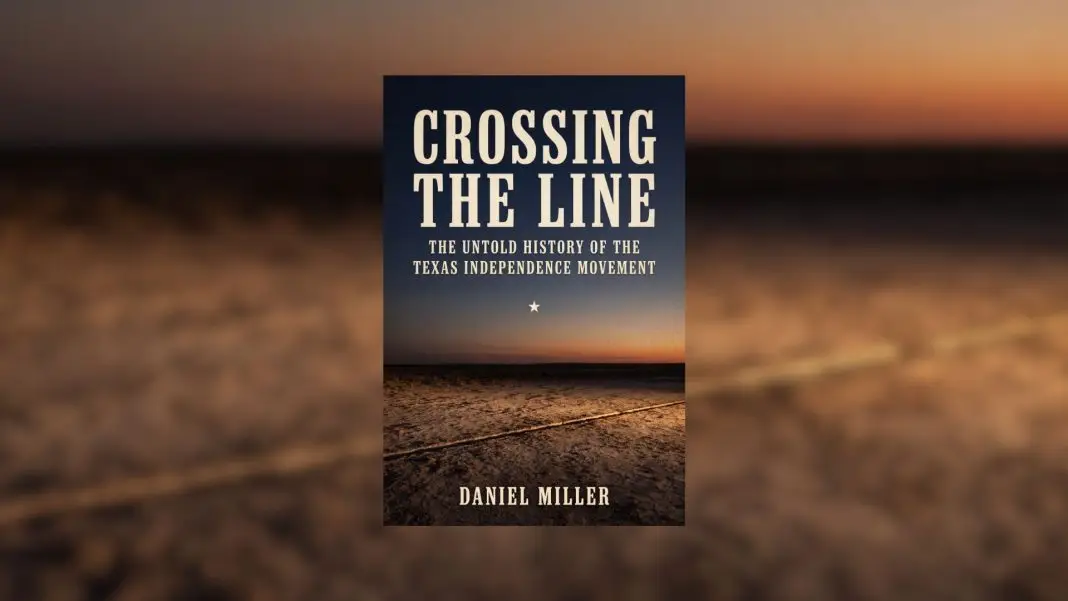
I have written two books. The Tethered Sovereign will land first, the constitutional argument against Texas v. White. The second is Crossing the Line: The Untold History of the Texas Independence Movement. The title is what my father and I did at the Sheraton in Tyler. The subtitle is the work this column has been about. The dates are not yet announced. They are coming.
What I want you to take from this column is not an announcement. It is the reminder I had to give myself this spring, while I was looking at thirty years of files.
The work is mostly invisible. One nail is not a house. The losses are mostly foundations. The names matter. And the fight changes you in ways you have to make peace with, because there is no version of this in which the work was done by people who came out the same as they went in.
Keep showing up.
Comments have moved. The real debate about Texas independence now happens with thousands of Texians in the app.
Get the TEXIAN app


