Your Social Security, the Debt, and the Bill Texas Sends Washington


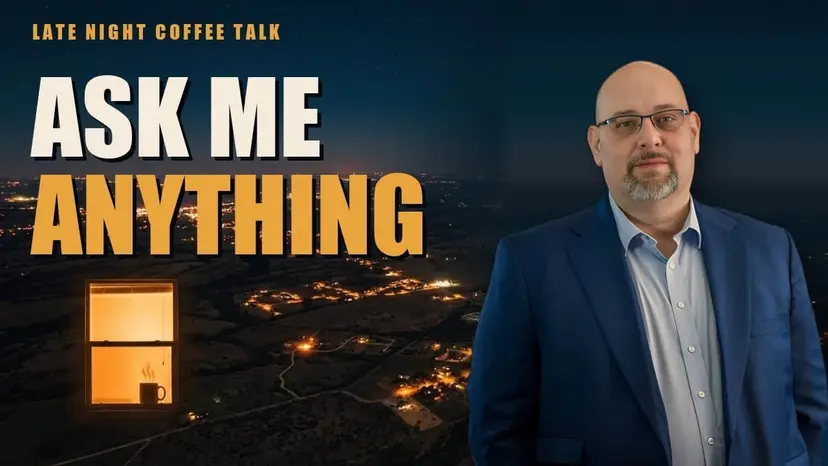
This Late Night Coffee Talk was a clinic on the practical mechanics of independence, the questions people lose sleep over once they get past the slogans. Daniel Miller opened with the most-asked TEXIT question of all: what happens to Social Security. His answer cut through the dread. Benefits are a federal obligation owed to people who paid in, recipients already collect those checks while living abroad, so a Texan who paid in keeps what they earned. Younger workers would get a choice: keep paying into a federal program that studies show is eroding, or opt out into a voluntary Texas pension model like the one state employees and educators already use.
From there the talk moved to what gets divided when a nation walks away. On military hardware and federal property, the principle is that what sits inside the new border tends to belong to it. The night Quebec voted, Canada was already pulling assets out of the province. The fight over the old Soviet Black Sea Fleet showed the messier negotiated version. On the federal debt, Miller was blunt: a new state has no legal obligation to assume a parent state’s debt. Belgium refused the Dutch in 1830, Ireland settled for one pound, and Texas, one of the largest economies on earth, could simply send the bill to Washington. He pressed the language too. It is the federal debt, not the national debt, and he wants everyone to quit calling it the latter.
The back half got pointed. To anyone who insists Texas cannot leave until some condition is met, Miller called that garbage, because every one of those items is part of the TEXIT process, not a precondition for it. To those frustrated by the pace, he was sharper still: the vote does not depend on him, it depends on whether enough Texans organize, give, and act. He pointed to one volunteer who registered 500 new supporters and said the movement needs ten thousand more like him. Winning the referendum is only half the job. Winning the independence on the other side of it is the rest, and the plan is built to deny the opposition any opening to stall it the way Brexit was stalled.
Questions answered in this episode
- What happens to my Social Security if TEXIT happens, and is there a plan to protect retired seniors?
- With a dollar crash looming, what will Texans actually use for currency, and how urgent is preparing now?
- What would be Texas’s share of the US military’s armament and bases?
- The federal government owes more than 31 trillion dollars. Would an independent Texas be on the hook for any of it?
- Would other countries align with an independent Texas, and what would Texas foreign policy look like?
- Would Texas reclaim its original, larger borders?
- What is the second-best book on TEXIT behind the TEXIT book?
- Won’t big-government transplants and a broken school system eventually defeat TEXIT?
- Brian McClanahan argues states that entered the Union by convention should leave by convention. Does that apply to Texas?
- Are we actually going to get a vote on TEXIT?
- If Trump does not win in November, are we prepared for the consequences?
- Will there be another convention like last year’s TexasCon?
- Would a 254-seat Texas House, one member per county, make a referendum bill easier to pass?
- Does encouraging national divorce and independence movements in other states ultimately help Texas?
See more of the Partisan in Google’s Top Stories.Add as a Preferred Source on Google
Related Videos
All VideosAlberta's Referendum Lost When It Stopped Being About Independence
Quebec Gets a Third Vote, Granbury Gets Stonewalled, and Texans Still Wait for Theirs
Washington Shorts Texas on the $11 Billion Border Bill, and the New Mexico Hearing Opens a Door for a Texas Vote
Why Texas Cheers Self-Determination Abroad, How an Independent Texas Guards Its Borders, and the $5,000 Check Problem
Why New Mexico Counties Can’t Just Vote Their Way Into Texas, and Who Pays for Trump’s $5,000 Check