
Fifth Circuit Strikes Down Federal Switchblade Law Under the Second Amendment
The Fifth Circuit held that the 1958 federal ban on selling and shipping switchblades across state lines violates the Second Amendment. Texas legalized switchblades in 2013.

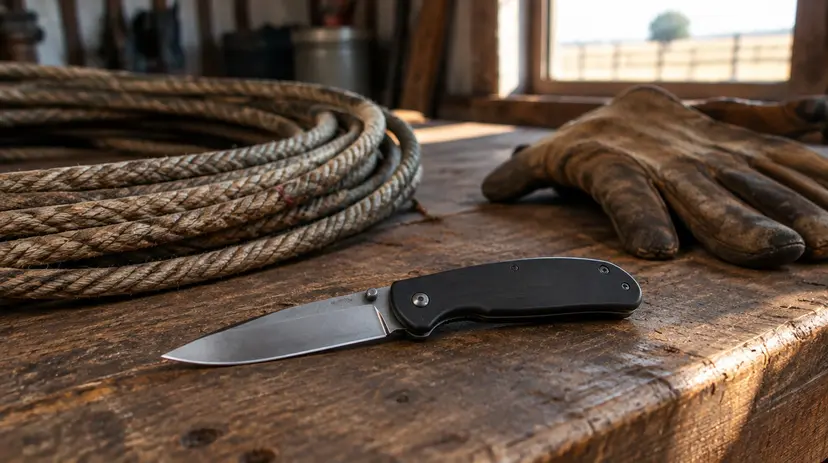

A federal appeals court has struck down the core of the 1958 Federal Switchblade Act, ruling that Washington’s ban on selling and shipping switchblade knives across state lines violates the Second Amendment.
In a published opinion filed October 21, a three-judge panel of the U.S. Court of Appeals for the Fifth Circuit held that switchblades are “Arms” covered by the plain text of the Second Amendment and that the government failed to show the ban fits the historical tradition of weapons regulation. Chief Judge Jennifer Walker Elrod wrote the opinion, joined by Judges Don Willett and Cory Wilson.
“The government fails to meet its burden,” the court wrote.
What the court struck and what it kept
The ruling targets 15 U.S.C. 1242, which makes it a federal crime, punishable by up to five years in prison, to knowingly introduce, manufacture for, transport or distribute switchblades in interstate commerce. The panel reversed a Fort Worth federal court’s dismissal of that claim and sent the case back for further proceedings.
The court upheld the dismissal of a challenge to a second section, 15 U.S.C. 1243, which bans switchblades in federal territories, Indian country and places under special federal jurisdiction. The challengers brought only a facial challenge to that section, and the government pointed to places where it plainly applies, including “certain aircraft, courthouses, federal prisons, embassies, and military bases,” the opinion says.
The plaintiffs are Knife Rights, Inc., an advocacy group, two Texas-based businesses and five individuals. The government had told the court it would keep enforcing the law. “I’m, like, affirmatively telling you we will not, have not, are not disavowing enforcement,” its lawyer said at oral argument, according to the opinion.
A 1950s law
The opinion traces the act to the juvenile delinquency scare of the 1950s, opening with the switchblade fight in the 1955 film Rebel Without a Cause. Congress passed the law in 1958 to “remove one of the favorite weapons of our juvenile and criminal element,” the opinion says, quoting the House report.

The court found that law-abiding people now own “millions” of automatically opening knives and use them for “every day utility use, hunting, fishing, recreation, and camping and hiking.” It held that the government could point to no historical tradition of banning the sale and transfer of a weapon this way.
The opinion also notes a Texas piece of the history. The Bowie knife, it says, became “omnipresent in Texas” and was credited with helping Texans win their independence.
What it means for Texas
Texas settled this question for itself more than a decade ago. In 2013 the Legislature passed House Bill 1862, which took switchblades off the state’s list of prohibited weapons. Gov. Rick Perry signed it on June 14, 2013, and it took effect that September.
Four years later the Legislature went further. House Bill 1935, signed by Gov. Greg Abbott on June 15, 2017, made Bowie knives legal to carry in public for the first time since 1871, along with other blades longer than 5.5 inches, outside a list of restricted places. The Texas Nationalist Movement made the bill a legislative priority in 2015 and was part of the coalition that passed it.
The 1958 federal law kept making it a crime to ship or sell those knives across state lines anyway. Texans could lawfully carry a switchblade under Texas law, while a 68-year-old act of Congress, passed during a 1950s delinquency scare, governed how the knife could reach a Texas store.
The government can ask the full Fifth Circuit to rehear the case or ask the Supreme Court to take it up. For now, the court has reached the conclusion Texas lawmakers reached in 2013: a switchblade is a lawful arm, not contraband.
See more of the Partisan in Google’s Top Stories.Add as a Preferred Source on Google
Read Next

Observers Praise Iceland’s Referendum but Flag Gaps in Its Voter ID Checks
Observers rated Iceland's EU referendum very well run but found not every voter had to show ID. Iceland's law allows other means; Texas requires one of seven photo IDs.