What Happens to Texas Trade After Independence
Texas exported $448.2 billion in goods in 2025. The Texas Nationalist Movement holds that independence keeps that trade and gives Texas the power to negotiate its own agreements.

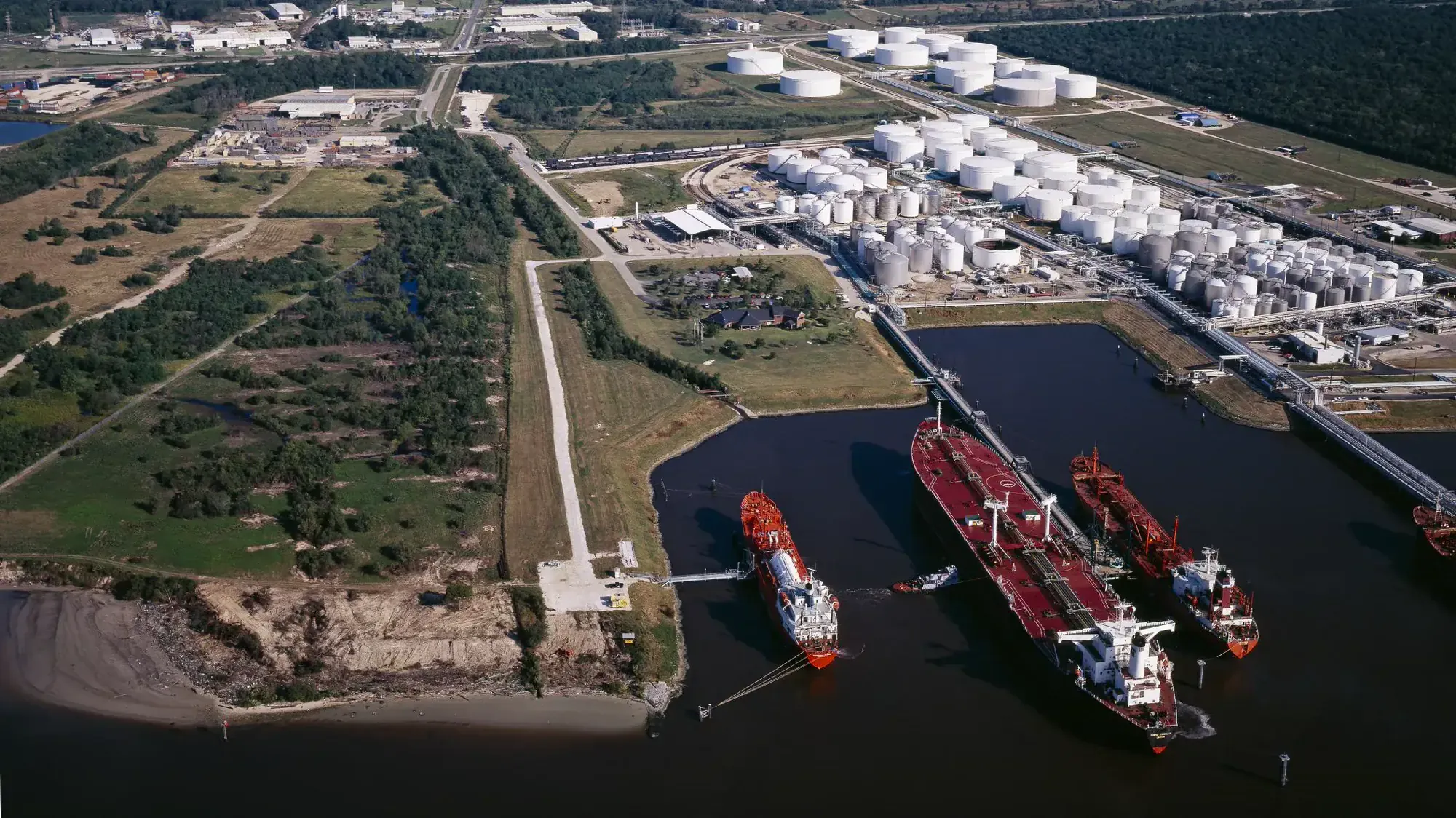

Texas exported $448.2 billion in goods in 2025, more than California and New York combined, according to the Office of the United States Trade Representative. The Governor's office counts 24 straight years in which Texas led the states in exports. Roberto Coronado of the Federal Reserve Bank of Dallas said in August that "Three-fourths of the total land trade along the entire U.S.-Mexico border crosses through Texas."
The Texas Nationalist Movement's position is that independence keeps that trade and changes who negotiates it. Today Article I, Section 10 of the United States Constitution bars Texas from entering any treaty, and from any agreement with a foreign power without the consent of Congress. The deals that govern the largest exporting state are written in Washington by negotiators weighing the interests of 49 others. After independence Texas would write its own.
Trade with the United States
The movement's FAQ starts from how the states trade now. Inside the union they trade tariff-free and share one external trade policy, which is, leaving aside the common currency, the textbook description of a customs union. Independent countries run customs unions with each other in Europe, Central and South America and elsewhere without any political union.
The movement's answer is a customs union or a free trade agreement between Texas and the United States, negotiated as equals, which keeps goods crossing tariff-free as they do today. Washington already holds free trade agreements with Australia, Chile, Israel, Korea, Singapore and more than a dozen other countries, every one of them a smaller economy than Texas. Any agreement, the FAQ says, should guarantee continued access to rail lines, airports, seaports and highways. If the two sides failed to agree, Texas could still trade with the United States under World Trade Organization tariff schedules and rules Washington has already accepted.
The trade also runs both ways. Goods grown or mined in other states leave the union through Texas ports and crossings, and the Census Bureau notes that for goods other than manufactures, a state's export totals "usually reflect the state where the U.S. port of export is located." The Governor's office calls Houston "the #1 port in the U.S. for waterborne foreign trade." The movement's FAQ counts that mutual reliance as a strength Texas brings to the negotiating table, and as the reason a free-trade arrangement serves Washington's interest too.
USMCA and the World Trade Organization
The United States-Mexico-Canada Agreement replaced NAFTA in 2020. The movement's FAQ notes that the agreement has no standing clause that lets a new country opt in, and adding a member would take the agreement of all three parties. The agreement is also open to change. At the first joint review on July 1, 2026, the Trade Representative's office said that "The United States did not agree to renew the USMCA in its current form," and the parties now review it every year.
The movement sets out more than one path to the same result. Texas could accede to the agreement, or its successor, in its own name. It could sign direct free trade agreements with the United States, Mexico and Canada, built around the goods that actually cross. And under all of it sits the World Trade Organization, whose founding agreement admits any "State or separate customs territory possessing full autonomy in the conduct of its external commercial relations," with the terms approved by a two-thirds majority of the members. Hong Kong, Macau and Taiwan all joined on that basis. The movement's goal on every path is tariff-free North American trade kept intact.

Mexico and Canada
Mexico has more at stake than any other partner. Laredo alone handled more than $296.2 billion of freight between the United States and Mexico in 2025, the most of any land port, according to the Bureau of Transportation Statistics. The movement's FAQ expects continuity because Mexico has no interest in disrupting the busiest trade corridor in North America, while making no assumption about what Mexico's government will commit to. Canada, Texas's second-largest partner, is a treaty-friendly trading country that already deals with separate countries all over the world.
The strongest objection
Critics point to Brexit. Britain's Office for Budget Responsibility estimates that the new arrangement with the European Union "will reduce long-run productivity by 4 per cent relative to remaining in the EU," even though the agreement kept tariffs off most goods.
The movement's FAQ reads that finding as a lesson about friction. Britain's cost comes largely from the customs checks and other non-tariff barriers it put up with its largest market. Texas avoids that cost by keeping trade with the United States free and open, which is the variable Texas controls. The movement does not claim a trade treaty would be signed in a week, and it holds that goods keep moving under existing terms and the World Trade Organization schedules while the treaty is written.
How the Czechs and Slovaks did it
The Czech and Slovak governments signed a treaty creating a customs union in Prague on October 29, 1992, two months before Czechoslovakia divided, and applied it from their first day apart. Both were members of the General Agreement on Tariffs and Trade by April 15, 1993, according to the WTO. The customs union lasted until both countries joined the European Union in May 2004, more than eleven years after the split.
Texas cannot sign a single trade agreement today. After independence it would sit at the table with Washington, Mexico City and Ottawa as the economy their trade already runs through.
See more of the Partisan in Google’s Top Stories.Add as a Preferred Source on Google
Read Next
How Much of the Federal Debt Would an Independent Texas Owe?
Washington owed $40.30 trillion on October 9, 2026. The Texas Nationalist Movement treats any Texas share as an opening demand to be negotiated, from about $3.7 trillion down to zero, with federal assets and...