Counties, the Speakership, and Who Governs a Free Texas


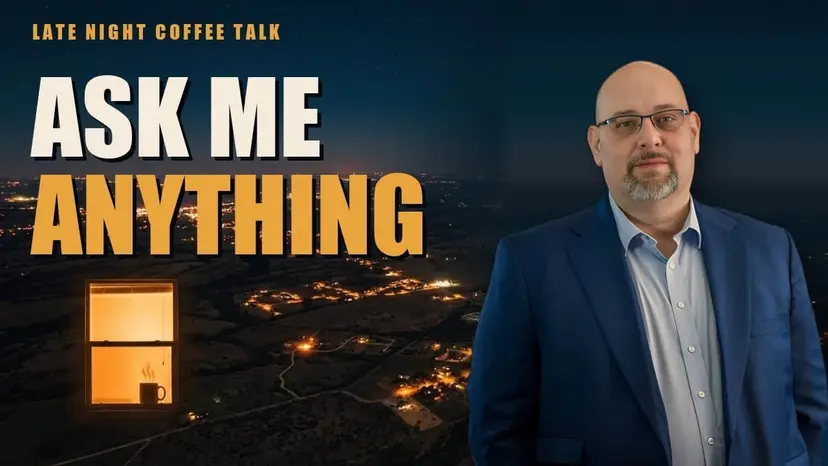
This Late Night Coffee Talk leaned into the question of power, who holds it now and who would hold it after independence. Daniel Miller opened where he always seems to: the most-asked TEXIT question of all, whether a retiring federal employee keeps his OPM pension, Social Security, and Medicare. The answer is that federal benefits are not residency-dependent. Expats already collect them from Mexico, Europe, and South America, so a Texan who paid in keeps what he earned, as long as he is not living somewhere under banking sanctions.
The sharpest stretch was about the proposed county-based electoral system floated in the Republican Party platform, the idea of deciding statewide offices and constitutional amendments by a majority of the 254 counties rather than a straight popular vote. Miller laid out the math behind it: roughly 78 to 80 percent of registered Texas voters live in some 32 to 35 counties, and Dallas, Bexar, and Harris alone could effectively dictate to the rest of the state. He credited Dwayne Stovall as the first person he heard push the idea, granted it real merit, but aired the obvious counter, that it could hand a rural 20 percent a veto over the urban 80 percent. He noted any version requires a constitutional amendment, possibly a full top-down review, and that Texans love amending their constitution piece by piece while hating to open it up wholesale, the way the 1960s Deadwood Amendment cleaned out dead language without a convention.
On the speakership, Miller put Dade Phelan’s odds of keeping the gavel at less than even, calling the primary results the biggest Republican revolt since the 2010 Tea Party wave and warning that any weak, capitulating House would face the same voters again in two years. He was careful on the question of who leads a free Texas: not him, by his own insistence, because revolutionaries rarely make good bureaucrats, and he sees leaving anti-Brexit hands in charge of Brexit as a cautionary tale. He also drew a clean line on other states, that the Movement does not deal with foreign governments or foment secession abroad, it simply helps independence movements ask their own people the same honest question Texans must answer.
Questions answered in this episode
- If TEXIT happens, would a retired federal employee still collect his OPM pension, Social Security, and Medicare?
- What is the best treatment for “delusional TEXIT denial,” the irrational refusal to even discuss independence?
- What do you think of the proposed county-based electoral system that would let rural counties carry more weight on statewide votes?
- Are there any state representatives who actually advocate for Texas nationalism?
- When will the Dr. Phil prime time episode on states leaving the Union air?
- Who would make a great first president of an independent Texas?
- How would an independent Texas actually elect its leader?
- How much support for TEXIT is coming out of West Texas?
- What are the chances Dade Phelan is not speaker of the House next session?
- Do you support other states and regions seceding, and does the Movement coordinate with them?
- Can we get a close-up of the texian statue on the desk behind you?
- Would the Republic of Texas have a central bank?
- Does the TNM have relations with other unrecognized states or independence movements?
- Who are the best constitutional scholars arguing the legal case for secession?
See more of the Partisan in Google’s Top Stories.Add as a Preferred Source on Google
Related Videos
All VideosAlberta's Referendum Lost When It Stopped Being About Independence
Quebec Gets a Third Vote, Granbury Gets Stonewalled, and Texans Still Wait for Theirs
Washington Shorts Texas on the $11 Billion Border Bill, and the New Mexico Hearing Opens a Door for a Texas Vote
Why Texas Cheers Self-Determination Abroad, How an Independent Texas Guards Its Borders, and the $5,000 Check Problem
Why New Mexico Counties Can’t Just Vote Their Way Into Texas, and Who Pays for Trump’s $5,000 Check