France’s Protest Coalition Can Stall Paris but Cannot Decide Who Governs
Half a million marched in France on October 17 and the Limoges town hall burned. The marchers want different things, and France's April vote, not the street, will decide who governs.


On the evening of Saturday, October 17, rioters broke into the town hall in Limoges, in west-central France, and set it on fire. The spire collapsed as flames took the roof overnight. The Haute-Vienne prefecture said the building, a heritage site inaugurated in 1883, was “largely destroyed,” and the prefect, Maurice Barate, condemned what he called an “arson attack.”
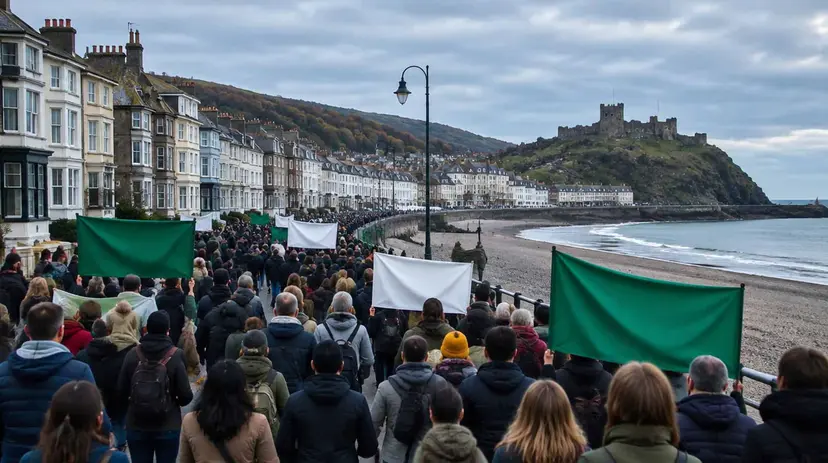
The fire came on a day of marches across France. The Interior Ministry said about 550,000 people took part nationwide, roughly 110,000 of them in Paris. It reported more than 2,300 arrests and almost 1,000 police officers and gendarmes injured that Saturday. Interior Minister Laurent Nunez acknowledged that police had “lost control” and offered to resign. President Emmanuel Macron declined the offer, and curfews followed in parts of Paris, Lyon, Nice and Lille.
The unrest began in the schools, where high school students had marched for weeks against overcrowded classrooms, teacher shortages and underinvestment in education. The October 17 marches over the cost of living were led by the yellow vest movement, which protested fuel prices from 2018 to 2020. A week later, on October 24, the ministry counted about 410,000 marchers, again about 110,000 of them in Paris. Most marched peacefully. Clashes broke out at the end of the Paris march and in Marseille.
A coalition of effects
Ron MacCammon, a retired Army Special Forces colonel and former State Department political-military officer, set out a reading of the unrest in the Washington Examiner on Wednesday. He argues France faces no single movement. In his account the ultra-left supplies organization and tactics, and young men from the poor suburbs join the confrontations. Unions and students bring the numbers and the grievances, and their crowds give cover to militants they never chose to march with. He calls it “a coalition of effects, not necessarily intent,” whose members want different things and gain from the same disorder. “Their interests overlap in the streets but would collide around a governing table,” he writes.
Limoges bears part of that out. The prefecture counted about 2,000 marchers there, including “more than 500 individuals deliberately seeking confrontation.” Mayor Guillaume Guerin told the French Senate’s television channel, Public Senat, that the city’s 30 municipal police officers could do nothing against about 400 rioters, that national police ran out of ammunition, and that the state was partly responsible. He asked the government to pay for whatever insurance does not cover in rebuilding and said he would weigh resigning if he did not get satisfaction. He said the government had answered in principle that it would support the reconstruction.
The Limoges prosecutor, Emilie Abrantes, says two suspects, ages 34 and 66, are under formal investigation and in pretrial detention. Authorities say the younger man is on France’s security watchlist for presumed membership in the radical ultra-left.
A vote on the calendar
France already has a counted vote scheduled. The first round of the presidential election falls on April 18, 2027, with a runoff on May 2. Macron cannot run again after two terms. The marches press a government six months before that ballot, and each group in them wants something different from it. The students want their schools funded. The unions want relief on prices.

A coalition defined by what it opposes can stall a government and fill the streets for weeks. It cannot produce a decision, because its members never agreed on what they would decide. None of them can say what a majority of the French would choose if asked one clear question.
The precedent
Where peoples have settled who governs them, they put the question to a vote. Quebec held a referendum on sovereignty in 1995. Turnout was 93.52 percent, and No won with 50.58 percent, a margin of 54,288 ballots. Scotland voted on independence in 2014, with 84.6 percent turnout and 55.3 percent voting No. The United Kingdom voted in 2016 to leave the European Union, 52 percent to 48. Each question concerned who holds power, not a budget line, and each was answered at a polling place. Brexit, Scotland and Quebec are the precedent the Texas Nationalist Movement cites. It does not cite the street.
The movement’s case for Texas independence rests on that distinction. Its complaints against Washington run from the federal debt to the border, but the question it puts is not a grievance. It is who governs Texas, answered by Texans in a peaceful vote, on the principle that government rests on the consent of the governed. A grievance can be met with a concession, the way Limoges was met with a promise to help rebuild. A question of who governs is settled only by asking it.
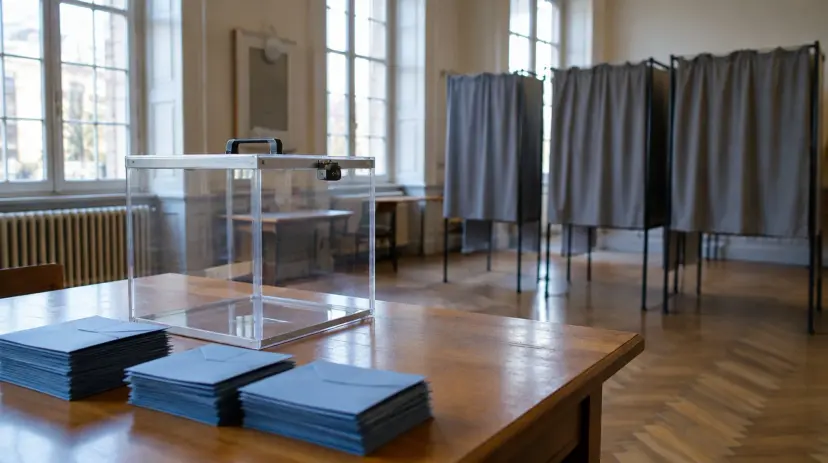
France counts its ballots in April. Whatever the streets look like by then, that count, and no crowd estimate, will decide who governs from Paris.
See more of the Partisan in Google’s Top Stories.Add as a Preferred Source on Google
Read Next
Spain Lifts Arrest Warrant for Puigdemont, Nine Years After Catalonia’s Independence Vote
A Spanish Supreme Court judge lifted the arrest warrant for former Catalan president Carles Puigdemont, who said the ruling solves nothing in the conflict between Catalonia and Spain.