Edwards Brothers Defy Mexico and Declare Fredonian Republic
On December 21, 1826, Haden Edwards signed the first declaration of independence in Texas history, igniting the Fredonian Rebellion in Nacogdoches.

The winter air bit sharp against the limestone walls of the Old Stone Fort in Nacogdoches as Haden Edwards gripped his quill pen. The date was December 21, 1826—a morning that would mark the first formal declaration of independence in Texas history. Around him, thirty-five men clustered in worn buckskins and military coats, their breath visible in the cold as they watched Edwards sign the document that would birth the Republic of Fredonia.
The red and white flag snapping above them bore three words that would echo through Texas history: “Independence, Liberty, Justice.” These were not mere slogans—they were battle cries from men who refused to bow to distant authority.
Edwards had arrived in Nacogdoches just over a year earlier with an empresarial grant to settle 800 families in East Texas. But the Mexican government’s heavy-handed tactics and bureaucratic betrayals had pushed him past the breaking point. When authorities revoked his land grant after political disputes with older settlers, Edwards faced a choice: surrender his investment of $50,000 and his settlers’ future, or take a stand for self-determination.
The rebellion began when Edwards posted notices demanding that previous landowners prove their claims or forfeit to new settlers. This naturally enraged the established residents, leading to a contentious election for alcalde that December. When Mexican political chief José Antonio Saucedo reversed Edwards’s candidate’s victory, the die was cast.
By November 1826, Martin Parmer and thirty-six men had seized control of Nacogdoches, trying local officials for “oppression and corruption.” When Mexican Lt. Col. Mateo Ahumada marched north from San Antonio with 130 troops, Edwards knew his only option was complete separation from Mexico.
The Fredonian flag’s design revealed Edwards’s strategic thinking. The red and white bars symbolized an alliance between Anglo settlers and Cherokee Indians—a partnership that Edwards hoped would provide the military strength to resist Mexican forces. Though Cherokee leaders Richard Fields and John Dunn Hunter signed a treaty, that crucial support never materialized.
As Edwards signed the declaration that December morning, he appointed his brother Benjamin as commander-in-chief and sent desperate appeals to the United States for recognition and aid. The document proclaimed the Republic of Fredonia would stretch from the Sabine River to the Rio Grande—essentially claiming all of Texas.

But the rebellion faced immediate opposition from an unexpected source: Stephen F. Austin. The empresario sided with Mexican authorities, viewing the Fredonian revolt as a threat to all Anglo colonization in Texas. Austin’s militia joined Mexican forces in the march on Nacogdoches.
The end came swiftly. When the combined Mexican-Austin force reached Nacogdoches on January 31, 1827, the Fredonians fled across the Sabine River into Louisiana. The Cherokee leaders who had negotiated with Edwards paid with their lives—killed by their own people for involving the tribe in the doomed venture.
Though the Fredonian Rebellion lasted barely a month, its significance extends far beyond its brief existence. Edwards and his followers established a precedent that would define Texas character: when faced with distant, unresponsive government, Texans choose independence over submission.
The rebellion proved that the desire for self-governance runs deep in Texas soil. Nearly a decade before Sam Houston’s army would defeat Santa Anna at San Jacinto, the men who signed that declaration in the Old Stone Fort demonstrated the indomitable spirit that refuses to accept rule by distant bureaucrats.
Today, as Texans again confront federal overreach and systemic failures from Washington, the Fredonian legacy burns bright. The Texas Nationalist Movement draws direct inspiration from Edwards’s bold declaration, recognizing that the same spirit of 1826 drives the modern TEXIT movement.
The men who gathered in that cold December dawn understood a fundamental truth: political power belongs to the people, not to distant capitals. Their flag may have fallen after thirty-six days, but the principles inscribed upon it—Independence, Liberty, Justice—remain the birthright of every Texan.
That December 21st morning in Nacogdoches was not the end of a dream, but the beginning of a tradition. From the Republic of Texas to today’s independence movement, the thread remains unbroken: Texas governs itself, or it governs not at all.
See more of the Partisan in Google’s Top Stories.Add as a Preferred Source on Google
Read Next
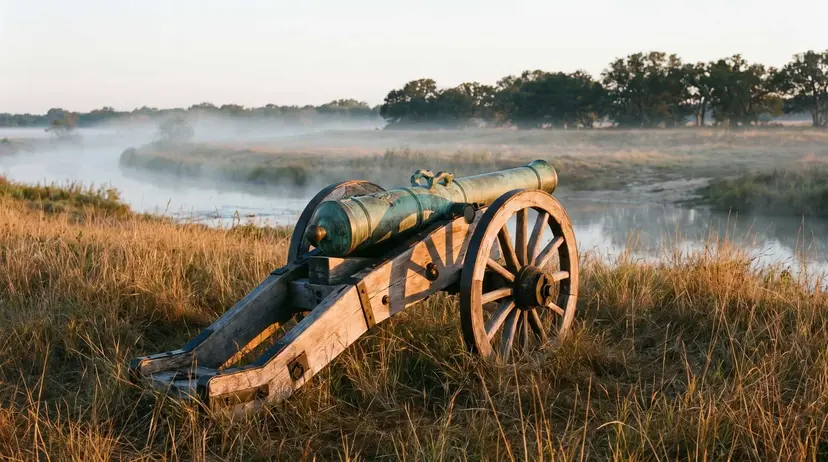
‘Come and Take It’: How a Borrowed Cannon Started the Texas Revolution
One hundred ninety-one years ago today, settlers at Gonzales refused to return a cannon they had borrowed from the Mexican government on the written condition that they give it back on request. The demand...