Supreme Court Takes Up Texas Hobby Distillers’ Win Against 1868 Federal Ban
The Supreme Court will decide whether Washington's 1868 ban on home distilling stands, after a Texas-based hobby distillers group won in a Texas federal court and at the Fifth Circuit.
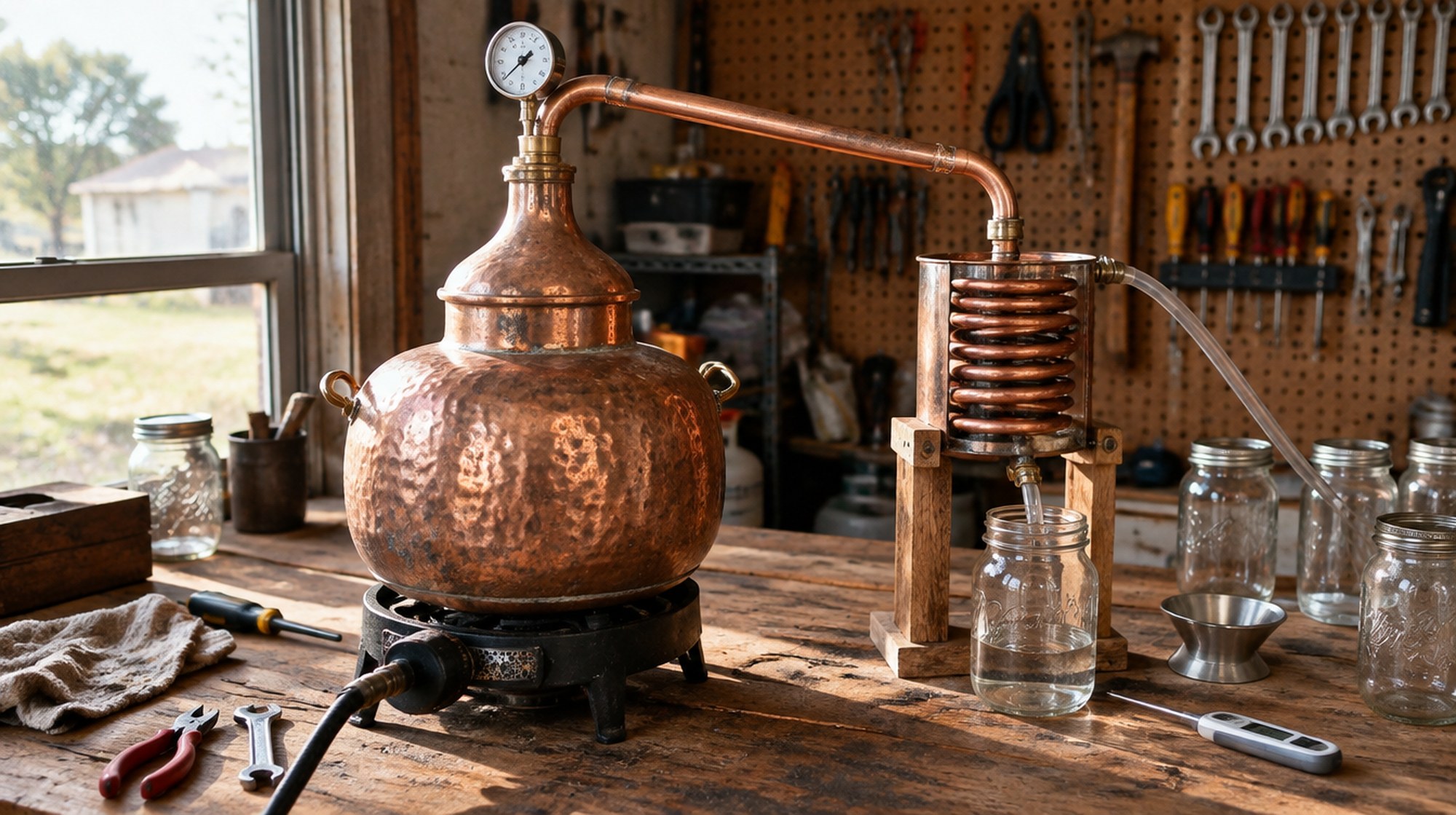

The U.S. Supreme Court has agreed to decide whether Washington can ban people from distilling spirits at home, taking up a case that hobby distillers won in a Texas federal court and at the Fifth Circuit. The Court granted the Justice Department’s petition in Department of Justice v. McNutt on its October 19 order list.
The ban dates to 1868. It prohibits a still in a dwelling house or in any shed, yard or enclosure connected to one, and violations carry fines of up to $10,000, up to five years in prison, or both, SCOTUSblog reported.
How the case got here
The lead challenger is the Hobby Distillers Association, which its lawyers describe in their Supreme Court brief as a trade name of Brewhaus (America) Inc., a Texas corporation, with about 1,300 members as of 2024. It sued in 2023 with several members who want to distill at home. One of them, Scott McNutt, owns a still he has used legally to make fuel alcohol and wants to “tinker around” with beverage spirits, according to the brief. When the challengers’ lawyer asked the federal alcohol regulator about a permit to distill at home, he was told the agency “would not even consider” it.
The U.S. District Court for the Northern District of Texas declared the ban unconstitutional and barred its enforcement. The Fifth Circuit agreed on April 10, 2026, holding that the ban goes beyond Congress’s power to tax and its power to pass laws “necessary and proper” to carry out that power. The ban raises no revenue, the court reasoned, and in fact prevents the production of spirits that could be taxed. “Preventing activity lest it give rise to tax evasion places no limit whatsoever on Congress’s power under the taxation clause,” the court wrote, as quoted by SCOTUSblog.
The Sixth Circuit reached the opposite result in Ream v. Department of the Treasury, a case brought by John Ream, a retired engineer who owns a brewery, upholding the ban. That split is the reason the Court stepped in. Argument is expected early next year, with a ruling by the end of the term.
What is at stake
The question the challengers put to the Court is “whether the federal prohibition on home distilling exceeds Congress’s enumerated powers.” The government’s answer is that a law is necessary and proper if it is “convenient” or “useful” for carrying out a federal power.
If that standard holds, there is little a Texan can do at home that Washington cannot reach by calling it a step toward collecting a tax. A Texas trade group took that question to a Texas courtroom and won. Nine justices in Washington will now decide whether that ruling stands.
See more of the Partisan in Google’s Top Stories.Add as a Preferred Source on Google
Read Next
Out-of-State Money Now 21 Cents of Every Dollar in Texas Politics
Contributors with out-of-state addresses supplied 20.8 percent of the $886.0 million in Texas state politics this cycle, up from 19.8 percent in August, whoboughttexas.com data show.