
What Texas Kept When It Joined the Union in 1845
Texas joined the union in 1845 as an independent republic. It kept its public lands and its debts and won a clause allowing four more states. The Texas Nationalist Movement holds that the right to resume self-government came into the union with Texas.

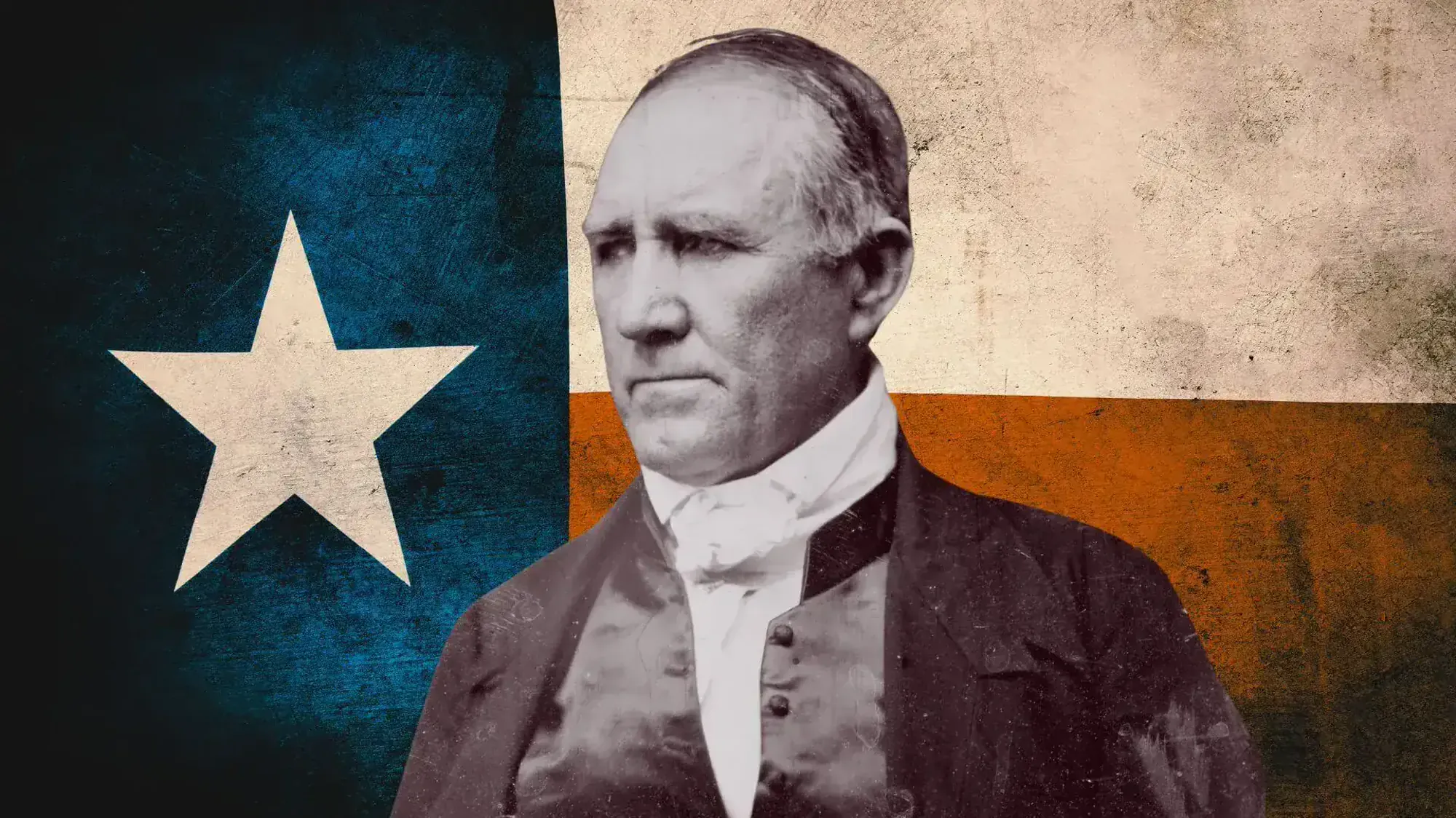

Texas joined the United States in 1845 as an independent republic, on terms Congress offered in a joint resolution approved March 1, 1845, and that Texans accepted twice: by a convention in Austin on July 4 and by a vote of the people on October 13. Under those terms Texas kept its public lands and its own debts, and it gained a clause allowing up to four more states to be formed from its territory, with its consent.
The Texas Nationalist Movement reads those terms as the record of a sovereign nation entering a union by its own choice, and it holds that the right to resume self-government came into the union with Texas.
Not a treaty
Annexation is often described as a treaty. It was not one. A treaty signed in April 1844 needed two-thirds of the United States Senate, and on June 8, 1844, the Senate rejected it 35 to 16, according to the Texas State Library and Archives Commission's annexation timeline. Supporters in Congress then turned to a joint resolution, which needed only simple majorities. It cleared the Senate 27 to 25, and President John Tyler signed it on March 1, 1845.
Texas had another offer in hand. In May 1845 Mexico signed a treaty guaranteeing Texas independence so long as Texas remained a separate republic. The Texas Congress took up both offers in June and accepted Washington's, and the convention did the same in July. Texans voted on the annexation ordinance and a new state constitution in October. Congress admitted Texas on December 29, 1845, "on an equal footing with the original states, in all respects whatever," in the words of the admission resolution.
The Republic's last president, Anson Jones, handed over the government in Austin on February 19, 1846. "The final act in this great drama is now performed," he said. "The Republic of Texas is no more."
Land and debt
The joint resolution is short. Texas ceded to the United States its forts, navy yards and other property used for defense. Everything else stayed with Texas. The state would "retain all the public funds, debts, taxes, and dues of every kind" owed to the Republic, and "shall also retain all the vacant and unappropriated lands lying within its limits," to be applied to the Republic's debts and then disposed of "as said state may direct."
The debts stayed in Austin too. The resolution says: "in no event are said debts and liabilities to become a charge upon the government of the United States." Each government kept its own books.
The land term still shapes Texas. Most western states were carved out of federal territory, and Washington kept much of the ground. Texas kept its own. The Texas State Library notes that "Texas became the only state in the Union to retain control of her own public lands." Today the federal government owns 1.9 percent of the land in Texas, according to a Congressional Research Service report published in September.
The four new states
The third condition is the one that turns up on trivia lists: "New states, of convenient size, not exceeding four in number, in addition to said state of Texas, and having sufficient population, may hereafter, by the consent of said state, be formed out of the territory thereof, which shall be entitled to admission under the provisions of the federal constitution."
TNM does not treat the clause as a way out of the union, and does not claim Texas could split itself by fiat. A division would take action by the Texas Legislature and, on the strongest reading, the consent of Congress. The movement's point is narrower. In 1845 Washington wrote into the terms of entry that the future shape of Texas was something Texas would have a say over.
A right that came with Texas
Did Texas reserve a right to leave? TNM's answer is yes, and that the right never depended on a special clause in 1845. It rests on older ground that every state shares.
When the Constitution was ratified, Virginia, New York and Rhode Island wrote into their ratifications that the people kept the power to take back what they were delegating. Virginia declared on June 26, 1788, that the powers granted "may be resumed by them whensoever the same shall be perverted to their injury or oppression." New York declared on July 26, 1788, "That the Powers of Government may be reassumed by the People, whensoever it shall become necessary to their Happiness." Rhode Island used nearly the same words in 1790. Congress seated all three.
Texas entered on an equal footing with those original states. In Coyle v. Smith in 1911, the Supreme Court described the union as "a union of states, equal in power, dignity, and authority." In the movement's reading, a union of equals cannot hold an original state that reserved the right to resume its powers and lock in every state admitted after it.
Texans also put the principle in their own words. The constitution they approved on the October 1845 ballot, alongside annexation, opened its bill of rights by declaring that political power belongs to the people, who may alter, reform or abolish their form of government as they think expedient. The same principle stands today in Article 1, Section 2 of the Texas Constitution, which says Texans "have at all times the inalienable right to alter, reform or abolish their government in such manner as they may think expedient," pledged to a republican form of government.
Texas set its independence aside by a convention and a vote of its people, on terms it read and accepted. TNM's position is that the same people can take it up again the same way, at the ballot box.
See more of the Partisan in Google’s Top Stories.Add as a Preferred Source on Google
Read Next

TEXIT Q&A: Texas Defense Against Federal Arms Embargo
TNM President Daniel Miller explains how Texas would maintain defense capabilities despite potential federal embargo attempts through local manufacturing and international law.