
How Texas Could Hold a Politically Binding Vote on Independence
Only the Texas Legislature can order a statewide vote on independence. The Texas Nationalist Movement's Texas Independence Referendum Act is written so that a yes vote is a political mandate the state government must answer, and opens a negotiation with Washington.

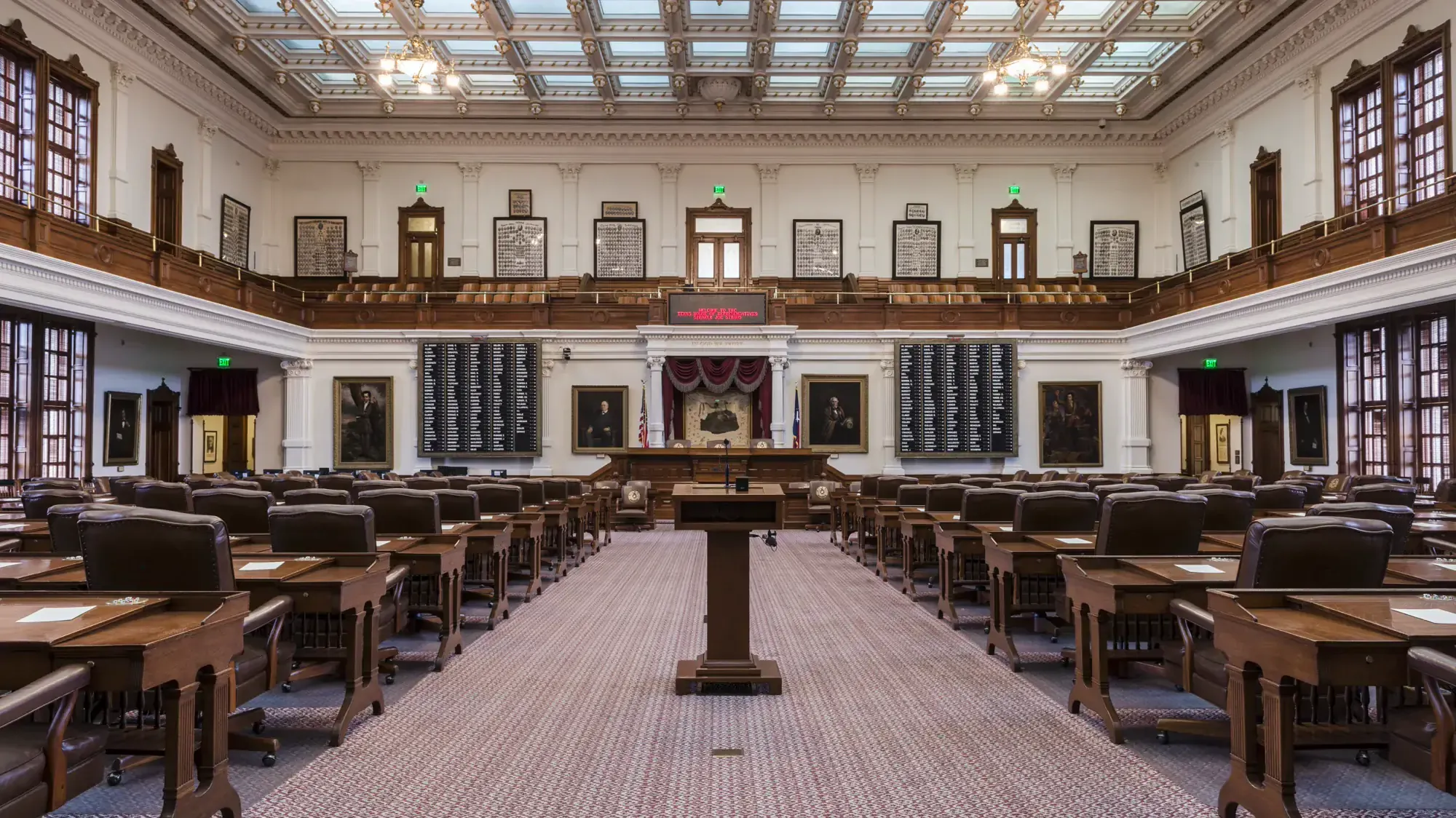

A statewide vote on Texas independence has to be ordered by the Texas Legislature. Texas has no statewide citizen initiative, so no petition can put the question on the ballot by itself. The route is a bill that passes the House and the Senate and that the governor signs or allows to become law.
That bill exists. The Texas Independence Referendum Act, the Texas Nationalist Movement's model legislation, was filed as House Bill 1359 in 2021 by Rep. Kyle Biedermann, with Rep. James White as joint author, and again as House Bill 3596 in 2023 by Rep. Bryan Slaton. The question in the 2023 bill, and in TNM's current model, is one sentence: "Should the State of Texas reassert its status as an independent nation?" A simple majority of the votes cast decides it.
Why the vote binds politically
TNM's position is that the act is written to be politically binding. Both bills say the referendum is "nonbinding on any decision of the legislature," so the force of a yes vote is political, not legal. A yes vote does more than record an opinion. It sets the state government to work on the result.
Under the 2021 bill, a yes vote set up a joint committee of the Texas House and Senate, co-chaired by the lieutenant governor and the speaker, to study "the most effective and expeditious method by which Texas may be returned to its status as an independent republic" and to report a strategy for achieving independence within 60 months of the result being certified. The 2023 bill set 24 months. The model TNM has prepared since goes further. A majority for independence is treated as the decision of the people of Texas, and the governor and the Legislature are directed to give it effect by lawful and peaceful means, including a commission to negotiate the terms of an orderly separation with Washington.
The vote does not declare independence on its own, and the model says so. It starts a negotiation. The movement's president, Daniel Miller, has described referendums of this kind, like Scotland's in 2014 and Britain's in 2016, as politically binding, and the political mandate as what carries the result.
The record from other votes
The Supreme Court of the United Kingdom put the legal rule in one sentence in 2017, in the case over Britain's departure from the European Union: "The effect of any particular referendum must depend on the terms of the statute which authorises it." The act of Parliament that called the 2016 vote said nothing about what had to follow, and Parliament passed a separate law in 2017 authorizing the prime minister to give notice of withdrawal.
Before Scotland's 2014 vote, the British and Scottish governments signed the Edinburgh Agreement, committing to a referendum that would deliver "a fair test and a decisive expression of the views of people in Scotland and a result that everyone will respect."

In 1998 the Supreme Court of Canada held that a clear majority in Quebec on a clear question "would give rise to a reciprocal obligation on all parties to Confederation to negotiate constitutional changes to respond to that desire." Quebec's 1995 vote had failed by 50.58 percent to 49.42 percent. TNM's model procedure is written so that the question and the threshold are settled before anyone votes. It calls for hand-marked paper ballots, a full audit, a single plain question and a majority fixed in law before any ballot is cast.
Why the Legislature
The other routes run through the Capitol as well. A governor cannot order the vote alone, although a governor can call a special session, which the Texas Constitution limits to 30 days and to the subjects the governor names. A constitutional amendment would need two-thirds of each house before it reached voters, and TNM's model is an ordinary statute instead. A petition cannot place the question on the statewide ballot, though it can show legislators how many of their constituents want the vote.
Both bills were referred to the House State Affairs Committee and went no further. Neither was voted down on its merits. The Republican Party of Texas asked in its 2026 platform for a bill requiring a referendum on "whether or not the State of Texas should reassert its status as an independent nation." The 90th Legislature convenes in January 2027.
The ground for the vote is already in the Texas Constitution. Article 1, Section 2 says Texans "have at all times the inalienable right to alter, reform or abolish their government in such manner as they may think expedient," pledged to a republican form of government. In October 1845 Texans voted on whether to join the union. The Texas Independence Referendum Act would ask them the reverse question, and under TNM's design a yes would be a mandate their own government is bound, politically, to carry out.
See more of the Partisan in Google’s Top Stories.Add as a Preferred Source on Google
Read Next

Expert Answer: What changes would occur in the Texas House and Senate after independence?
TNM's Daniel Miller explains how the Texas Legislature would transition from state to national body through constitutional amendments, not wholesale replacement.