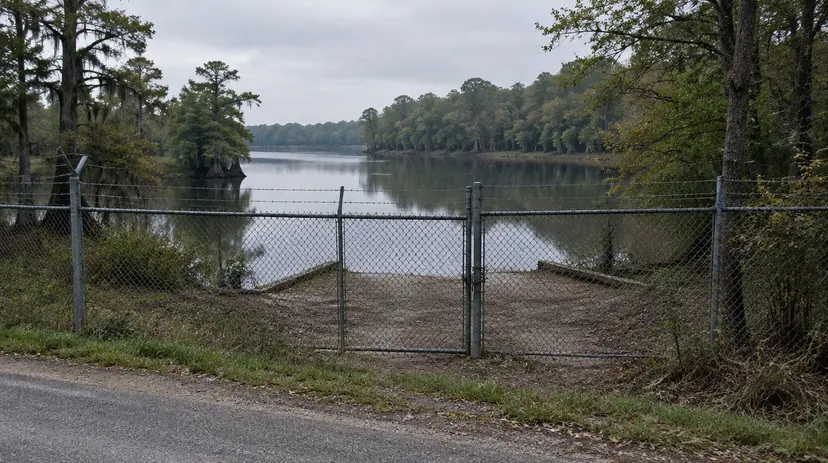
Washington Asks Supreme Court to Let It Build Border Barriers Through Big Bend
The Solicitor General asked the Supreme Court to lift an El Paso court's order halting about 340 miles of border barrier and road work in the Big Bend Sector.

The federal government has asked the U.S. Supreme Court to lift a court order that halted border barrier and road construction across the Big Bend region of West Texas, about 340 miles of planned work the Solicitor General says now sits idle.
The application, filed Wednesday and docketed as No. 26A560, asks Justice Samuel Alito, who handles emergency matters from the Fifth Circuit, and the full Court to stay the injunction and to treat the filing as a petition and summarily reverse.
What the court blocked
A federal district court in El Paso entered a preliminary injunction on October 2 barring the Department of Homeland Security from building “border barrier or related infrastructure,” or doing any construction or ground-disturbing work, in the Border Patrol’s Big Bend Sector. The court denied the government’s request to pause that order on October 21.
The case was brought by Friends of the Ruidosa Church, which preserves a historic church in Ruidosa, the Center for Biological Diversity and a Big Bend river guide. Because the federal law that lets the homeland security secretary waive environmental and other laws for border construction bars most challenges, the plaintiffs argued the waivers were unconstitutional. The district court sided with them on their major questions argument.
Washington’s argument
The Solicitor General argues the claim is not a constitutional one at all and that “this major-questions claim borders on frivolous.” Leaving “a 300-plus-mile gap in border defenses would act as a dangerous magnet for cartels and other bad actors to exploit as other routes close off,” the application says.
The government also points to an August statement from U.S. Customs and Border Protection Commissioner Rodney S. Scott: “We are NOT building a 30-foot wall or stadium lighting through Big Bend National Park, Big Bend Ranch State Park or the Black Gap Wildlife Management Area.”
Under the 1996 federal immigration law that authorizes the waivers, the district court’s order “may be reviewed only upon petition for a writ of certiorari to the Supreme Court,” the application says, which is why the case skipped the Fifth Circuit. The Court has not yet set a deadline for a response.
Whose land
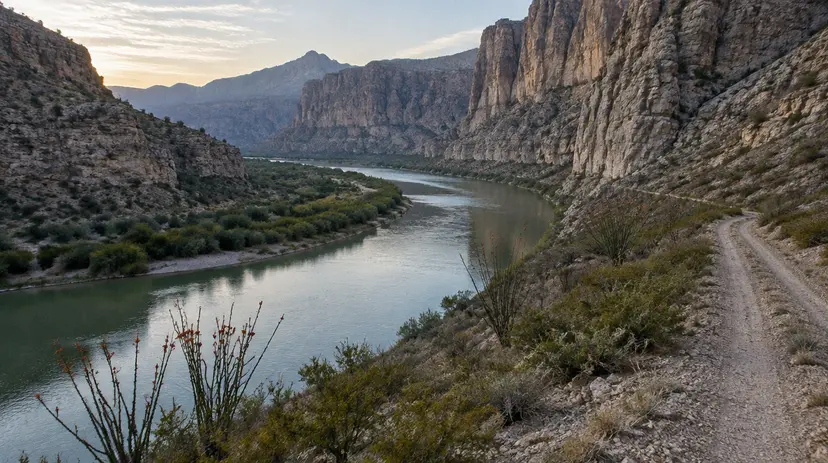
The Big Bend Sector covers nearly a quarter of the U.S.-Mexico border, according to the application, a stretch that takes in Big Bend National Park and the state’s Big Bend Ranch State Park. The State of Texas is not a party to the case. The question before the Court is how far Washington can go in deciding what gets built on that land, and who in Texas gets a say.
See more of the Partisan in Google’s Top Stories.Add as a Preferred Source on Google
Read Next

Texas and Washington Tell Supreme Court Out-of-State Cities Cannot Revive Immigration Rule
Texas and the Justice Department told the Supreme Court that Baltimore, Columbus and New Haven lack standing to revive a vacated immigration-court rule.