Four Bills Target Flock License Plate Cameras as 2027 Filing Opens
Four bills filed on the first day of 2027 filing would cut off the insurance-fee money that paid for thousands of Flock cameras, ban license plate readers outright, or limit police use to court orders and warrants.

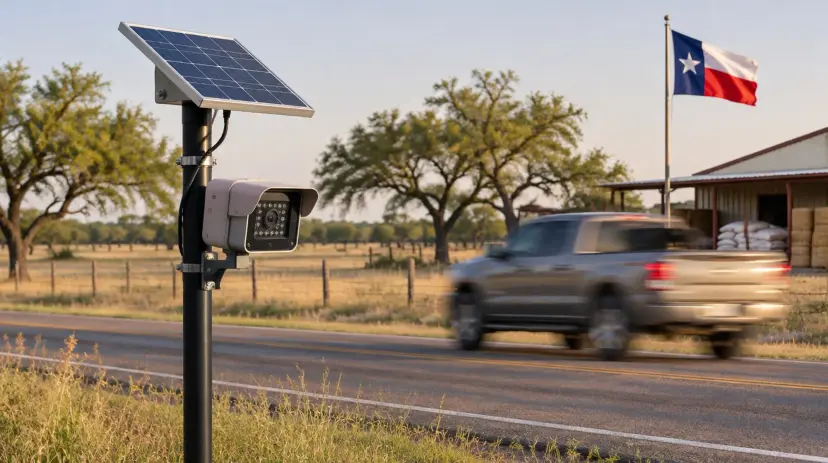

Texas lawmakers filed four bills on Monday, the first day of bill filing for the 2027 session, aimed at automatic license plate readers. One would cut off the state money that paid for many of them. The other three would ban the readers or limit how police use them. Thousands of the cameras went up along Texas roads on money from a fee the Legislature created to fight catalytic converter theft.
Senate Bill 232, by Sen. Carol Alvarado of Houston, goes after the money. Under the Transportation Code, insurers pay the Motor Vehicle Crime Prevention Authority $5 a year for every insured vehicle, and $1 of each fee goes to the state’s general revenue fund “to be used only for” fighting catalytic converter theft. Alvarado’s 2023 bill created that $1 share. Her new bill says fee money deposited to general revenue under that section “may not be used to purchase or use, or contract with a person to purchase or use, an automatic license plate reader.” Sens. Roland Gutierrez, José Menéndez and Taylor Rehmet joined as co-authors, the Texas Tribune reported.
An August investigation by the Tribune found the authority had put more than $30 million of that money toward at least 3,200 Flock cameras. Alvarado told the Tribune that roadside cameras were never discussed while her bill passed both chambers unanimously. The authority also paid for a $15.9 million contract meant to put more than 1,200 cameras on the roads for the Texas Department of Public Safety, and 940 went up. In June, law enforcement agencies across the country searched that network an average of once every four seconds.
Gov. Greg Abbott, who appoints six of the authority’s seven board members, froze state funding for the cameras after the Tribune sent him questions about the grants. Several cities have since ended their Flock contracts. Gov.-elect Gina Hinojosa campaigned against the cameras. “They were never authorized. They shouldn’t be standing,” she told the Tribune in September.
The three House bills go further than the money.
House Bill 331, by Rep. John Bucy of Austin, would end their use outright: “A governmental entity may not use an automatic license plate reader.” It covers the state, every city and county, and their officers and employees. Anyone harmed by a violation could sue for actual damages or $1,000, and the bill waives the government’s immunity from those suits.
House Bill 763, by Rep. Mary González of Clint, would allow the readers only for six purposes the bill lists, such as felony investigations and the search for a stolen car or a missing person. Agencies would have to destroy the data within 48 hours unless a court orders it kept on a showing of probable cause. The bill also bars sharing the data with “the federal government, or any agency, department, or person acting on behalf of the federal government,” and it makes the access logs that show when officers search the system public records, with plate numbers removed.

House Bill 847, by Rep. Brian Harrison of Midlothian, would let police use a plate reader “only as authorized by a warrant or court order,” and only to investigate violent offenses. Agencies would have to post their policies and an annual count of plates scanned and of scans that led to an arrest or prosecution. Harrison filed similar bills in the last two sessions, the Tribune reported.
All four bills would take effect September 1, 2027. Earlier this month, League City became the first Texas city where voters decided the cameras’ fate at the ballot box, as the Texian Partisan reported.
The Legislature convenes on January 12. The camera network was built by a state board out of a fee set aside for catalytic converters, and agencies across the country search it. Whether it keeps running, and who beyond the state’s borders can see what it records, now goes to the Texas Legislature.
See more of the Partisan in Google’s Top Stories.Add as a Preferred Source on Google
Read Next
Paxton Drops Nearly Three-Year Fight to Shut Down Annunciation House
The attorney general's office filed a nonsuit with prejudice in its case against the El Paso shelter network, El Paso Matters reported. The Texas Supreme Court ruling that let the case go forward still...