
Texas Supreme Court Rejects Pakistani Divorce in $100 Million Houston Case
The justices held that five days of newspaper notice in Pakistan cannot bind a Houston wife, and sent her divorce case back to Harris County.

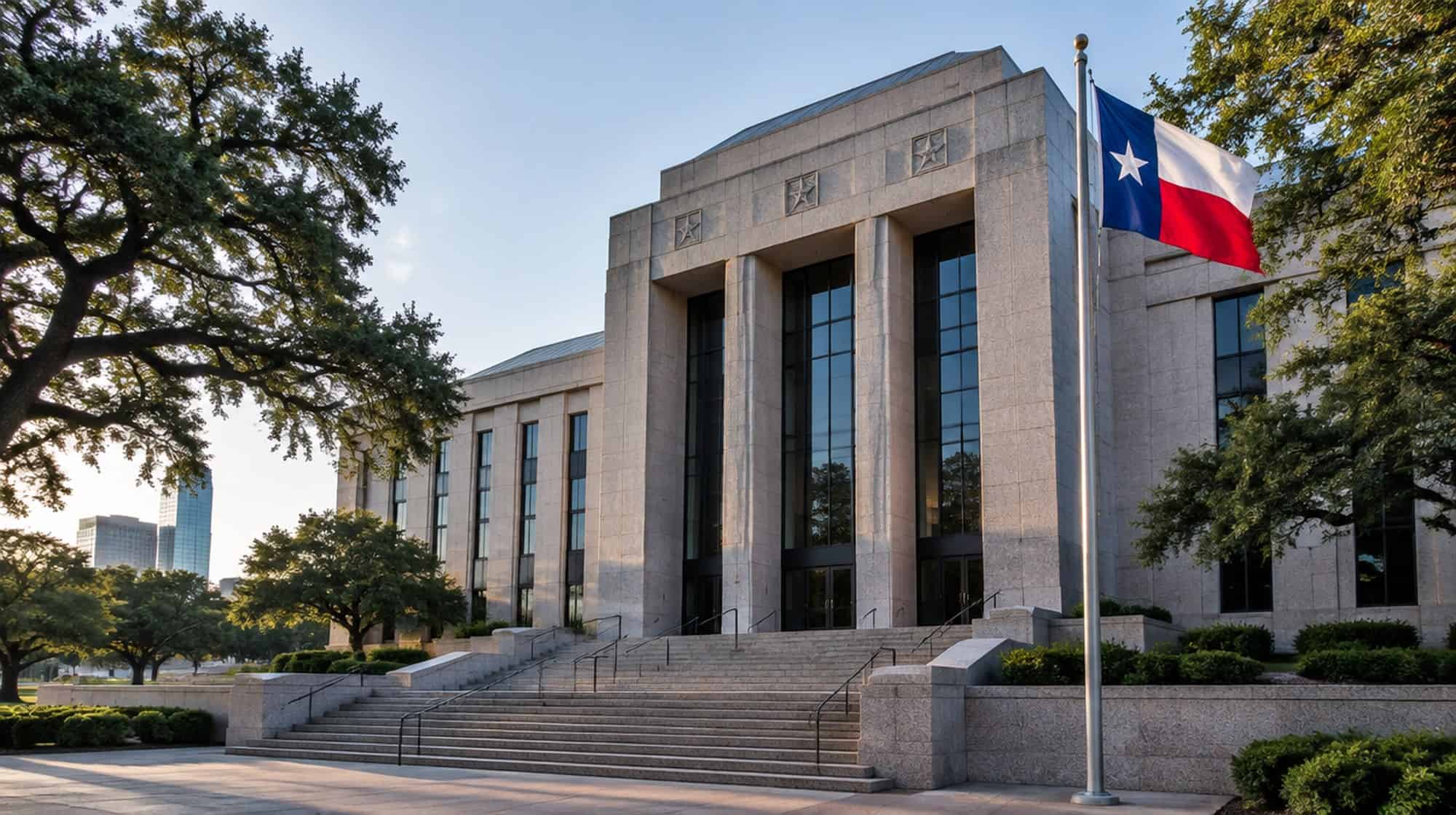

The Texas Supreme Court has refused to recognize a divorce that a Houston businessman obtained in Pakistan without telling his wife. In an unsigned opinion delivered September 25 in Azhar v. Choudhri, the justices reversed two lower courts that had treated the Pakistani judgment as final and sent the case back to a Harris County trial court.
The opinion lays out the history. Mohammad Ali Choudhri has lived in Houston since he was three. He and Hira Azhar married in Pakistan in 2008, she joined him in Houston in 2010, and during the marriage the couple amassed more than $100 million in community assets. In 2012 he sent her back to Pakistan, ostensibly to renew her visa. In January 2013 he divorced her there through a talaq proceeding, a divorce a husband can carry out on his own. The only notice was an item published in a small local Pakistani newspaper five days in advance. She learned of the divorce two years later.
Azhar filed for divorce in Harris County in June 2015 and asked for a division of the marital property. The trial court instead recognized a 2018 judgment of the Pakistan Supreme Court, dismissed her petition and awarded her nothing, after hearing testimony that Pakistan does not recognize community property and that each spouse keeps what is titled in his or her own name. Houston’s First Court of Appeals affirmed in 2023.
The justices held that the notice was constitutionally inadequate as a matter of law. “The notice in this case, involving five days of publication in a single obscure outlet, does not suffice,” they wrote. The husband offered no evidence that he could not have reached his wife by telephone, text message, email or mutual friends. Recognizing another country’s judgment, which courts call comity, is never required, the opinion says. “No foreign judgment is entitled to comity when it contradicts the fundamental guarantees of the Texas and United States Constitutions,” the justices wrote.
The ruling is limited by its own terms. In a footnote the court said it does “not hold that comity must be denied per se to every foreign judgment that results from notice procedures that differ in any respect from those of Texas.” The decision turns on notice and on the facts of this case. Justices Rebeca Huddle and Evan Young did not participate, and the court ruled without hearing oral argument.
Texas had already written rules for cases like this one. A 2016 attorney general opinion addressed when Texas courts should refuse foreign judgments. The next year the Legislature passed House Bill 45, which directed the Supreme Court to adopt rules limiting comity in cases involving a marriage. The result was Rule of Civil Procedure 308b, in effect since January 1, 2018, which requires written notice and a hearing with findings before a Texas court enforces such a judgment. The rule did not govern this case, the court noted, because Azhar filed in 2015.
The court quoted Justice Joseph Story, who wrote in 1834 that no nation can be required to give up “its own fundamental policy and institutions in favour of those of another nation.” Then it stated the rule for Texas in a sentence: “Other countries are welcome to conclude otherwise, but their judgments are not entitled to comity in a Texas court.”
See more of the Partisan in Google’s Top Stories.Add as a Preferred Source on Google
Read Next

Texas Health Agency Plans $78 Million in Rural Healthcare Grants to 216 Providers
The Texas Health and Human Services Commission plans $78 million in Rural Texas Strong grants to 216 providers, the first share of an expected $1.4 billion federal program.