Supreme Court Keeps Missouri’s 2022 Map After Voters Force a Referendum
The Supreme Court stopped lower federal courts from forcing Missouri onto its 2025 map after a voter referendum petition suspended it. Missouri's constitution reserves that power to its people; Texas's does not.

The U.S. Supreme Court on September 25 kept Missouri’s 2022 congressional map in place for this year’s election and blocked lower federal courts from ordering the state to use a new map its Legislature passed in 2025. In an unsigned order in People Not Politicians v. Onder, the Court stayed injunctions from a federal district court and the Eighth Circuit and left the question where Missouri’s own law had settled it.
That law belongs to Missouri’s voters. The Missouri Constitution says the people “reserve power to approve or reject by referendum any act of the general assembly,” and a referendum can be ordered by petitions signed by five percent of the voters in each of two-thirds of the state’s congressional districts. Once a sufficient petition was filed against the 2025 map, the Missouri Supreme Court ruled on September 3 that the map “is not the law and has never been the law” in Missouri, and that it takes effect only if voters approve it in November.
A group of voters and candidates then sued in federal court, arguing that the U.S. Constitution required Missouri to use the 2025 map anyway. A district court agreed on September 8, and the Supreme Court stayed that order two days later without any noted dissent. On September 21 the Eighth Circuit ordered a permanent injunction requiring the 2025 map. The September 25 order stayed those rulings as well.
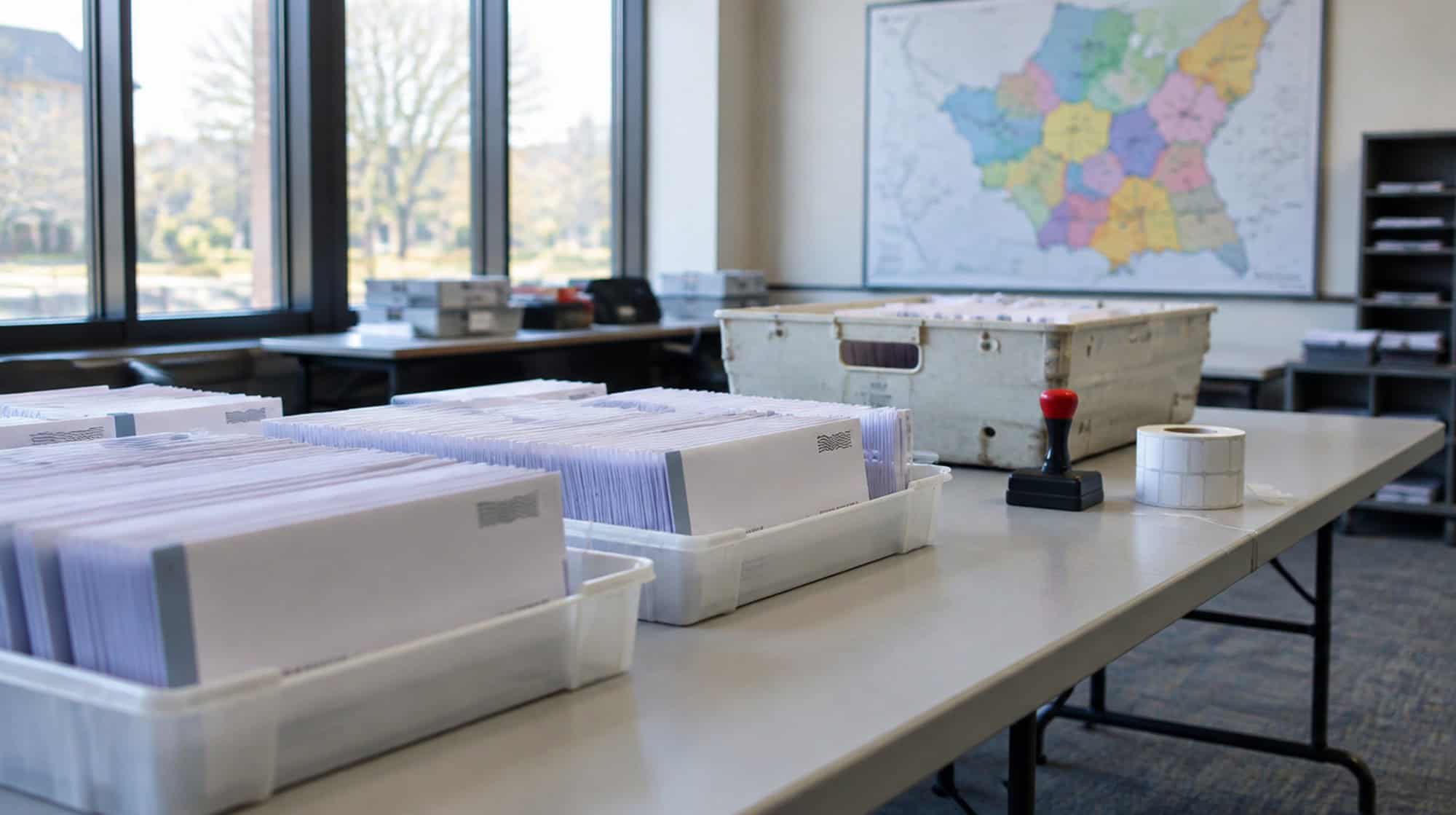
The Court pointed to timing. Missouri election officials have already printed and mailed ballots using the 2022 map, and absentee and military voting has begun. “At this late date, ordering reversion to the 2025 map in the midst of an ongoing election would usher in electoral chaos,” the order said. It rejected the Eighth Circuit’s view that the Missouri Supreme Court had caused the disruption, noting that the state court said in May that the 2025 map would not take effect before a referendum if the petition held up. Federal courts should not change election rules close to an election, the order said, but “States are free to decide for themselves whether last-minute changes to an election are in their best interests.” On the constitutional claim itself, it said only that the merits are “not entirely clearcut.”
The Court has left a state’s elections to that state before. In December 2020, when Texas asked it to take up a challenge to how four other states had run the presidential election, the Court declined, writing that “Texas has not demonstrated a judicially cognizable interest in the manner in which another State conducts its elections.” Neither order decided the underlying constitutional claims.
Missourians wrote a veto over their own Legislature into their constitution, and this fall they are using it. Texans reserved no such power. The Texas Constitution vests “the Legislative power of this State” in the Senate and the House, and there is no petition by which Texas voters can put an act of the Legislature to a statewide vote before it takes effect.
See more of the Partisan in Google’s Top Stories.Add as a Preferred Source on Google
Read Next

Boulder’s Lawyer Concedes Its Climate Theory Could Reach Retailers
Boulder's lawyer told the Supreme Court nothing in its theory stops climate suits against retailers. Texas, home to ExxonMobil and 42 percent of U.S. oil output, backs the producers.