A Federal Judge Set the Deadline for Air Conditioning Every Texas Prison. The Legislature Will Write the Check.
Judge Robert Pitman ordered air conditioning in every Texas prison by December 31, 2029, told TDCJ to report what it will ask the Legislature for, and ruled that a shortage of funds is no defense.

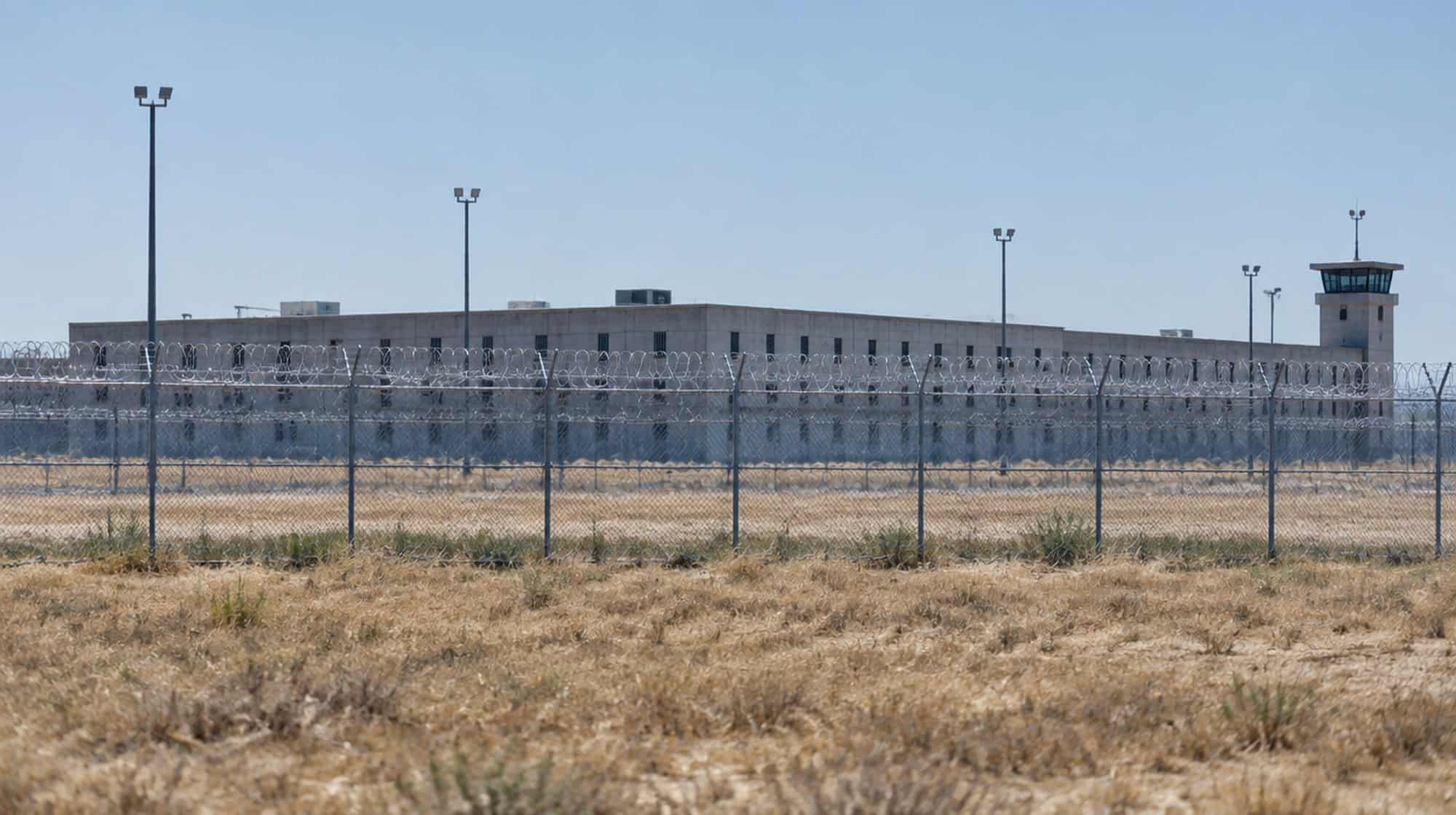

A federal judge ordered the Texas Department of Criminal Justice on Tuesday to install air conditioning in every Texas prison by December 31, 2029, and to report to his court every six months until it is done.
The order came from U.S. District Judge Robert Pitman in Austin, in a case brought by Texas Citizens United for Rehabilitation of Errants against TDCJ director Bobby Lumpkin. It runs 150 pages and follows a bench trial held from March 30 to April 9. Pitman declared that conditions in TDCJ’s un-air-conditioned prisons violate the Eighth Amendment and that the agency’s current response to heat is insufficient to remedy it. He ordered TDCJ to “immediately develop and implement a plan to install air-conditioning in every Texas prison, with installation to be completed not later than December 31, 2029.”
The findings behind that are not in dispute in the order. About 88,697 inmates, some 63 percent of the TDCJ population, were living in un-air-conditioned housing this summer. “The Court concludes that heat continues to cause deaths in TDCJ’s prisons,” Pitman wrote. He found the agency’s director deliberately indifferent to the risk, writing that Lumpkin’s “failure to enact a meaningful, committed plan to install air-conditioning on the timeline that TDCJ has repeatedly indicated is possible is deliberate indifference.”
TDCJ had plans of its own. Its Four-Phase Plan put the cost of air conditioning the whole system at $1.1 billion and called for asking the Legislature for $319 million in the 2026-27 budget and $322.4 million in 2028-29. The agency then published a Three-Phase Plan that moved the money later, shrinking the near-term request and raising the 2028-29 request to $620.4 million. The court treated that shift as evidence of the indifference it found.
The order does not stop at the deadline. TDCJ’s first status report, due by March 22, 2027, must describe the phases of construction, procurement and design, and must state “the amounts he intends to request from the Legislature to fund each stage of the plan.” Every report after that has to say whether the agency is on schedule and, if not, why. And the order forecloses the answer Texas agencies usually give. “Defendant is advised that financial considerations will not be considered a legitimate reason for his failure to comply with this Court’s order,” Pitman wrote, citing a 1974 Fifth Circuit decision holding that a shortage of funds is no defense to unconstitutional prison conditions.
TDCJ said it respectfully disagrees with the finding of deliberate indifference and will appeal, according to reporting on the ruling. Both sides may brief attorney’s fees by October 20.
The 90th Legislature convenes in January and writes the 2028-29 budget. A capital program running to the better part of a billion dollars now sits inside that budget with a completion date attached, and the date was set by a federal judge rather than by the House, the Senate or the Governor. The agency that asks for the money has been told in advance what it must ask for and when, and told that not having the money is not an answer.
Whether Texas prisons should be air conditioned is settled for now. The court found that they must be, on a constitutional standard Texas does not control. The question it leaves behind is narrower: when a federal court sets the schedule and the amount, what is left for Texans to decide about their own budget.
See more of the Partisan in Google’s Top Stories.Add as a Preferred Source on Google
Read Next
Texas Health Agency Plans $78 Million in Rural Healthcare Grants to 216 Providers
The Texas Health and Human Services Commission plans $78 million in Rural Texas Strong grants to 216 providers, the first share of an expected $1.4 billion federal program.