Abbott Halts Data Center Permits Until Texas Knows What They Will Draw
Abbott told TCEQ on September 21 to issue no permits to data center projects until ERCOT and the Texas Water Development Board finish auditing their power and water use. ERCOT is holding about 474 gigawatts of connection requests, roughly 90 percent of them data centers.


Gov. Greg Abbott directed the Texas Commission on Environmental Quality on September 21 to issue no permits to data center projects until ERCOT and the Texas Water Development Board finish auditing what those projects intend to draw from the state’s power supply and its water. The order reaches past TCEQ to every state agency, and it gives TCEQ until October 19 to report back on whether it has complied.
“Simply put, Texans must come first,” Abbott said in the directive. “Data centers must pay their own way, protect our grid and water, and complete the ERCOT and TWDB audits. Until they do, TCEQ will issue no permits sought by data center projects.” The directive states that no state agency shall move forward with regulatory approvals related to data center development until the audit information is acquired.
The order closes a gap in one Abbott issued seven weeks earlier. On August 3 he directed the Public Utility Commission of Texas and ERCOT to run a verification and audit of every data center moving through the grid interconnection process, and to deny a connection to any project that failed it. The audit asks whether a project pays its own way or leans on tax incentives and grants, where it gets its power and how much it will use, how much water it will consume and what it uses for cooling, what it does about noise and traffic for the people who live nearby, and who holds the ownership and controlling interests.
That order reached projects seeking a grid connection. It did not reach projects that generate their own power behind the meter and never come to ERCOT at all, which is the gap the permit freeze closes, the Texas Tribune reported. The Tribune also reported that 28 percent of data centers responded to a mandatory survey on water use.
The queue behind the pause is enormous. ERCOT is holding roughly 474 gigawatts of requests to connect to the Texas grid, about 90 percent of them data centers, which Abbott has said is more than five times the record peak demand the Texas grid has ever served. Chad Seely, ERCOT’s senior vice president of regulatory policy, told regulators the audit of roughly 300 projects of 75 megawatts or larger is aimed at a December 10 filing, and that a related study will not be finished by its April 2027 target.
Texas could settle this in Austin because the grid in question is a Texas grid. ERCOT runs almost entirely inside the state and is not synchronously tied to the systems on either side of it, so power sold inside it has not been treated as interstate commerce, and it sits outside the Federal Energy Regulatory Commission’s authority over electric ratemaking. Oversight belongs to the Public Utility Commission and to the Legislature.
A governor in almost any other state facing the same buildout would be filing comments with a regional transmission organization and waiting on a federal commission to rule. Texas answered the question itself.
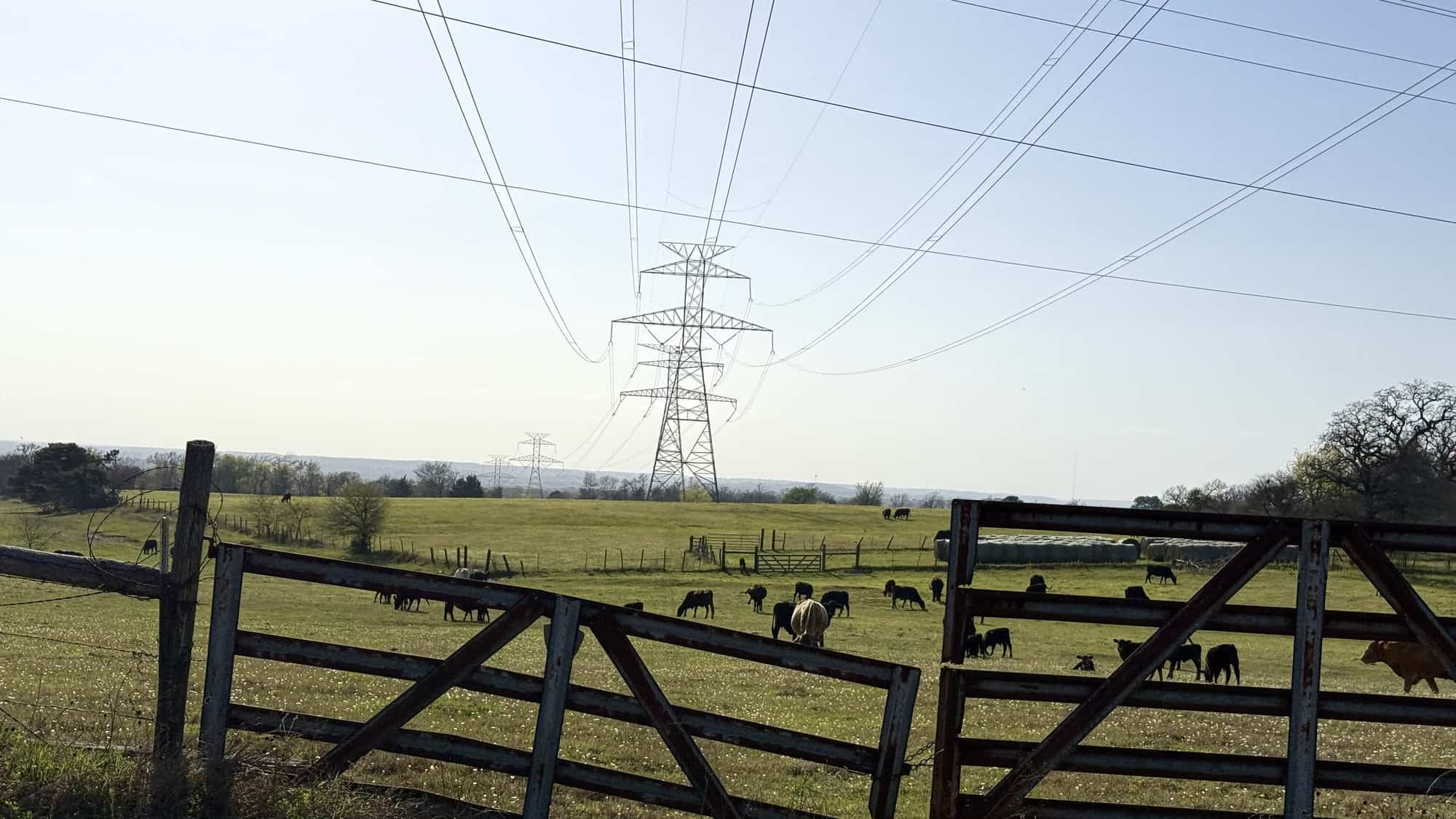
Photo: transmission lines over pasture in East Texas. Mxmls, CC BY 4.0.
See more of the Partisan in Google’s Top Stories.Add as a Preferred Source on Google
Read Next
Texian Partisan Opens Live Results Desk for Texas Election Night
The Texian Partisan's live page tracks Texas early voting now and every statewide and legislative race from 7 p.m. Central on November 3, county by county and district by district.