A Day After Setting a Test for a Scottish Referendum, Burnham Tells Swinney It Is Off Limits
Prime Minister Andy Burnham told John Swinney in writing on Thursday that a second Scottish independence referendum is off limits, a day after telling the Commons that one would follow a shift in public opinion.

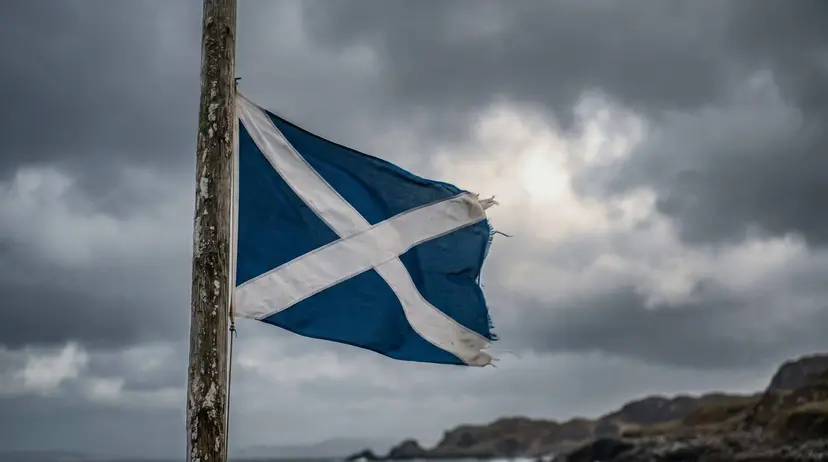

Prime Minister Andy Burnham told Scotland’s First Minister in writing on Thursday that a second independence referendum is “off limits,” a day after telling the House of Commons that one would follow a shift in public opinion.
“As I made clear to you personally when we met recently in Glasgow, independence and a referendum are off limits as it would take our focus away from growing the economy and helping families with the cost of living,” Burnham wrote to John Swinney. The letter answered one Swinney had sent the same day, asking for talks on an “agreed legal mechanism” for a vote.
Swinney wrote because of what Burnham said on Wednesday. Answering the SNP’s Chris Law at Prime Minister’s Questions, Burnham described the test in the Good Friday Agreement, under which a border poll on Irish unity must be considered by the Northern Ireland Secretary “when there is a clear consensus in the country, when public opinion has changed to the point where the call has to be considered.” Then he applied it to Scotland. “I would say exactly the same situation in Scotland,” he said. “I am not aware that there is a majority of public support for another referendum and until that changes there won’t be one.”
His press secretary said within hours that nothing had changed and that Labour “does not support independence or another referendum.” Swinney took the Commons answer at its word, calling it the first time since 2014 that a British prime minister had accepted that majority support should mean a referendum takes place. “During the summer the Prime Minister indicated to me that the question of a referendum on Scottish independence was off the table,” he said Thursday. “But yesterday in the House of Commons, he accepted that if the people of Scotland wished to have a referendum on independence there had to be a mechanism to enable that to happen.” A prime minister’s view set out to the Commons, Swinney said, “should be taken as the most authoritative statement of a Prime Minister.”
The exchange comes two weeks after Swinney’s government published its draft Independence Referendum Bill, which puts the 2014 question back to voters and cannot be introduced at Holyrood without a transfer of powers from Westminster. The UK Supreme Court ruled in 2022 that the Scottish Parliament cannot stage a referendum on its own authority. Scots voted to remain in the United Kingdom in 2014 by 55 percent to 45.
Burnham has been in office seven weeks. He replaced Keir Starmer in July without a general election, after a by-election returned him to the Commons and Labour MPs nominated him unopposed.
He now holds both positions, one in the record of the House of Commons and one in a letter to Edinburgh. The letter says off limits and gives the economy as the reason. The Commons answer set a condition, that a referendum follows a change in public opinion, and a condition can be met. Swinney has chosen to hold the Prime Minister to the one he gave Parliament.
See more of the Partisan in Google’s Top Stories.Add as a Preferred Source on Google
Read Next
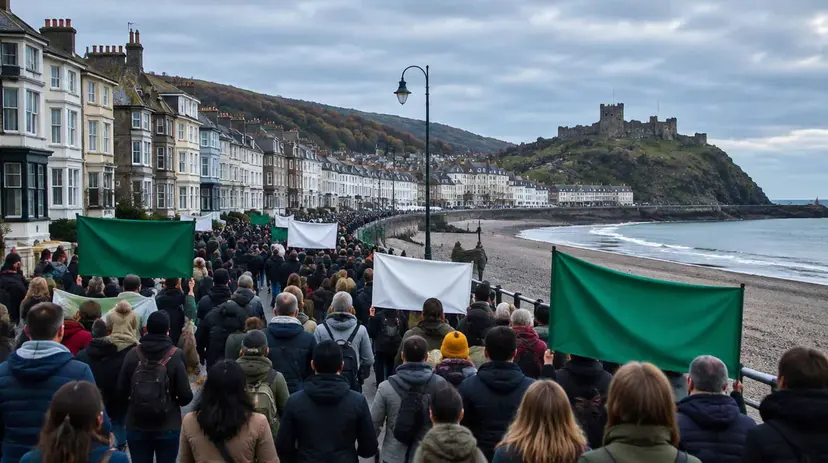
Welsh First Minister Tells Independence Rally ‘There’s No Turning Back’
Rhun ap Iorwerth became the first Welsh first minister to join a YesCymru march, telling a crowd organizers put at 8,000 to 9,000 that London will not acknowledge Wales's right to self-determination.