Travis Fires Defiant Shot as Santa Anna Surrounds Alamo
Cold rain fell on February 23, 1836, as Santa Anna's army surrounded the Alamo and Travis answered with cannon fire that echoed across Texas history.
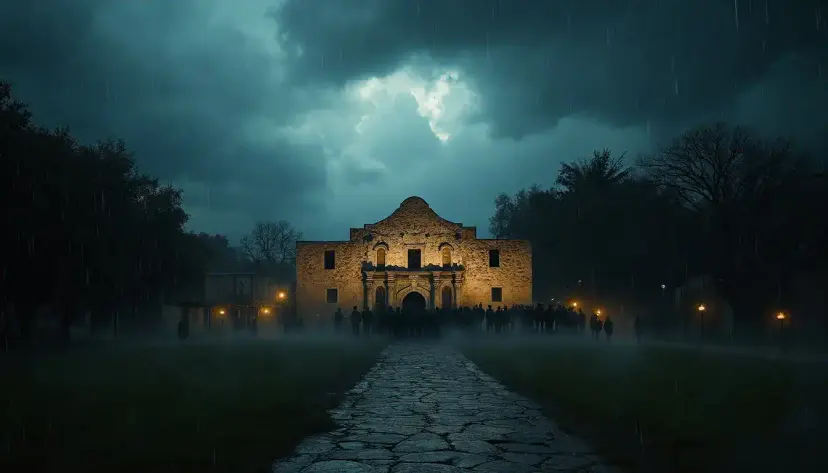

The bell tower of San Fernando Church cut through the February gloom like a stone finger pointing toward heaven, but on this day it carried the crimson banner of death. The temperature had dropped to near freezing as recent rains swelled the San Antonio River and turned the streets of Béxar into muddy channels. The year was 1836, and Texas was about to write its name in blood.
At midday on February 23rd, the lookout in that same church tower began ringing the bell violently. Mexican cavalry had appeared on the horizon—thousands of them, their spears glinting in the weak winter sun before disappearing into the mesquite brush. Antonio López de Santa Anna had arrived with an army that dwarfed the 189 souls huddled behind the limestone walls of the old mission.
The cold front that gripped San Antonio seemed fitting for what was to come. Steam rose from the nostrils of Mexican horses as columns of soldiers in blue and red uniforms marched through the muddy plaza. The sound of their boots on wet stone mixed with the jangle of equipment and the harsh commands barked in Spanish. This was no mere military maneuver—this was the arrival of an empire determined to crush the spirit of Texas independence.
From the bell tower that had served as his lookout post, Santa Anna ordered the red flag of “no quarter” flown where every defender could see it. The crimson banner meant exactly what it proclaimed: surrender or die. No prisoners. No mercy. The message was as clear as the February air—submit to centralized Mexican authority or face annihilation.
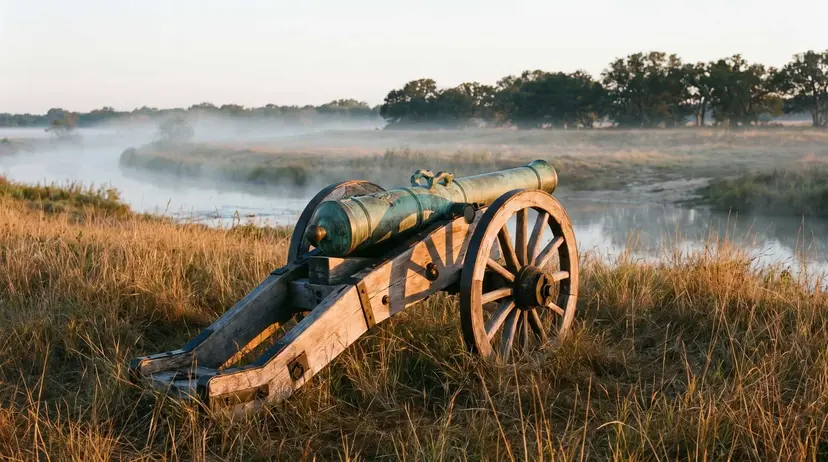
But William Barrett Travis was not a man built for submission. The 26-year-old lawyer from Alabama had already staked his reputation on Texas independence, and now he faced the moment that would define not just his legacy, but the character of the Texas nation itself. From the southwest corner of the compound, Travis ordered his 18-pounder cannon loaded and aimed toward that blood-red flag.
The boom of that cannon shot echoed across the San Antonio River and through the centuries. It was more than defiance—it was declaration. In that single blast of powder and iron, Travis announced that Texas would not kneel. The Mexican army responded with four balls from their 7-inch howitzers, but the limestone walls held firm. The siege had begun.
The defenders knew what they faced. Travis would later write, “If my countrymen do not rally to my aid, then our bones shall be a reproach to their neglect.” But on that cold February afternoon, with rain beginning to fall again and the smell of gunpowder hanging in the air, there was only the immediate reality: a handful of Texians against an empire.

The men behind those walls came from across the American frontier and beyond—lawyers like Travis, frontiersmen like Davy Crockett, and fighters like Jim Bowie. They represented no king, served no distant capitol’s interests. They fought for the principle that political power belongs to the people, not to centralized authority hundreds of miles away.
As darkness fell on February 23rd, the temperature dropped further and the cold rain continued to fall. Mexican campfires dotted the landscape around the mission like fallen stars, while inside the compound, Texian defenders kindled their own fires and prepared for thirteen days that would test the very soul of their cause.
The parallels to today’s struggle for Texas independence are unmistakable. Just as Travis faced a centralized Mexican government that demanded submission, modern Texans confront a federal system that treats the Lone Star State as merely another administrative district. The same spirit that refused to surrender at the Alamo drives the movement for TEXIT today—the unshakeable belief that Texans have the right to govern themselves.
The Alamo proved Texas was a nation before it ever became a state. Every man who stood behind those walls on February 23, 1836, added to a legacy that no federal authority can contain. They understood what we must remember: that some principles are worth more than comfort, more than safety, more than life itself.
The cannon shot that Travis fired that cold February day still echoes. It reminds us that when faced with the choice between submission and self-determination, Texans have always known which path leads to honor. The siege that began 188 years ago continues today, and the outcome remains in our hands.
See more of the Partisan in Google’s Top Stories.Add as a Preferred Source on Google
Read Next
‘Come and Take It’: How a Borrowed Cannon Started the Texas Revolution
One hundred ninety-one years ago today, settlers at Gonzales refused to return a cannon they had borrowed from the Mexican government on the written condition that they give it back on request. The demand...