‘Come and Take It’: How a Borrowed Cannon Started the Texas Revolution
One hundred ninety-one years ago today, settlers at Gonzales refused to return a cannon they had borrowed from the Mexican government on the written condition that they give it back on request. The demand was lawful. They refused anyway.

Gonzales marks the morning of October 2, 1835, this weekend, when a small body of Texian militia refused to hand a cannon back to the government that had lent it to them. The town’s Come and Take It Celebration runs October 2 through 4, with a reenactment of the standoff on Saturday afternoon.
The standoff began with a loan.
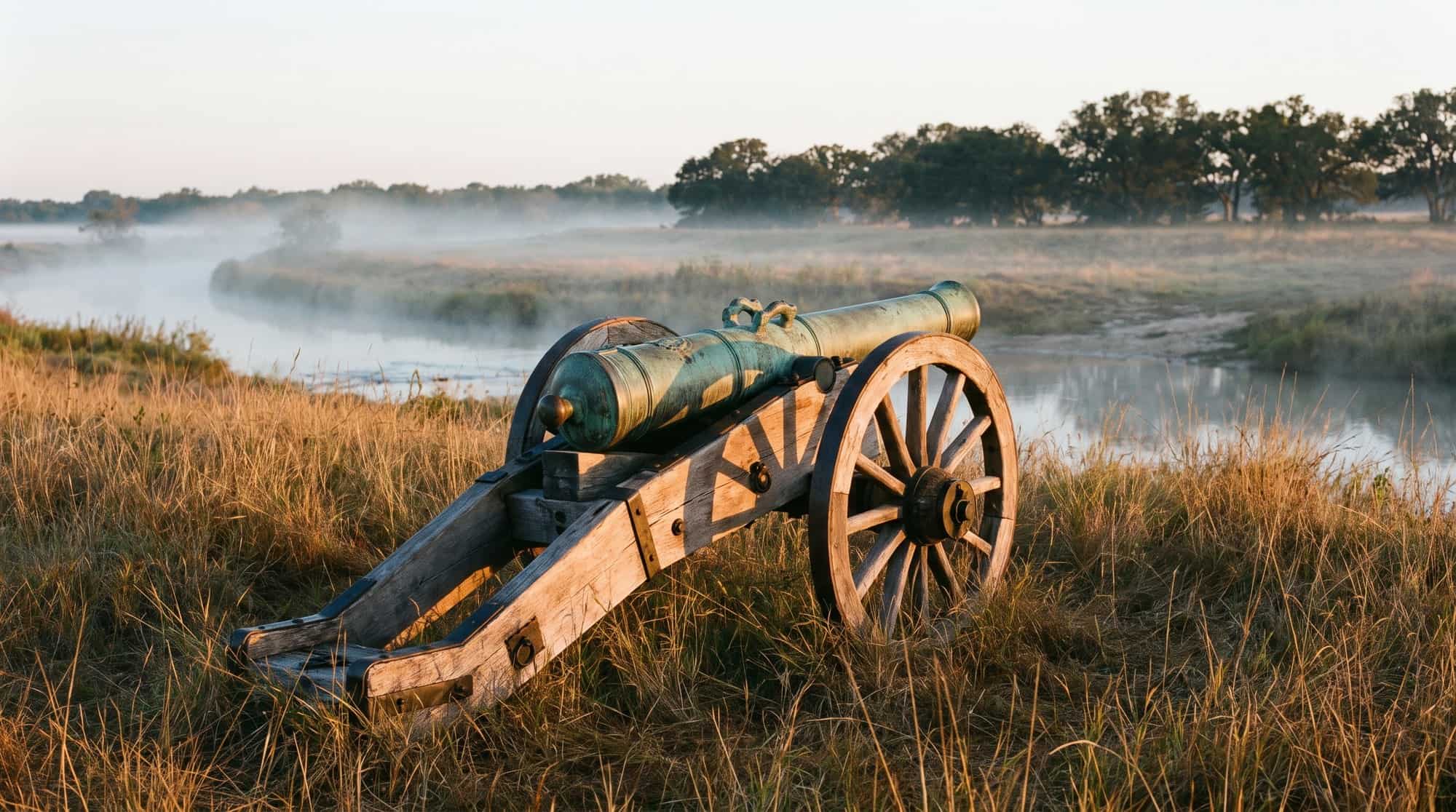
On January 1, 1831, Green DeWitt wrote to Ramón Músquiz, the political chief of Bexar, asking that a cannon be furnished to the colonists at Gonzales for protection against Indian raids. On March 10, 1831, James Tumlinson, Jr., a DeWitt colonist at Bexar, received one bronze cannon to be turned over to DeWitt at Gonzales. It was a Spanish-made artillery piece of six-pound caliber, and it came with a stipulation: it was to be returned to Mexican authorities upon request.
The colonists accepted that condition. A frontier settlement needed a gun for its defense, and the government had one to lend on ordinary terms.
Four years later the government asked for it back.
Domingo de Ugartechea, the Mexican military commander at Bexar, demanded the cannon’s return in September 1835, with relations between the colonists and Santa Anna’s government deteriorating. By the plain terms of the 1831 arrangement, he was entitled to it. Gonzales said no.
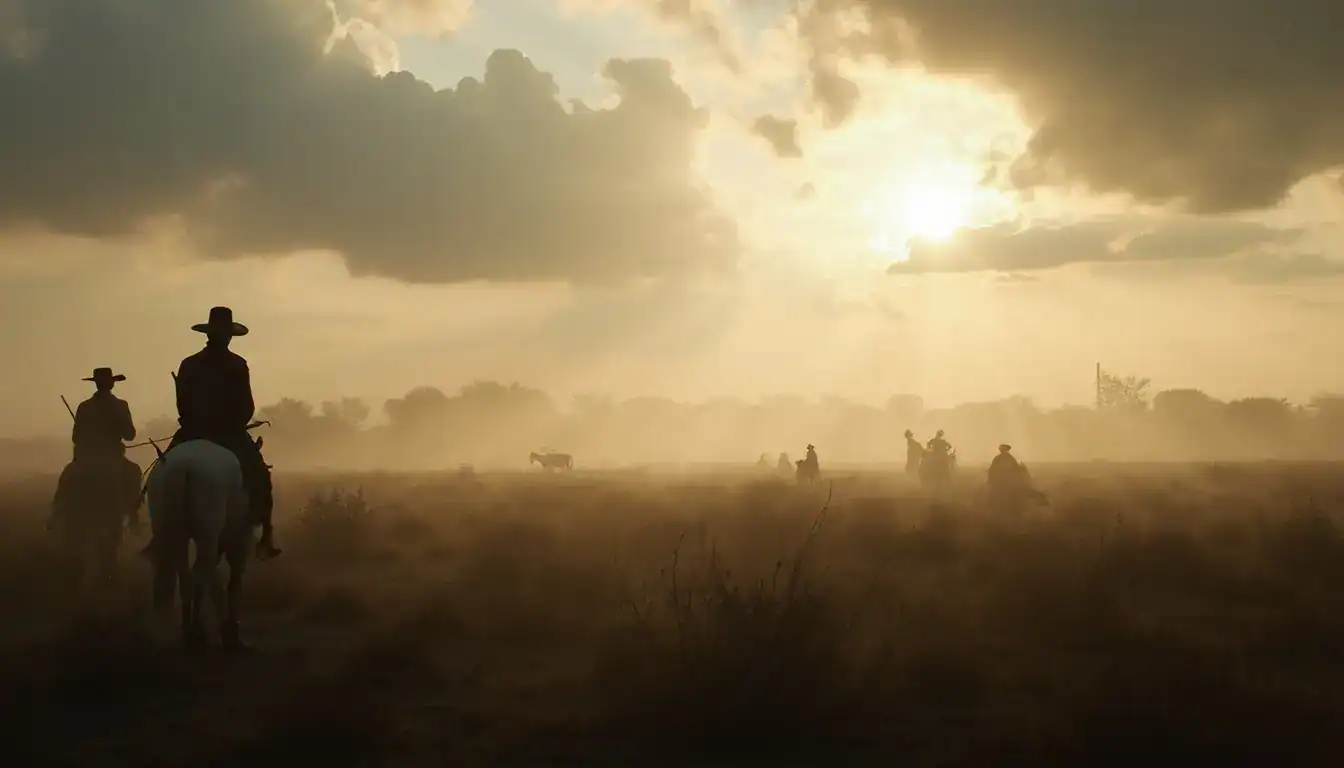
Ugartechea sent Francisco de Castañeda with 100 dragoons to collect it. What they found was a town that had decided not to comply. The Texian force began as eighteen militiamen. By the time the standoff broke it had grown to at least 140, with more expected, under the command of John Henry Moore.

The fighting itself was slight. The Handbook of Texas describes the engagement as really only a brief skirmish rather than a formal battle. Castañeda withdrew toward Bexar without pressing the matter. In his own report he explained the decision plainly: “since the orders from your Lordship were for me to withdraw without compromising the honor of Mexican arms, I did so.”
The skirmish, in the Handbook’s words, marked a clear break between the American colonists and the Mexican government.
The flag that came out of Gonzales has outlived every other detail of the day. It was white, with a black cannon, a star, and three words. Very little about its making is documented. The Handbook of Texas frames the story as tradition rather than record, reporting that according to popular narratives, Sarah DeWitt and her daughter Eveline took Naomi DeWitt’s wedding dress and made it into the Gonzales flag, and noting that some accounts have also credited Cynthia Burns, with Eveline, with painting the design. The flag is described as reportedly used at the battle. The three words are documented. The sewing room is tradition.
The cannon had a longer war than the town did. It was assigned to Captain James C. Neill’s artillery company, hauled to San Antonio, and used during the Siege of Bexar. After Bexar fell to the Texians in December 1835 the gun stayed at the Alamo. On March 6, 1836, when the Mexican army retook the mission, it was one of twenty-one large artillery pieces commandeered there, and it was buried with other captured Texan cannons inside the compound.
The object that started the revolution spent the rest of it changing hands.
Ugartechea’s demand was consistent with the terms the colonists themselves had accepted in 1831, and nothing in the written arrangement had changed in four years. What had changed was the colonists’ willingness to let a distant government hold a claim on the means of their own defense, and once that willingness was gone, the legality of the demand no longer decided the outcome.
The question at Gonzales was consent: whether the people living under a government still agreed to its claim over them. In 1835 Texans answered it at a river crossing. Today the same question can be put to Texans in a referendum.
See more of the Partisan in Google’s Top Stories.Add as a Preferred Source on Google
Read Next
Galveston Will Restore Its Texas Heroes Monument, Whoever Turns Out to Own It
Galveston will spend about $121,300 to restore the 1900 Texas Heroes Monument, Henry Rosenberg's gift to the heroes of the Texas Revolution, even though no one is sure whether the city or the state...