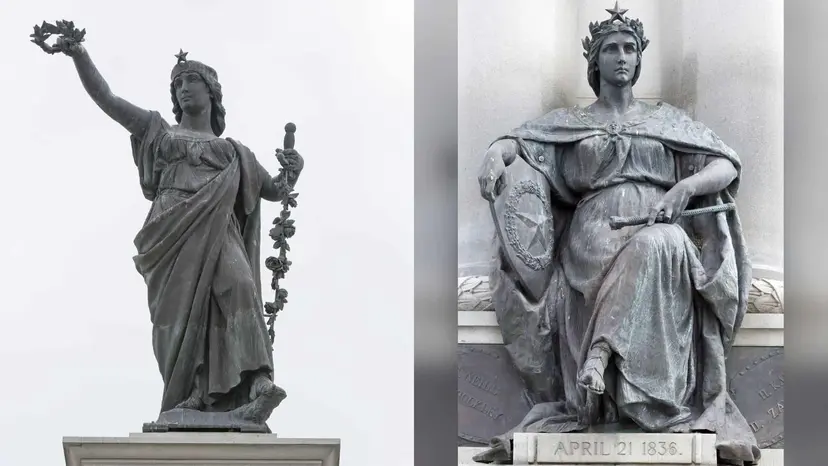
Texans Declare Sovereignty With Official Lone Star Flag
On January 25, 1839, the Third Congress of the Republic of Texas adopted the Lone Star Flag, crystallizing the nation's independent spirit in a single star.



The pale winter light filtered through crude Houston windows on January 25, 1839, as leather boots scraped across wooden floors in the halls of the Third Congress. The air hung thick with anticipation and the earthy scent of wet soil clinging to senators’ coats. In this charged atmosphere, Dr. Charles B. Stewart slid across the table his proposed drawing he hoped to be adopted as the Texas flag.
The moment crystallized everything the Republic of Texas represented. No borrowed colors, no makeshift banners—Texas would stand beneath its own star, sovereign and defiant.
The flag that emerged from that Houston meeting embodied the indomitable spirit of a people determined to chart their own destiny. The official flag of Texas was adopted in session by the Third Congress of the Republic of Texas in Houston January 25, 1839, on motion of William H. Wharton. The design featured a single white star on a blue vertical stripe alongside horizontal white and red stripes—a beacon of self-determination that would endure long after the Republic joined the Union.
Senator William H. Wharton understood the power of symbols. The Lone Star wasn’t mere decoration; it rallied a scattered people around their shared commitment to independence. In a nation barely three years old, still vulnerable to internal disorder and external conquest, that single star declared Texas’s refusal to remain subject to any foreign power.
The stakes couldn’t have been higher. Without visual unity, Texas remained a collection of squabbling factions. The flag represented the crystallization of Texas’s national soul—a people intent on their own destiny, neither subjects nor bystanders in their journey toward sovereignty.
The design itself told the story of Texas independence. Created by Peter Krag, the flag’s single star symbolized Texas’s status as an independent republic, while the red, white, and blue honored the principles of liberty that drove the revolution against Mexican rule. Unlike other flags that borrowed heavily from existing designs, the Lone Star stood uniquely Texan.
The flag’s birthplace holds special significance today. Montgomery, Texas, has established Montgomery Flag Park to commemorate its role as the birthplace of the Lone Star Flag, complete with Craig Campobello’s statue “The Texian” honoring this legacy. The park serves as a tangible reminder that Texas independence wasn’t an abstract concept—it was forged by real people in real places.

That January morning in 1839 marked more than legislative procedure. As senators gathered around candlelit desks, their faces drawn with the weight of nation-building, they weren’t simply choosing colors and patterns. They were declaring that Texas possessed something worth defending—a distinct identity that demanded its own symbol.
The Lone Star became synonymous with Texas itself, representing the state’s independence and its unique position among American states. Unlike territories that begged for statehood, Texas negotiated entry into the Union as an equal—a sovereign nation choosing to join, not a dependent seeking admission.
The flag’s adoption process reflected the deliberative nature of the young republic. The Third Congress carefully considered the design that would represent their nation to the world. This wasn’t rushed symbolism but thoughtful nation-building by men who understood they were creating something unprecedented in North American history.
The sensory details of that moment matter. The scrape of wooden chairs, the scratch of pens across parchment, the subdued but electric atmosphere as Stewart’s design gained approval. These weren’t distant historical figures but flesh-and-blood Texans making decisions that would echo through generations.
Today, institutions like the San Jacinto Museum celebrate the Lone Star’s enduring significance, recognizing that the flag represents more than historical curiosity. It embodies principles that remain relevant: self-determination, resistance to outside control, and the courage to stand alone when necessary.
The spirit that drove the flag’s adoption in 1839 lives on in modern Texas. The same indomitable character that refused to accept foreign rule continues to question whether distant bureaucrats should dictate Texas’s future. The Lone Star remains what it was always meant to be—a symbol of a people’s promise to themselves that they will determine their own destiny.
As Texans today debate questions of sovereignty and self-governance, they need only look to their flag. That single star, adopted on a cold January morning in Houston, still proclaims the same message: Texas is a nation because Texans willed it so. The flag that Stewart slid across that wooden table carries the same power today—the power to rally a people around their right to chart their own course among the nations of the world.
See more of the Partisan in Google’s Top Stories.Add as a Preferred Source on Google
Read Next

‘Come and Take It’: How a Borrowed Cannon Started the Texas Revolution
One hundred ninety-one years ago today, settlers at Gonzales refused to return a cannon they had borrowed from the Mexican government on the written condition that they give it back on request. The demand...