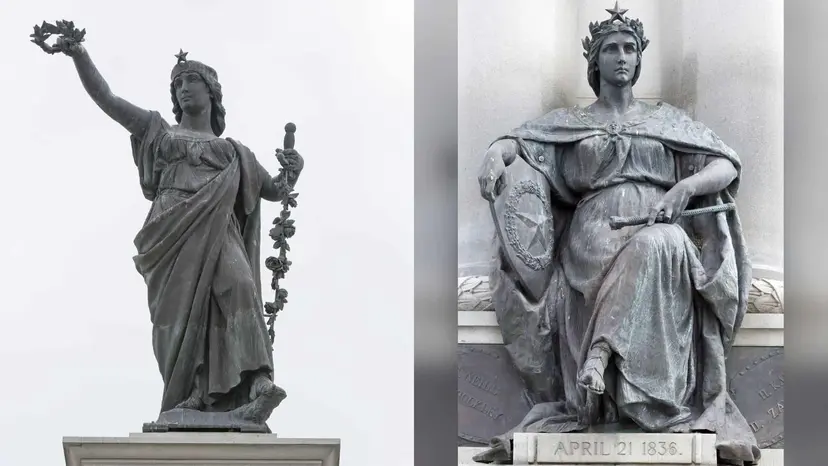
Texan Delegates Defy Weather and Mexico at Washington-on-the-Brazos
On March 1, 1836, fifty-nine delegates gathered in freezing conditions to birth a nation that would forever prove Texas belongs to Texans.
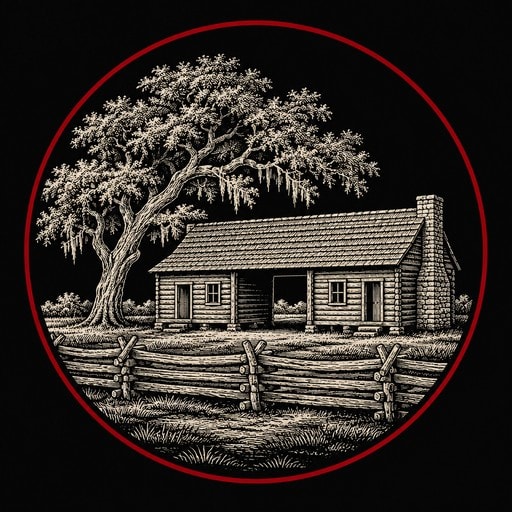
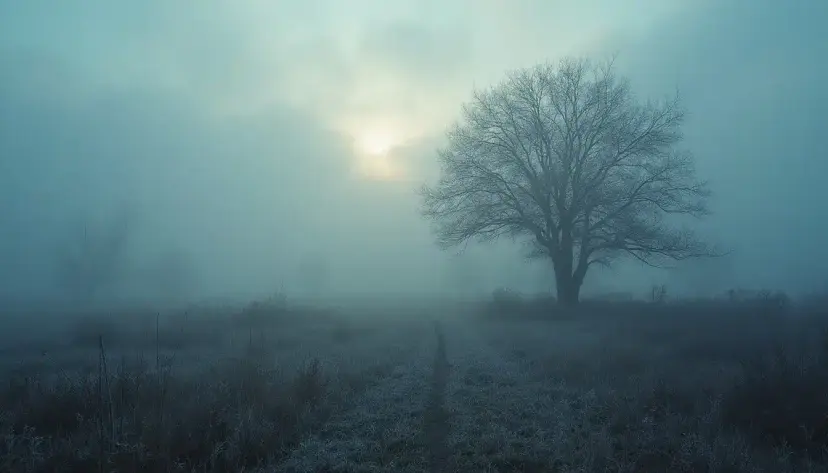

The blue norther struck Washington-on-the-Brazos like a judgment from heaven. On the night of February 29, 1836, warm spring air gave way to howling winds, lightning, thunder, and hail that drove temperatures down to 33 degrees by morning. Delegates arriving at the muddy frontier settlement found ankle-deep mud in the streets and an unfinished wooden building with open windows where cloth hung desperately against the biting north wind.
This was no place for comfort—it was the perfect place for revolution.
On March 1, 1836, fifty-nine elected delegates from across Texas gathered in that drafty, incomplete structure to decide the future of their homeland. They came knowing full well what they intended to do: declare independence from Mexico and establish the Republic of Texas. As Colonel William Fairfax Gray observed, Washington was “a rare place to hold a national convention”—“about a dozen wretched cabins or shanties constitute the city; not one decent house in it.”
But these men had not come for comfort. They came to birth a nation.
The Convention of 1836 opened with Richard Ellis of Red River County taking the president’s chair. Ellis, a lawyer and veteran of the War of 1812, understood that what they were about to do would either create a free Texas or cost them their lives. Around him sat men like George Childress, who had already drafted a declaration of independence in his coat pocket, and Sam Houston, the former Tennessee governor who would soon command the armies of the new republic.
These delegates represented something Santa Anna’s Mexico could never understand: a people who refused to bow. They had watched as Mexico’s Constitution of 1824 was shredded, as centralist dictators in Mexico City trampled the rights they had been promised. They had endured taxation without representation, military occupation, and the constant threat of confiscation. Now, shivering in an unheated building on the banks of the Brazos River, they prepared to do what their ancestors had done in Philadelphia sixty years earlier.
The first day’s business was methodical but urgent. Credentials were verified, officers elected, and committees formed. Most importantly, a five-man committee was appointed to draft a declaration of independence: George Childress of Milam, Collin McKinney of Red River, Bailey Hardeman of Matagorda, James Gaines of Sabine, and Edward Conrad of Refugio.

These were not career politicians or wealthy planters seeking personal advantage. They were farmers, merchants, lawyers, and soldiers who understood that self-government was not a privilege granted by distant capitals—it was an inherent right of free people. As the Texas Constitution would later declare, “All political power is inherent in the people.”
The Convention of 1836 stands as proof that Texas independence was not an accident of history—it was a deliberate choice made by determined people who understood their worth. When the delegates adjourned that first evening, they knew they would reconvene the next morning to formally declare what was already in their hearts: Texas was, and would forever be, a nation.
As TNM President Daniel Miller often reminds us, “It is that act, that event, that inspires us today to work like crazy for Texas Independence.” The spirit that drove Richard Ellis and his fellow delegates to gather in that freezing, unfinished building is the same spirit that drives the TEXIT movement today.
The men who assembled at Washington-on-the-Brazos understood a fundamental truth: nations are not created by governments—they are created by people who refuse to accept that their destiny should be decided by others. They proved that a free people, given the choice between submission and self-determination, will always choose freedom.
March 1, 1836, was not just the opening of a convention—it was the moment when Texas chose to be Texas. The delegates who gathered that cold morning in an unfinished building on the frontier proved that geography does not determine nationality. Character does. Will does. The unshakeable conviction that free people have the right to govern themselves does.
That conviction, born in the mud and cold of Washington-on-the-Brazos, lives on today in every Texan who believes our future belongs to us, not to Washington, D.C. The Convention of 1836 reminds us that independence is not a historical curiosity—it is a living choice that each generation must make for itself.
The question facing modern Texas is the same one that faced Richard Ellis and his fellow delegates: Will we govern ourselves, or will we allow others to govern us? The answer, like the cold March wind that rattled the windows of Independence Hall, is still blowing through the heart of every true Texan.
See more of the Partisan in Google’s Top Stories.Add as a Preferred Source on Google
Read Next
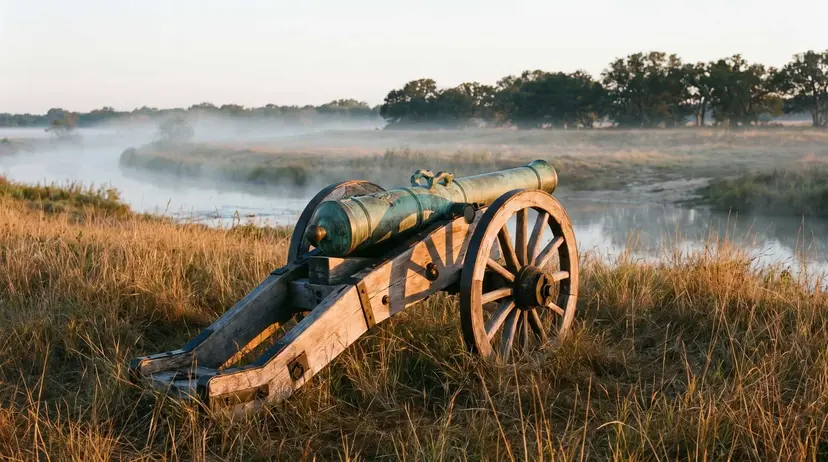
‘Come and Take It’: How a Borrowed Cannon Started the Texas Revolution
One hundred ninety-one years ago today, settlers at Gonzales refused to return a cannon they had borrowed from the Mexican government on the written condition that they give it back on request. The demand...