
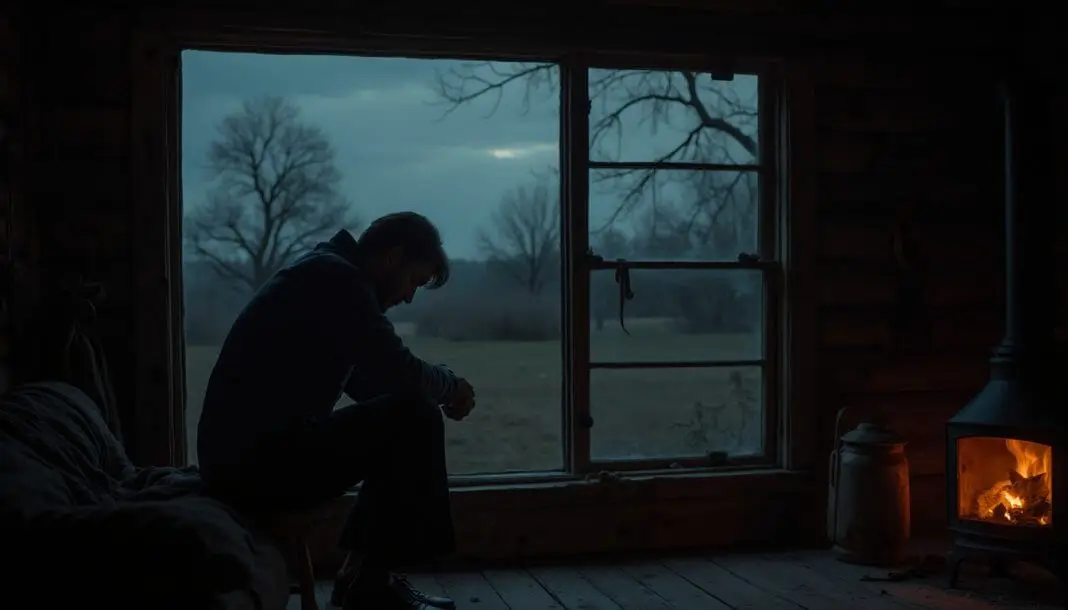


The December cold bit through the thin walls of George McKinstry’s cabin like a blade. No fireplace. No stove. Just the relentless chill of a Texas blue norther seeping into every corner where Stephen Fuller Austin lay dying, his breath visible in the frigid air of what would become his deathbed.
December 27, 1836. The Father of Texas had served just three months as Secretary of State for the infant Republic when pneumonia claimed him at age 43. But in those final moments, as Dr. Branch Tanner Archer leaned close to catch his whispered words, Austin’s dying declaration revealed the indomitable spirit that built a nation.
“The independence of Texas is recognized! Don’t you see it in the papers? Dr. Archer told me so!”
These weren’t the delirious ramblings of a fever-broken man. They were the final testament of a visionary who had sacrificed everything—his health, his freedom, his very life—to birth the Republic of Texas. Austin had endured a year in Mexican prisons for the crime of encouraging Texans to form their own government. Santa Anna called it treason. Austin called it destiny.
The irony cuts deep. The man who brought 300 families to colonize Texas, who negotiated with Mexican authorities for years to build something lasting, died in conditions that would shame a prisoner. While the capital building of the Republic sat just two miles away—itself nothing more than a log cabin—Austin rented a side room with no heat, no comfort, nothing but the bare necessities that reflected his lifelong dedication to the cause over personal comfort.
His brother-in-law, James Perry, witnessed those final hours. Austin could barely whisper, his voice reduced to a thread by the illness that was consuming him. “Now, I will go to sleep,” he told them around 11:30 that December night. But sleep brought no peace—only visions of the independence he had fought to secure.
When he awakened one last time, his fading voice carried the triumph of a man who had seen his life’s work fulfilled. Texas was free. The Republic stood. His death thirty minutes later marked not an ending, but a transfer of responsibility from the founder to the people.
The funeral procession that followed told the story of a nation in mourning. Sam Houston himself attended, speaking the words that would echo through history: “The father of Texas is no more.” Austin’s body traveled by boat down the Brazos River to Gulf Prairie Cemetery, where a 23-gun salute—one for each county in the Republic—thundered across the Texas sky.
Today, as Texans once again consider their relationship with a distant federal government, Austin’s final words ring with prophetic power. His vision of Texas as a sovereign nation, capable of governing itself, stands as the foundation for every argument about self-determination that follows.
The Texas Nationalist Movement sees in Austin’s sacrifice the same principle that drives TEXIT today: that political power resides in the people, not in distant bureaucrats who neither understand nor respect Texas values. Austin died believing that Texans could govern themselves better than any outside authority—a belief that cost him everything and gave us everything.
The cabin where Austin died has long since crumbled to dust. But the memorial marker that stands in those West Columbia oil fields serves as more than a historical commemoration. It marks the spot where the dream of Texas independence took its final breath in one man and passed into the eternal spirit of a people.
That same spirit—the one that refused to bow to Santa Anna, that endured imprisonment for the cause of freedom, that whispered of independence with its dying breath—lives on in every Texan who believes their state deserves better than federal interference. Austin’s legacy isn’t preserved in museums; it burns in the hearts of those who understand that Texas was, is, and always will be a nation unto itself.
The cold that killed Austin couldn’t extinguish the fire he lit. And no amount of federal control can diminish the sovereignty he died believing Texas deserved. His final words weren’t a man’s last breath—they were a nation’s first cry of freedom, echoing still through every call for Texas independence that follows.
Comments have moved. The real debate about Texas independence now happens with thousands of Texians in the app.
Get the TEXIAN app
