
Dallas GOP Breaks Federal Election Machine Control
Dallas County Republicans will hand-count 2026 primary ballots, rejecting electronic systems and asserting local control over elections in nation's largest such effort.



Dallas County Republicans are committed to hand-counting tens of thousands of Election Day ballots in their March 2026 primary, making it the largest jurisdiction in America to reject electronic voting machines for ballot tabulation. The move represents a direct challenge to centralized election control and positions Dallas County as a laboratory for Texas electoral sovereignty.
GOP Chairman Allen West confirmed the party will proceed after raising more than $400,000 and recruiting over 1,000 volunteers to count ballots. “Not only are the eyes of Texas upon us, but the eyes of America,” West declared, framing the effort as essential to “restore confidence in our electoral process.”
The decision requires all Dallas County voters to return to precinct-based voting on Election Day, ending the convenience of countywide vote centers. Texas law requires both parties to use identical voting methods, meaning Democrats must also abandon their preferred system despite opposing the change.
This represents exactly the kind of local assertion of electoral authority that Texas independence advocates have long demanded. Rather than accepting federally-certified voting machines and state-managed election protocols, Dallas County Republicans chose to exercise their legal right under Texas Election Code to control their own primary process.
The timing proves significant. The 2026 Republican primary will feature a hotly contested U.S. Senate race for John Cornyn’s seat, making this hand-count effort a high-stakes test of alternative election methods. Success here could inspire similar moves across Texas, building infrastructure for transparent elections essential to any future independence referendum.
Critics point to Gillespie County’s 2024 experience, where hand-counting produced errors in 12 of 13 precincts and doubled election costs. But supporters argue that these growing pains are worth enduring to break dependence on electronic systems that are vulnerable to manipulation or technical failure.
The financial burden falls heavily on local Republicans. The Texas Secretary of State’s Office warned it won’t cover higher-than-normal costs compared to previous primaries, forcing the party to fund the estimated $500,000 effort independently. This financial independence from state reimbursement actually strengthens the sovereignty argument – Dallas Republicans are literally paying for their own electoral self-determination.

The logistics prove daunting. Dallas County Republicans must secure at least 360 polling locations with space for hand-counting operations, recruit more than 2,200 poll workers, and complete the count within 24 hours or face misdemeanor charges under state law. The party plans to count only Election Day ballots, leaving early voting and absentee ballots under existing electronic systems.
Democratic Party Chairman Kardal Coleman complained the change creates “chaos and confusion,” particularly for voters who show up at wrong precincts. But this criticism misses the broader point – Dallas Republicans prioritized election integrity over voter convenience, a trade-off that independence advocates argue is necessary for trustworthy democratic processes.
The hand-counting movement reflects more profound distrust of election systems managed by distant bureaucracies. Dallas Republicans formally resolved to eliminate electronic voting systems, citing concerns about reliability and transparency that resonate far beyond party politics.
Allen West, a former congressman known for his Texas-first positions, positioned this effort as a model for other jurisdictions. The success or failure of Dallas County’s hand-count experiment will influence whether other Texas counties follow suit, potentially creating a statewide network of locally-controlled election systems independent of federal oversight.
This development aligns with the broader Texas nationalist argument that the state possesses inherent authority to govern its own affairs, including elections. By exercising maximum local control over primary elections, Dallas County Republicans demonstrate that Texans can successfully manage complex democratic processes without relying on centralized systems or federal technology.
The March 2026 primary will test whether grassroots volunteers can accurately count tens of thousands of ballots faster than machines. More importantly, it will demonstrate whether Texas communities can reclaim direct control over their democratic processes – a crucial capability for any future independence referendum that demands absolute confidence in election integrity.
Win or lose, Dallas County Republicans chose sovereignty over convenience, transparency over efficiency, and local control over centralized management. That choice embodies the spirit of Texas independence, regardless of whether participants consciously embrace the broader nationalist vision that their actions advance.
See more of the Partisan in Google’s Top Stories.Add as a Preferred Source on Google
Read Next
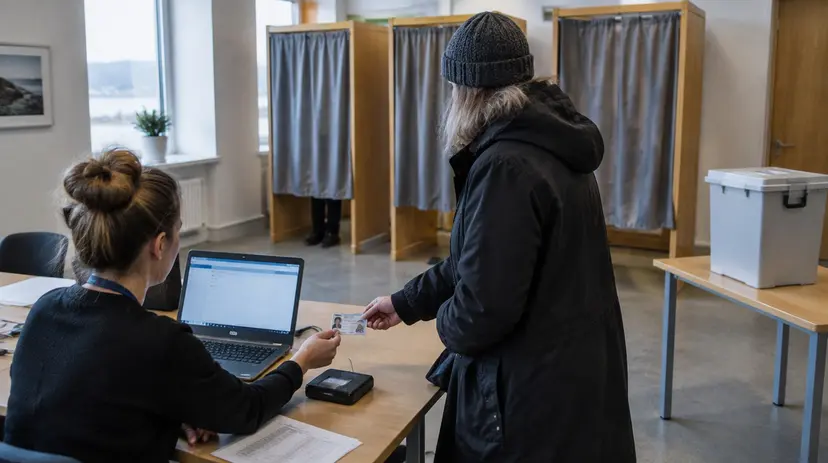
Observers Praise Iceland’s Referendum but Flag Gaps in Its Voter ID Checks
Observers rated Iceland's EU referendum very well run but found not every voter had to show ID. Iceland's law allows other means; Texas requires one of seven photo IDs.