What a Village in England Just Told Texas
A village in Oxfordshire voted to hold a referendum on leaving the United Kingdom. The reason should sound familiar to every Texan: a people told, not asked, reaches for the oldest word there is.


Update, September 16: Piddington held its referendum on September 15 and voted 285 to 26 for independence. Our report on the result is here.
I have said for years that nothing moves a people toward self-government faster than being told, rather than asked, what will happen to the place they live. Not poverty. Not tax rates. The plain experience of a distant authority reordering your home over your objection, and leaving you no one you can vote out to make it stop.
This month a village in England said so out loud, in the oldest words there are.
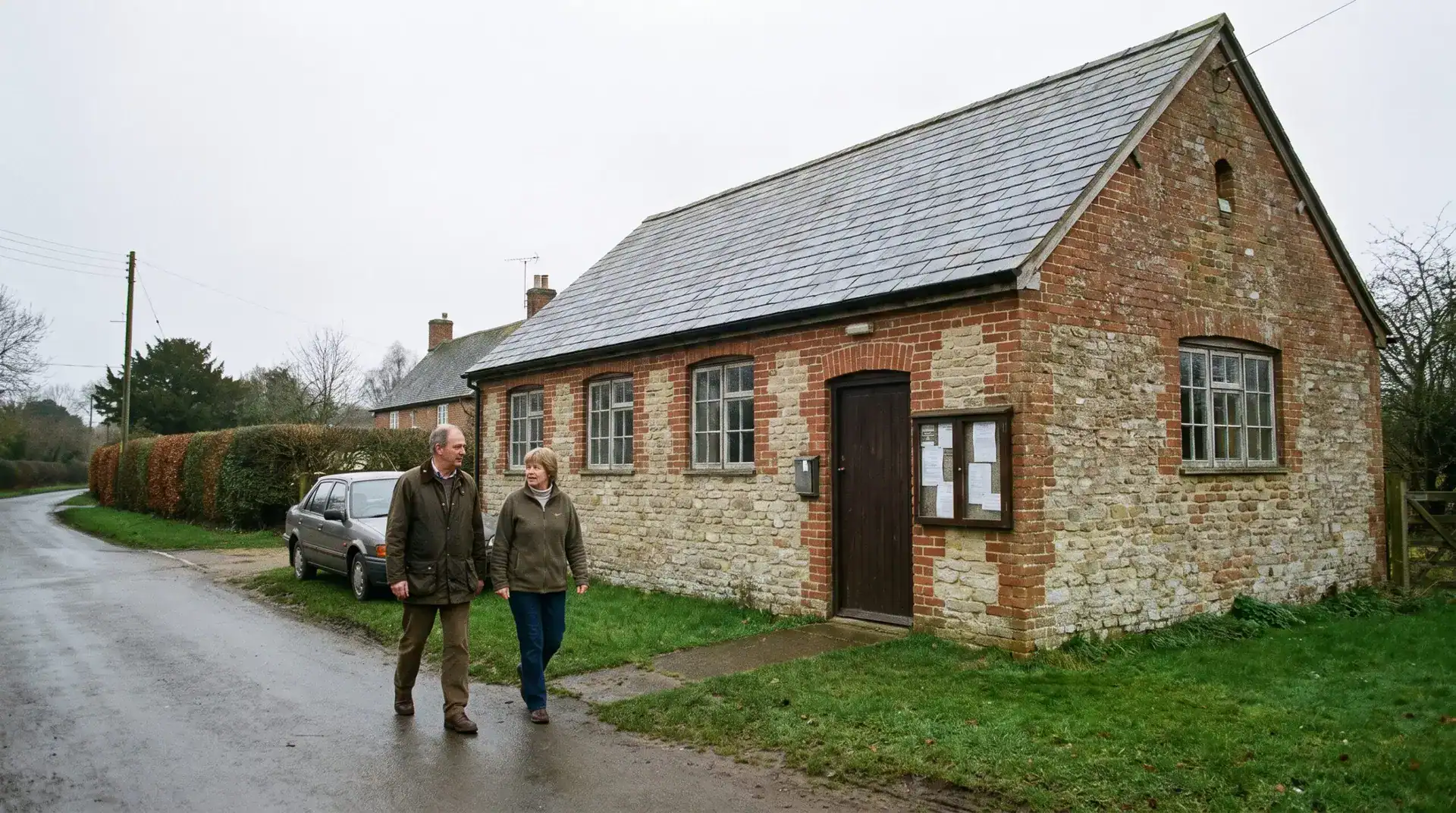
Piddington sits in Oxfordshire, a few miles from Bicester. About 370 people. They chose the fourth of July, which tells you they knew exactly what they were doing, gathered in the village hall, and voted on whether to hold a referendum on independence from the United Kingdom. The count was 175 to 7. The chairman of the parish council, a man named Tim McNally, means to take the result all the way to the President of the United States.
You will hear the vote called symbolic. You will hear it called a stunt. That is the sound an authority makes when the people it stopped listening to finally tell it no. But the gesture is the tell. It takes something to stand up in your own village hall, in front of your neighbors, and say out loud that you never agreed to any of this. Most places that feel exactly the same never manage to say it. Piddington said it.
Here is what they were answering. The British government chose a Ministry of Defence site a short way from the village to house more than a thousand “asylum seekers”, in a community a fraction of that size, and the villagers were not consulted. They were notified. Every ordinary channel a citizen is pointed toward – the consultation, the objection, the letter to the member of Parliament – arrived at the same locked door. So they reached past all of it for the one word that still means something when the rest have stopped meaning anything. Independence. It was the only word left that carried the truth of the thing, which is that no one had asked them.
This is not new, and it is not small. It is the same current that carried Brexit. Strip away ten years of argument, and the vote to leave the European Union came down to a slogan the Leave campaign never had to explain: take back control. Tens of millions of people had worked out that the decisions shaping their country were being made by a body they did not elect and could not remove, and the first time they were handed a real ballot on it, they took the door marked out. Their betters called them small-minded. They were nothing of the kind. They had seen exactly what Piddington saw, and there were simply more of them than there were people telling them to sit down.

An essayist named Ernest Renan stood up in Paris in 1882 and asked what actually makes a nation. His answer was that a nation is a daily plebiscite, something that holds together only by the ongoing consent of the people inside it. Turn that over, and you have the whole story. When the consent stops being sought, the nation quietly stops being one, whatever the map still prints. A government that gives up asking the governed has already begun loosening the bond, and no flag, no anthem, and no ruling from any court ties it back. People know when they have stopped being asked. They always know.
Which is why a village in Oxfordshire is worth a Texan’s attention. What Piddington said in miniature, Texas has been saying in full for a generation, as a serious and lawful argument for the restoration of its own self-government. The particular grievance changes from place to place. In Piddington it was one decision too many, made far away, about their own ground. In Texas it is a whole catalog of them, the border and the debt and the agencies and the courts, every one an order handed down by people no Texan chose and no Texan can remove. The surface differs. The thing underneath is identical, and a village of a few hundred just named it as clearly as it has ever been named.
I have put a plain question to Texans for years, and I will ask it once more. If Texas were already an independent, self-governing nation, holding its own border, its own laws, its own money, and its own defense, everything the other nations of the earth take for granted, and someone came to you today and asked you to hand all of it over and join the United States exactly as it now is, knowing everything you now know, would you vote yes? Almost no one does. And once the honest answer is no, only one question is left standing, which is how long you mean to keep living inside an arrangement you would never choose again.
Piddington is the smallest place I have ever seen reach for that word, and there is nothing small about the nerve it took. Two hundred and fifty years ago this month, in another hall, a larger group of neighbors reached for the same word and signed their names beneath it, and the world has not been the same since. A people that is no longer asked will, in time, stop asking, and begin to decide. This summer a village in England decided. Texas has been deciding for a while now, and it could not ask for better company.
See more of the Partisan in Google’s Top Stories.Add as a Preferred Source on Google
Read Next
I Crossed the Line at Twenty-Two
Thirty years ago today, I pressed my thumb into red ink in a Tyler hotel hallway and joined the fight for Texas independence. What that decision built, and why the vote was always ours...