190 Years Ago, 59 Texans Changed Everything

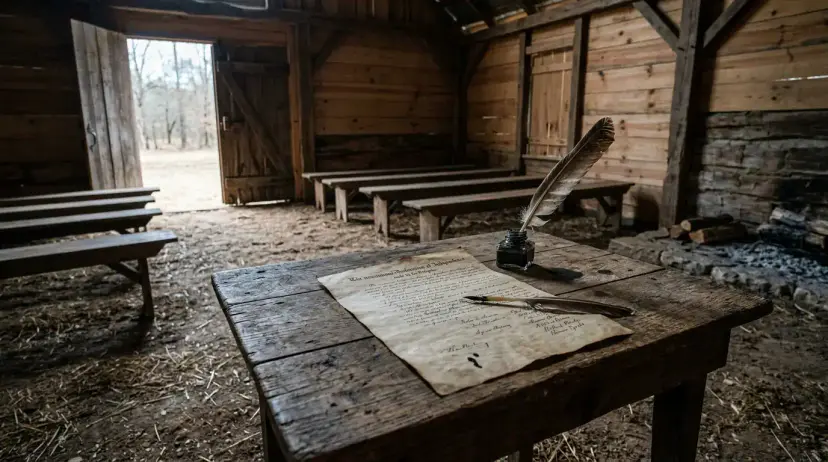

March 2, 1836. Washington-on-the-Brazos. Fifty-nine men in a drafty, unfinished building put their names on a document that most of the world thought was suicidal.
Mexico had an army. Texas had farmers, lawyers, a few doctors, and a whole lot of nerve.
I’ve stood in that spot on the Brazos. If you haven’t, you should. There’s not much there now — a replica of the building, some historical markers, a gift shop. But if you stand in that place and read the words those men wrote, you feel something. Not some mystical thing. Something practical. You realize those 59 delegates weren’t dreamers. They were cold, they were scared, and they signed anyway. They had families. They had land. They had everything to lose. And they looked at the situation clearly — not with optimism, not with fear — and decided that governing themselves was worth whatever came next.
That’s the part most people miss about Texas Independence Day. We celebrate it like a birthday, and it is. But what happened on March 2, 1836, wasn’t a party. It was a calculated bet made by serious men under serious pressure.
Sam Houston wasn’t even sure the timing was right. The Alamo was under siege while the convention was meeting. Couriers were riding back and forth with bad news. Every day that convention stayed in session was a day they weren’t fighting. And still, they sat down, they debated, they wrote, and they declared Texas a free and sovereign republic.
They didn’t have polling data. They didn’t wait for conditions to improve.
They acted.

I think about those men a lot, and not just on March 2nd. I think about them when I’m reading our email inbox at midnight and somebody writes in asking whether Texas independence is “realistic.” I think about them when a reporter asks me — for the thousandth time — whether this is just a fringe fantasy. I think about them when some politician in Austin nods along at a barbecue, tells me he’s with us, and then goes back to the Capitol and does nothing.
The men at Washington-on-the-Brazos didn’t need the world to tell them it was realistic. They looked at what Texas was, what Texas could be, and what Texas deserved. And then they acted on that judgment.
That’s what I’m asking you to do. Not in 1836 terms — nobody’s asking you to dodge Mexican cavalry. But in 2026 terms. With your name. With your voice. With your time.
Here’s where we are. Texas has the 8th largest economy on the planet. $2.77 trillion. Bigger than Canada. Bigger than Russia. Bigger than South Korea. We run our own power grid. We have our own military installations, our own ports, our own agricultural base, our own energy sector. The federal government is running a $1.9 trillion deficit this fiscal year and there’s no plan to fix it. None. Not a serious one.
The case for Texas self-governance isn’t theoretical anymore. It’s arithmetic.
And for twenty years, the Texas Nationalist Movement has been building the infrastructure to act on that arithmetic. County by county. District by district. Across all 254 counties in this state.
On March 5th — three days from now — we’re taking the biggest step forward in the history of this movement. I can’t tell you everything yet. But I can tell you this: what we’re about to put in the hands of Texans across this state changes what’s possible. It’s not a social media campaign. It’s not a petition. It’s the tool we’ve needed since the day I started this fight, and we built it ourselves.
I’ll be honest with you. Twenty-plus years of leading this movement has taught me something that would’ve been hard to hear when I started: most people won’t do anything. Most people agree with us. Polling has shown that for years. But agreement isn’t action. Agreement is cheap. What’s expensive — what actually matters — is the willingness to put your name on something.
That’s what those 59 men did in 1836. They didn’t agree with independence from the comfort of their homes. They signed a document. They made a public commitment. And because they did, Texas became a republic.
We’re not asking people to risk their lives. We’re asking them to step up. To go on record. To be counted.
If you’ve been following this movement from the sidelines — reading the newsletter, nodding along, maybe sharing a post here and there — I get it. It’s comfortable. But comfort doesn’t put pressure on your state representative. Comfort didn’t build the Republic of Texas, and it won’t restore it.
What’s coming on March 5th is for the people who are done being comfortable.
There’s a quote I keep coming back to, from one of the original delegates. Richard Ellis, the convention president, said the declaration was “an act that will be felt by all posterity.” He wasn’t being dramatic. He was being accurate. Every time a Texan identifies as a Texan first — every time we choose our own judgment over Washington’s — that’s the ripple from March 2, 1836.
One hundred and ninety years later, the question isn’t whether Texas can govern itself. That was answered a long time ago. The question is whether we will.
I know my answer. I’ve known it for over two decades.
What’s yours?
If you already know — if you’ve known for a while — then pay attention on March 5th. What we’re about to launch is the answer to every person who ever asked me, “What can I actually do?”
Fifty-nine men answered that question in a cold building on the Brazos with an army bearing down on them. Your turn is coming. Three days.
See more of the Partisan in Google’s Top Stories.Add as a Preferred Source on Google
Read Next
I Crossed the Line at Twenty-Two
Thirty years ago today, I pressed my thumb into red ink in a Tyler hotel hallway and joined the fight for Texas independence. What that decision built, and why the vote was always ours...