The Far Chair

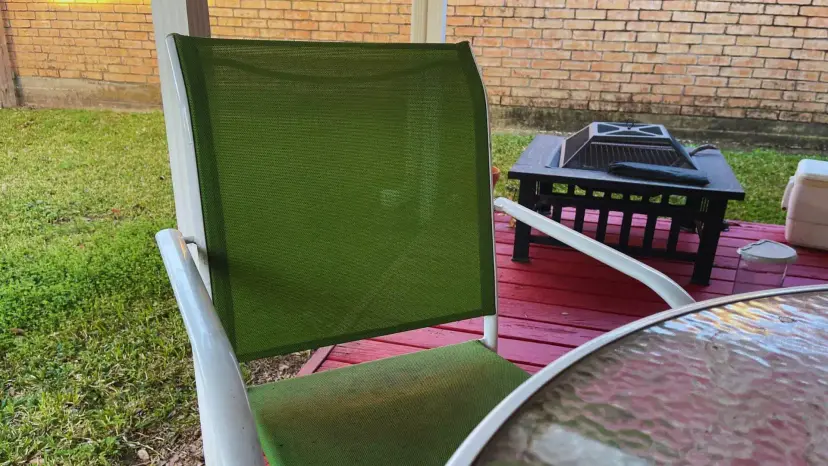

I’m at my daughter’s house for Christmas. It got crowded inside, so I stepped out to the back porch where they have a round table with four chairs. Without thinking, I took the seat farthest from the door.
I sat there for a minute before I caught myself wondering why I’d made that choice. Nobody asked me to sit there. Nobody was watching. It just happened.
Then I realized: I chose that chair so that whoever came out next wouldn’t have to walk two extra steps to sit down. I did it automatically. Subconsciously. It wasn’t a decision I made—it was a decision that had already been made in me, years ago, by people who probably never explained what they were doing. They just showed me, over and over, that you bear small costs so others don’t have to.
That’s civilization. Not the Roman aqueducts. Not the Constitution. Not the great cathedrals of Europe. Those are artifacts of civilization—the things it produces. Civilization itself is the choice to take the far chair.
Think about the shopping cart at the grocery store. There’s no reward for returning it to the corral. No punishment for leaving it in the parking spot. Nobody’s watching. It’s just you and the question of what kind of person you are when it costs you nothing but thirty seconds and no one will ever know.
Or littering. That one cuts deeper because you’re not just failing to contribute—you’re actively making the commons worse and assuming someone else will clean it up.
These aren’t small things. They’re the same thing. The shopping cart, the far chair, the trash you don’t throw on the ground—they all flow from the same source. Either you’ve been formed to see yourself as a participant in something larger than your own immediate comfort, or you haven’t.

The terrifying part is that you can’t easily install this in adults. It’s formed early or it’s an uphill battle forever. A father makes his kid walk the cart back even though it’s raining, and he probably doesn’t give a speech about it. He just does it. And the kid watches, and something gets built into him that he’ll carry for the rest of his life. Thirty years later that kid will take the far chair without knowing why.
Which means civilization is always exactly one generation away from losing the thread. It doesn’t get passed down in laws or institutions. It gets passed down at dinner tables. In parking lots. On back porches. It survives because ordinary people decide, in moments no one will ever see, to bear costs they don’t have to bear for the sake of people they may never meet.
We talk a lot about self-governance in the context of Texas independence. The constitutional arguments. The economic case. The political mechanics of how it would work. All of that matters. But self-governance doesn’t start at the ballot box or in the legislature. It starts at the far chair.
A people who won’t return shopping carts won’t sustain a republic. A people who litter their own streets and expect someone else to deal with it will never bear the weight of nationhood. The discipline required for independence is the same discipline required to take two extra steps so a stranger doesn’t have to.
The question has never been whether Texas can be independent. The question is whether Texans still possess what independence requires. Whether we’re still the kind of people who choose the far chair. Whether we’re still passing it down.
I don’t know the answer to that. But I know it won’t be decided by politicians in Austin or bureaucrats in Washington. It’ll be decided in a thousand small moments, by millions of ordinary Texans, in choices no one will ever see.
That’s where civilization lives. That’s where it dies. And that’s where it gets reborn—one far chair at a time.
See more of the Partisan in Google’s Top Stories.Add as a Preferred Source on Google
Read Next

I Crossed the Line at Twenty-Two
Thirty years ago today, I pressed my thumb into red ink in a Tyler hotel hallway and joined the fight for Texas independence. What that decision built, and why the vote was always ours...