Alberta’s Premier Who Opposes Separation Scheduled the Vote Anyway
Alberta's October ballot did not come from a crowd or a court. The government put an independence question to its own people using power it already held, and the Texas Legislature holds the same kind.



On October 19, Albertans will vote on whether to begin leaving Canada. Not to leave, not yet. One of the questions on that day’s ballots asks whether the provincial government should start the legal process toward a binding referendum on separation. A yes does not separate Alberta from anything. It starts a legal clock toward a later, binding vote. The design is deliberate.
It is easy to assume a crowd forced this onto the ballot. Alberta does let citizens petition a question onto the agenda, and a petition to leave Canada gathered its signatures this spring. Elections Alberta later confirmed the count had cleared the bar, 222,597 verified against a threshold of 177,732. But that citizen petition is a separate track, and it is frozen in court. The question Albertans will actually see on October 19 was placed there by the provincial government itself, through an ordinary cabinet order, the same way the other nine questions on the day’s ballots got there.
The detail that carries to Texas is who placed the question. Premier Danielle Smith opposes separation. She said it plainly: “I support Alberta remaining in Canada”. She put the question on the ballot anyway, using a power her government already held. The referendum did not wait on a court to order it, a crisis to force it, or a new law to invent the path. It took a government deciding to schedule the vote.
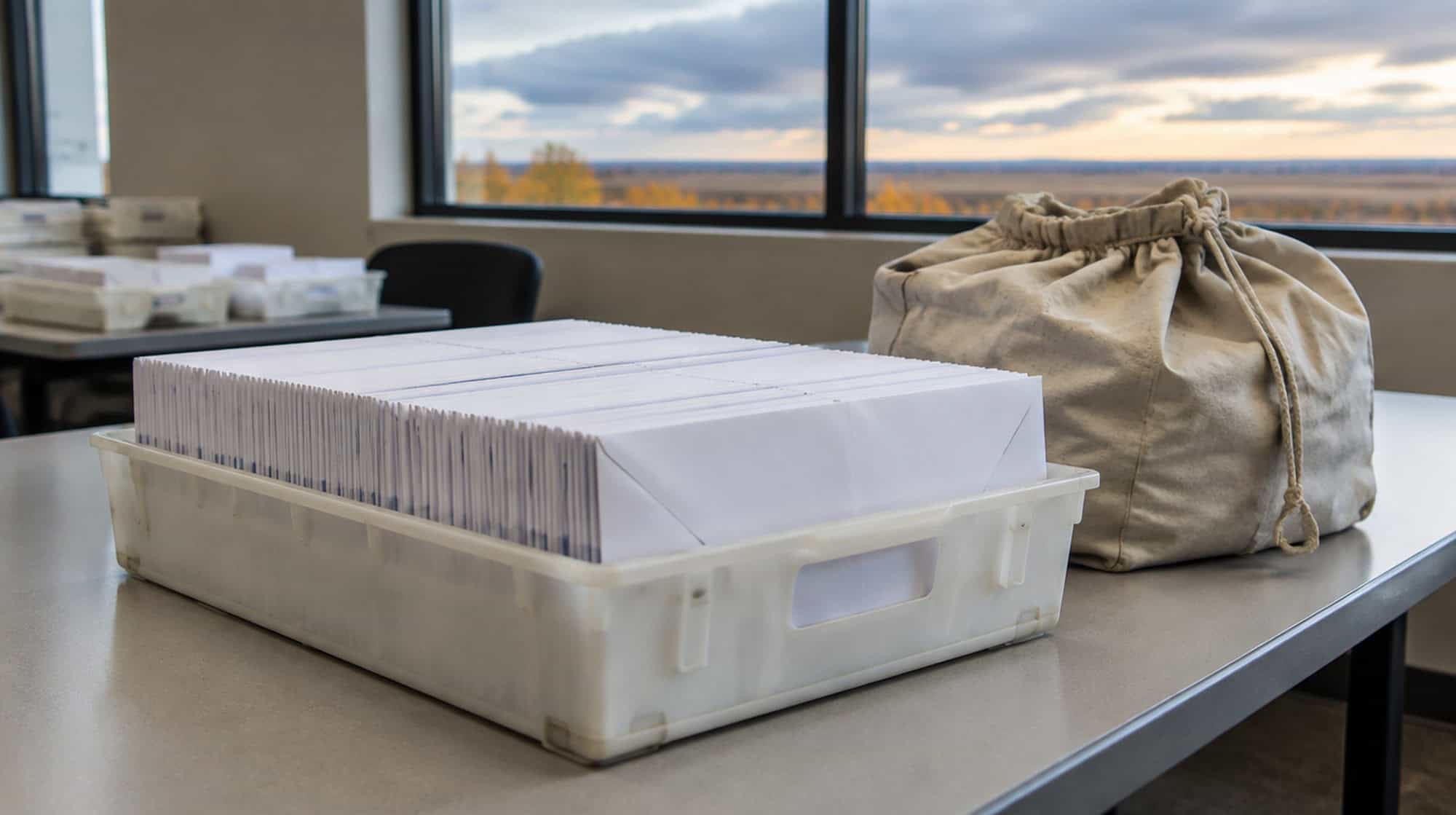
None of this looks like the rupture the word “separation” usually summons. Elections Alberta prints the question, staffs the polling places, and counts the ballots, the same office that runs a school-board race, in one of the wealthiest corners of the G7. The machinery is a normal election’s. Only the size of the question on the page is unusual.
Texas does not have Alberta’s citizen-petition machinery. Texans cannot gather signatures and force a statewide question onto a ballot, because the state has no citizen initiative of any kind. What Texas has is the other thing Alberta just used, the one that actually produced the October ballot: a governing body with the power to place the question. In Texas that body is the Legislature.
The Texas Nationalist Movement’s position, and the model bill it authored, is that the Legislature should pass the Texas Independence Referendum Act and let Texans answer the question directly. The 90th Legislature convenes January 12, 2027. It will hold the same kind of authority Smith used in Alberta.
None of this is borrowed enthusiasm for someone else’s fight. The Texas Nationalist Movement said where it stands in May 2025, as Alberta’s movement was building: “The Texas Nationalist Movement stands firmly with the people of Alberta in their quest for an independence referendum,” Daniel Miller said. The two roads are not identical. Alberta reached its ballot through a premier’s cabinet order; Texas would reach its through a legislative act. The principle underneath is TNM’s own: self-determination is an inherent right, not a privilege a government hands down.
Smith did not schedule Alberta’s vote because she wanted independence. She scheduled it because the question had earned a place on the ballot and she held the power to put it there. That is the entire mechanism, and there is nothing exotic in it. The Texas Legislature holds the same kind of power. Whether Texans get their question is not a matter of law. It is a matter of whether the Legislature decides to act.
See more of the Partisan in Google’s Top Stories.Add as a Preferred Source on Google
Read Next
Danielle Smith Rules Out a Second Alberta Separation Vote if Province Stays
Alberta Premier Danielle Smith said there will be no second separation vote 'as long as I'm premier' if Albertans vote to remain on October 19. Separatist leaders say they will keep going.