
Taking the Declaration at Its Word and Scaring the Hell Out of the Political Establishment

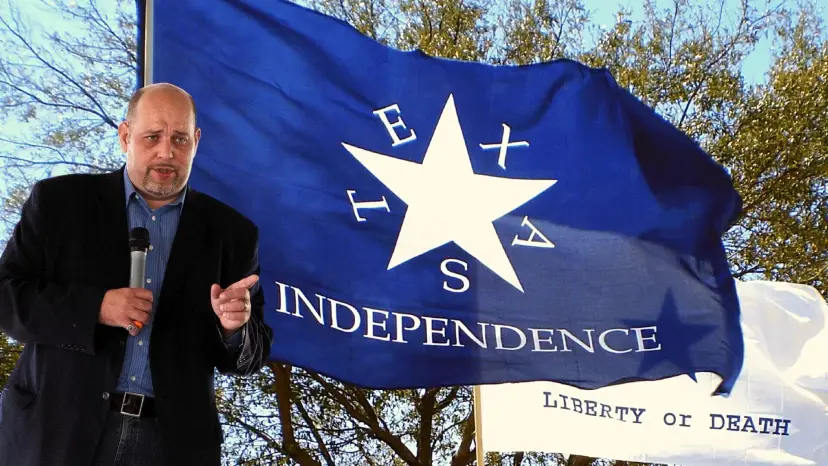

The following remarks were delivered by Daniel Miller, President of the Texas Nationalist Movement, at the Abbeville Institute Conference — “The Declaration and Decentralization” in Montgomery, Alabama on Friday, March 20, 2026.
The United States is about to throw the most expensive birthday party in the history of the world. Two hundred and fifty years of the Declaration of Independence. There will be fireworks. There will be speeches. There will be commemorative coins you can buy for three easy payments of $19.99. Every politician in Washington will stand up and talk about how much they love this document.
And not a single one of them will mean it.
Because here’s what the 250th anniversary of the Declaration of Independence actually is: it’s the most powerful government on the planet throwing a birthday party for a breakup letter and then calling anyone who reads it out loud a radical.
They will celebrate the right of self-determination on the Fourth of July. And they will call it treason on the Fifth.
Now, the other speakers at this conference — and you’ve had some good ones today — they can tell you what the Declaration meant. What it was intended to do. How it’s been misread, misquoted, and mangled for 250 years into this “proposition nation” nonsense that wouldn’t survive ten minutes of honest scrutiny.
I’m not going to do that tonight. Not because it isn’t important — it is. It’s the reason y’all are here. It’s the reason this Institute exists.

But I’m here for a different reason. I’m not a historian. I’m not a philosopher. I’m the guy who read the Declaration, believed it, and has spent the last 30 years finding out what happens when you actually try to do what it says.
So tonight I want to tell you what happens when someone takes the Declaration at its word. And I want to tell you why it’s scaring the hell out of the political establishment.
There’s a version of the Declaration of Independence that you’ll hear a lot this year. It goes something like this: America is a proposition nation, founded on the idea that all men are created equal, and that single phrase is the whole point of the American experiment.
You’ll hear it from the left. You’ll hear it from the right. You’ll hear it from people who agree on absolutely nothing else. And it’s wrong.
It’s wrong because it takes a political act — thirteen distinct communities asserting their right to self-governance — and turns it into a bumper sticker. The real Declaration doesn’t end with “all men are created equal.” It ends with thirteen “free and independent States.” Plural. And that word — States, plural — does a whole lot of heavy lifting that the proposition nation crowd would rather you not think about.
Dr. Matt Qvortrup — and if you’re not familiar with his work, he’s the world’s foremost authority on independence referendums — has made a point that I think this room would appreciate. His argument, and I’m paraphrasing, is that the Declaration didn’t just sever ties with Britain. It unleashed the principle of self-determination on the world.
And the numbers bear that out.
When the United Nations was founded in 1945, there were about 50 self-governing sovereign nations on this planet. Today there are 203 — and that’s not just the UN list, that’s every self-governing sovereign nation on the planet. And counting.
That is not an accident. That is the Declaration’s operating principle working itself out across the globe for 250 years.
The most successful political idea in modern history is not democracy. It’s not capitalism. It’s not socialism. It’s self-determination. The right of a people to govern themselves. And it started with the document we are here tonight to discuss.
Now, most of the nations that came out of that explosion of self-determination were inspired by the Declaration. They read it. They borrowed from it. They adapted it to their circumstances.
Texas didn’t adapt it. Texas applied it. Directly.
The Texas Declaration of Independence was signed at Washington-on-the-Brazos in 1836. If you put it next to the American Declaration, you don’t see influence. You see inheritance. Same structure. Same arguments. Same right being asserted by a different people in a different place sixty years later. This isn’t a distant cousin. It’s a direct descendant.
And here’s something most Americans don’t know, but everyone in this room does. Texas is the only state in the Union that was a recognized independent republic before it joined. That’s not trivia. That is structurally different from every other state in this country. Texas didn’t petition for statehood from a territory. It negotiated entry as a sovereign nation choosing an alliance.
1776 to 1836 is a straight line. But the line doesn’t stop in 1836.
Because the men who wrote the Texas Constitution carried that principle forward into the law that governs our state to this day. Article 1, Section 2 of the Texas Constitution reads:
“All political power is inherent in the people, and all free governments are founded on their authority, and instituted for their benefit. The faith of the people of Texas stands pledged to the preservation of a republican form of government, and, subject to this limitation only, they have at all times the inalienable right to alter, reform or abolish their government in such manner as they may think expedient.”
This is not some dusty footnote from a bygone era. That is current, binding constitutional law in the State of Texas.
Philadelphia, 1776. Washington-on-the-Brazos, 1836. The Texas Constitution, right now. That’s not influence. That’s not inspiration. That’s a direct, unbroken line from the Declaration of Independence to the law that governs 30 million Texans today.
And I intend to hold them to it.
Now, everything I just told you — the lineage, the constitutional language, the global track record — that’s the foundation. That’s the case you make to people who already think in these terms. People like the ones in this room.
But most people are not in this room. Most people have never read Qvortrup. Most people have never read the final paragraph of the Declaration. Most people, if you walk up to them and say the word “secession,” will hear one thing and one thing only — and it isn’t the Declaration of Independence.
So let me tell you what I’ve learned about how you actually move people.
For years, I made the same mistake a lot of people in this movement make. I led with the argument. I led with the history. I led with the constitutional text. And I watched people’s eyes glaze over — not because they disagreed, but because I’d triggered every defense mechanism they had before I ever got to the point.
The word “secession” does that. It doesn’t matter that it’s the right word. It doesn’t matter that it’s exactly what the Declaration describes. The moment you say it, half the room stops listening and starts arguing with a ghost. They’re not arguing with you. They’re arguing with 1861. You’re making a case about the future and they’re stuck in a fight about the past.
So I stopped making the argument. And I started asking a question.
If Texas was already an independent nation — if it had never joined the union — would you vote to join today?
That’s it. That’s the whole thing. One question.
And here’s what happens when you ask it. Every single time.
First, they actually think about it. Because you haven’t triggered the defense mechanism. You haven’t said “secession.” You haven’t said, “leave.” You’ve asked them to imagine something — and people will always engage with a question before they’ll engage with a statement.
Second, they say no. Not all of them. But the overwhelming majority. And it’s not even close. Because when you strip away the emotional baggage, when you take away the weight of “leaving” something, and you just ask people to evaluate the union on its merits — to actually make a positive case for why 30 million Texans should be governed by Washington — they can’t do it.
Nobody has ever made that case. Think about that for a second. In the entire history of this debate, no one — not a politician, not a pundit, not a professor — has ever stood up and made a compelling, affirmative argument for why Texas should be part of the United States. They’ve argued that we can’t leave. They’ve argued that it’s illegal. They’ve argued that it would be economically catastrophic. But not one of them has ever argued that the union, on its merits, is a good deal for Texas.
And that tells you everything you need to know.
Because once someone says no — once they admit they wouldn’t vote to join — they’ve conceded the principle. They’ve conceded that the current arrangement isn’t something they would choose. And at that point, we’re not arguing about whether Texas should be independent. We’re arguing about logistics.
And I’m happy to argue about logistics all day long.
This is what the Declaration understood that we keep forgetting. Self-determination isn’t an abstract principle. It’s a practical question. Do the people of this community consent to be governed in this manner, by these people, under these terms? Yes or no.
Now, Jefferson was careful. He wrote that governments long established should not be changed for “light and transient causes.” Fair enough. That’s a serious standard and I accept it. The Declaration made a long, detailed case against George III. So did the Texas Declaration against Mexico. Grievances matter.
But here’s what The Question does — it sidesteps that debate entirely. I’m not asking whether the causes are serious enough to leave. I’m asking whether anyone can make a case good enough to join. And nobody can.
That’s a different burden of proof. And it’s one the other side has never even attempted to meet.
And when you ask Texans that question — really ask them, without the baggage, without the loaded language — the answer is no.
Now, I’ve just shown you a rhetorical tool. A good one. One question that reframes the entire debate. But I want to be honest with you about something — that question didn’t come easy. It came out of about twenty years of doing it wrong.
I started advocating for Texas independence in 1996. Founded the Texas Nationalist Movement in 2005. And for a long time — a long time — this was the loneliest position in politics.
You have to understand what it was like. This wasn’t unpopular. Unpopular means people disagree with you. This was invisible. People didn’t argue with you. They looked at you like you’d just told them you were building a spaceship in your garage. Not angry. Just… confused. Like the words you were saying didn’t fit into any category they had.
And I’m not talking about opponents. I’m talking about people who should have been natural allies. Conservatives who’d rail against the federal government all day long and then look at you like you’d lost your mind when you suggested the obvious conclusion.
If you want to know what it feels like to take the Declaration seriously in modern America, that’s what it feels like. You spend years saying what the document plainly says, and people treat you like you’re the radical.
But here’s what I’ve learned from all of those conversations. The abstract case for self-determination — the philosophy, the constitutional text, the history — that’s necessary. You need it. It’s the foundation everything else sits on. And it’s what the people in this room have spent their careers building.
But it’s not what moves most people to act.
What moves people is something much simpler. It’s the concrete, daily experience of being governed by people who don’t know you, don’t share your priorities, and don’t care. It’s watching Washington make decisions about your land, your water, your schools, your border — and knowing that the people making those decisions couldn’t find your county on a map.
And by the way — that’s not a departure from the Declaration. That’s exactly how the Declaration works. The philosophy is the foundation — but the heart of that document is a list of grievances. Twenty-seven of them. Specific, concrete, practical complaints about what it feels like to be governed without your consent. The philosophy names the right. The grievances are what got people out of their chairs.
The Texas Declaration did the same thing. And we’re doing the same thing today. Because the principle of self-determination lives or dies on whether people can feel it in their own lives. And right now, in Texas, they can feel it.
And here’s something that would have been unthinkable when I started this. We’re not the only ones.
The language of self-determination, nullification, state sovereignty — it’s not just coming from Texas anymore. It’s everywhere. And it’s coming from places that would shock you.
Brexit happened. The fifth-largest economy on earth voted to leave a political union, and they did it with a referendum — exactly the mechanism we’re proposing. Scotland nearly left the United Kingdom. Catalonia held an independence vote that Madrid tried to stop with riot police. Canadian provinces are openly talking about leaving Confederation.
But it doesn’t stop there. Nuevo León in northern Mexico. São Paulo in Brazil. Flanders in Belgium. Venice. Bougainville in Papua New Guinea — they actually voted for independence in 2019, ninety-eight percent. New Caledonia nearly left France. And right here in the United States — New Hampshire, Alaska, California. In the last decade, there have been more active independence movements on this planet than at any point since the fall of the Soviet Union.
You know the list better than most people in the world.
Every single one of them is operating on the same principle the Declaration put into practice 250 years ago. The principle of self-determination doesn’t care about your party affiliation. It doesn’t care whether you’re left or right. It cares whether you consent to be governed. And all over the world, people are answering that question the same way.
Now, I’d love to tell you that the opposition comes from where you’d expect — Washington, the political establishment, the people who benefit from centralized power. And it does. But the opposition that surprised me — the opposition that taught me the most — came from people who should have been on our side.
People who believe in limited government but can’t get past the word “secession.” People who will defend the Second Amendment to their last breath but think the Declaration’s central operating principle is off-limits. People who’ve been so conditioned to think of the union as permanent and sacred that they can’t hear the argument on its merits.
And I suspect some of you know exactly what I’m talking about. Because you’ve spent your careers fighting the same thing from the academic side. The conflation of self-determination with treason. The idea that even discussing this is somehow dangerous.
That’s the fight. Not the one with Washington. The one with the assumptions people carry around in their heads without ever examining them. And that fight — the fight to make people think clearly about what they already believe — that’s the hardest fight there is.
All right. So that’s the thirty-year view. The long road. But you didn’t invite me to Montgomery to hear about the struggle. You invited me because you want to know what’s actually happening. Where does this thing stand right now?
So let me give you the field report.
In the 87th Texas Legislature, a member named Kyle Biedermann filed HB 1359 — a bill to put the question of Texas independence on a ballot for the people of Texas to decide. A referendum. Not a declaration. Not a unilateral act. A vote. The most democratic thing you can do.
The political establishment said it would never happen. No one would touch it. Career suicide.
It attracted joint authors.
In the 88th Legislature, it was filed again. HB 3596. Filed on March 6th — the anniversary of the Alamo, because Texans are not subtle people. It attracted co-authors.
Now, neither bill made it to a floor vote. I’m not going to stand up here and pretend otherwise. But here’s what the establishment doesn’t want you to understand about those bills: the goalposts moved permanently. Before Biedermann filed, the official position was that no elected official would ever put their name on this. That’s over. That argument is dead.
In the 89th Legislature, we didn’t file a bill. And I’ll tell you why. Because the strategy changed.
In the 87th and 88th, we were trying to find one member brave enough to file. We found them. Point made. But filing a bill that dies in committee is a statement. It’s not a strategy for winning.
So we stopped looking for one brave soul and started building a bloc. And that brings me to where we are right now.
About five years ago, we launched something called the Texas First Pledge. Simple concept. Candidates and elected officials sign a pledge committing to put Texas first — including supporting the right of Texans to vote on independence in every term they serve.
Five years ago, getting anyone to sign that pledge was a fight. Nervous as a chihuahua crapping a peach pit, every one of them. Their consultants would call us in a panic. Their donors would threaten to pull funding. We had to drag people across the line one at a time.
Today, more than 220 elected officials and candidates have signed the Texas First Pledge.
In the March primary that just happened two weeks ago, more than 80 Texas First Pledge signers were on the ballot. Eighty-three. Not just for one office. Not just for the state legislature. From the Governor’s race to congressional seats. State senate. State house. State Board of Education. County commissioner. Justice of the peace. County party chair. Precinct chair. Top to bottom. Every rung of the ladder.
Ten pledge signers were elected to the Texas House in 2024. Up from zero. And they didn’t win by running in safe seats. Shelley Luther beat an incumbent. Mitch Little beat an incumbent. Wesley Virdell beat an incumbent. Andy Hopper beat an incumbent in a runoff. David Lowe beat an incumbent in a runoff. These are people who walked into districts where the establishment said they couldn’t win and won anyway.
And it’s not just the Legislature. The Chair of the Republican Party of Texas, Abraham George — signer. The Vice Chair, D’Rinda Randall — signer. State Republican Executive Committee members across the state — signers.
And the Republican Party of Texas didn’t stop at electing sympathetic leadership. Let me walk you through a timeline that tells you everything you need to know about how fast this thing is moving.
In 2016, at the state convention, a resolution on Texas independence was brought to the floor. It was narrowly rejected. That was ten years ago.
In 2020, a plank affirming the right of Texas to secede passed the convention with 93 percent of the delegate vote.
In 2022, the convention didn’t just reaffirm it — they added a second plank calling for the Legislature to pass a referendum and let the people vote. That plank received more delegate votes than border security. More than election fraud. More than support for the armed forces. In Texas. The most popular plank at the entire convention was TEXIT.
And in 2024, they did it again. Both planks reaffirmed. But this time, the plank language went further. I want to read it to you exactly as it appears in the platform:
“The Texas Legislature should pass a bill in its next session requiring a referendum in the next General Election for the people of Texas to determine whether or not the State of Texas should reassert its status as an independent nation. This referendum should be a legislative priority.”
Not a suggestion. Not an aspiration. A legislative priority — in the official platform of the Republican Party of Texas.
So when you hear someone say this is fringe — when the experts go on television and call this a stunt — understand what they’re asking you to ignore. They’re asking you to ignore that the official position of the largest state party in the country, reaffirmed at three consecutive conventions with supermajority votes, elevated to a legislative priority, backed by its chair, its vice chair, the Republican nominee for Comptroller, and candidates at every level of government from the Governor’s mansion to the precinct chair — is that the people of Texas should have the right to vote on independence.
This is what a political realignment looks like.
Now, I want to be straight with you, because this audience deserves straight talk. We haven’t won the big one yet. A referendum bill hasn’t passed. The federal government hasn’t had to confront this question directly.
But we’re not trying to find one brave legislator anymore. We’re building a legislative bloc. Ten members in the House after 2024. And of those 83 pledge signers on the March 3 ballot — roughly 30 won outright. Every single incumbent who signed the pledge held their seat — nine for nine. Don Huffines won the Comptroller’s race with 57 percent. When he takes office, he’ll be the first Texas First Pledge signer elected to statewide constitutional office. Steve Toth — a pledge signer — knocked off Dan Crenshaw in a congressional primary. Our county chairs went eight for eight. And roughly 1.6 million Republican primary voters — three out of every four — cast a ballot for at least one pledge signer somewhere on their ticket. And the 90th Legislature convenes in January 2027 with more Texas First members than any session in history.
And here’s the part the establishment doesn’t want to talk about. They tested the attack. In at least two races, the opposition spent hundreds of thousands of dollars on mailers going after our candidates specifically for signing the Texas First Pledge. “Secession” in big scary letters. The full playbook.
Andy Hopper — one of the incumbents who won his seat in 2024 by beating an establishment Republican in a runoff — they hit him with everything they had. And on Election Day in Decatur, a campaign volunteer for his opponent walked up to a voter outside a polling location and asked for his support. The voter said no. Told her it was specifically because of that mailer. Then he walked over to Hopper and said — and I’m quoting — “I voted for you last time, but I realized when your opponent went after you on secession that she was a total RINO. And we need to secede.”
Hopper won. Seventy percent.
The question isn’t if anymore. It’s when. And the distance we’ve covered in the last five years is more than the previous twenty-five combined.
TEXIT has always been more popular than the federal government — whose favorables, by the way, always poll somewhere right above or below leprosy. The difference now is that the political class is starting to catch up with the people. And once that happens, the only question left is timing.
So. That’s where we are. And I want to close by talking about this room.
I know what some of you have been through. I know what it costs to take the Declaration of Independence seriously in an academic environment that treats the document like a museum piece — something to be studied but never applied. Something to be celebrated on the Fourth of July and locked back in the glass case on the Fifth.
I’ve been doing this for thirty years on the political side, and I’ve got the scars to show for it. But you’ve been doing it on the intellectual side, and in some ways that’s harder. Because the political operative who gets called a radical can at least point to a movement. The scholar who gets called a radical risks being quietly excluded from the conversation altogether.
What I want you to understand — what I came to Montgomery to tell you — is that the work you do in this room matters in ways you may not fully see from where you sit.
Every time one of my volunteers knocks on a door and a Texan says, “You know, I’ve been thinking about this” — that didn’t come from nowhere. Ideas have to exist before people can discover them. Someone has to do the patient, unglamorous work of keeping the intellectual tradition alive so that when the moment arrives, the arguments are ready. The vocabulary is ready. The framework is ready.
You did that. You’ve been doing that for decades. And the fact that a movement like ours can stand up and make its case in the language of the Declaration — not as nostalgia, not as reenactment, but as a living political argument — that’s because people in rooms like this one refused to let that language die.
I opened tonight by talking about a birthday party — 250 years of celebrating a document that most Americans have never actually read. And I asked you to think about the Declaration not as a historical artifact but as an operating system. A set of principles designed to run.
Here’s what I’ve learned in thirty years of trying to run it:
It works.
Not easily. Not quickly. Not without opposition from people who should know better. But when you take the Declaration’s core principle — that governments derive their just powers from the consent of the governed, and that when any form of government becomes destructive of those ends, the people have the right to alter or abolish it — when you take that seriously, as a proposition to be tested in the real world, it works.
People respond to it. Not because it’s Texan. Not because it’s Southern. Not because it’s conservative or liberal. Because it’s true. And true ideas are durable — but they’re not self-executing. They need people willing to defend them when it’s costly and apply them when it’s hard.
The Abbeville Institute exists to take the American constitutional tradition seriously. The Texas Nationalist Movement exists to put it into practice. And what I hope you take away from tonight is that those two missions are the same mission.
The Declaration of Independence is not a relic. It is not a poem. It is not the thing we read before the fireworks.
It is an open invitation to any people, in any place, in any time, to govern themselves. And in Texas, we intend to accept it.
Sam Houston said it better than I ever will. He said, “Texas will again lift its head and stand among the nations.”
That’s not a wish. That’s a promise. And we aim to keep it.
Thank you.
See more of the Partisan in Google’s Top Stories.Add as a Preferred Source on Google
Read Next

Remarks at the Launch of TNM – Angelina County
The following remarks were delivered by Daniel Miller, President of the Texas Nationalist Movement, on February 4, 2025, at the official launch of the TNM – Angelina County group. Tonight marks a moment of...