
Quebec’s Referendum Barely Moves the Bond Market
The bond market is said to be nervous about a Quebec independence referendum. The premium it is actually charging, six basis points over Ontario, says the opposite.



The story out of Canada this month is that the bond market has turned nervous about Quebec. Thirty-year Quebec debt is trading about six basis points wider than comparable Ontario debt, its widest gap in roughly a decade, according to Bloomberg. The trigger is not a mystery. The pro-independence Parti Quebecois leads the polls in the province and has promised a referendum on independence if it wins the provincial election this October.
Six basis points. Six one-hundredths of a percentage point. That is the premium the market is charging on the debt of a place of nearly nine million people, a fifth of Canada’s population, over the live possibility that it votes to leave the country. The headline says investors are nervous. The number says they are charging almost nothing for it.
The people quoted as nervous say as much themselves. A Manulife strategist told Bloomberg it was “difficult to attribute a single factor” to the move, because the same six points are absorbing American tariffs, a stretched provincial budget, and the referendum all at once. A Franklin Templeton manager called the prospect of a vote “a whole lot of headaches and headlines.” Headlines are not a default. A Leith Wheeler portfolio manager said that with a referendum overhanging it, Quebec “is a province I just can’t bring myself to buy,” which is a preference, not a forecast. The Parti Quebecois strategist put the counter bluntly: the gap with Ontario is “very, very, very marginal,” and the political-risk framing is “spin invented by federalists.” On the arithmetic, he has the better of it.
What the nervous framing leaves out is that the thing being priced is a procedure, not a crisis. Canada has already settled how a province leaves. Its Supreme Court held in 1998 that a clear majority on a clear question would oblige the rest of the country to negotiate in good faith, and Parliament wrote that standard into law. A Quebec referendum would not be a rupture. It would be a vote, and then a negotiation, on rails the country built for exactly this. The last time Quebec ran the play, in 1995, the No side won by about 54,000 votes, the Canadian dollar slipped three percent during the campaign, and then it recovered. The market now charging six basis points has been here before, and it knows how this ends. At a ballot box, and then a table.
The read here is not the frightening one. Support for the Parti Quebecois is, in the words of one Quebec pollster, a “parked vote,” soft enough that the referendum is a live possibility and not yet a certainty. The market is pricing that uncertainty, and it is pricing it cheap. The loudest risk language comes, predictably, from the desks positioned against the trade or invested in the federalist frame. Strip that away and the signal is nearly dull. A G7 country has a lawful, democratic path to breaking up a province larger than most countries on earth, and the cost of that possibility hanging in the air is six-hundredths of one percent.
That is the part worth a Texan’s attention, and it is why a reader sent this our way. The case against self-determination is almost never that the people have no right to decide. It is that deciding would be too expensive, too destabilizing, too alarming to the markets to be allowed. Quebec is the live test of that claim, and the bond market just filed its verdict. It logged the possible breakup of the federation under ordinary political risk and went back to work. The Texas Nationalist Movement has argued for years that independence is a lawful question for the people to settle, not a catastrophe to be talked out of. The trading desks in Toronto, pricing a Quebec referendum like a chance of afternoon rain, are making the same point in another language.
The six-basis-point scare is noise, and the analysts saying so on the record outnumber the ones selling the fear. The thing to watch is not the spread. It is October. If the Parti Quebecois wins, and the referendum stops being a possibility and becomes a date on the calendar, the number will move, and it still will not be the catastrophe the frame promises. Quebec is about to demonstrate, in real time and in public, what it actually costs a modern democracy to ask its own people whether they wish to govern themselves. So far, the answer is about six basis points.
See more of the Partisan in Google’s Top Stories.Add as a Preferred Source on Google
Read Next
Texian Partisan Will Track Alberta’s Referendum Count Live, Division by Division
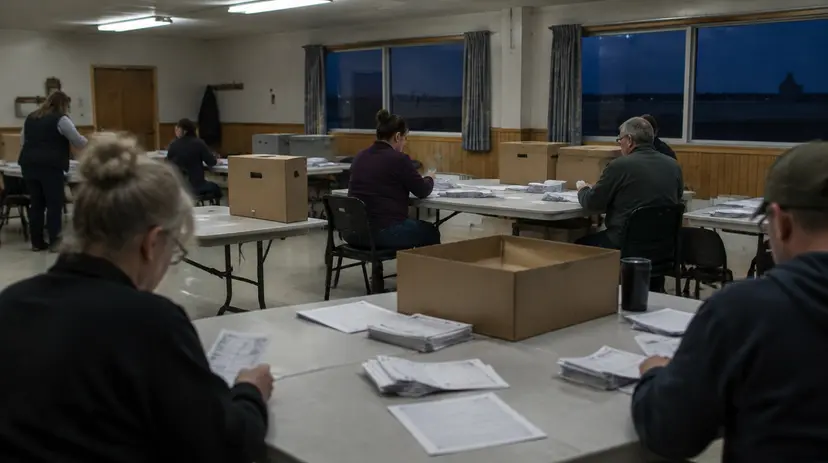
The Texian Partisan's Alberta results page will carry Monday's referendum count from Elections Alberta live, division by division, from the 9 p.m. Central poll close.