Quebec’s Bill 1: Secession Without a Referendum and What It Means for the Era of Secession


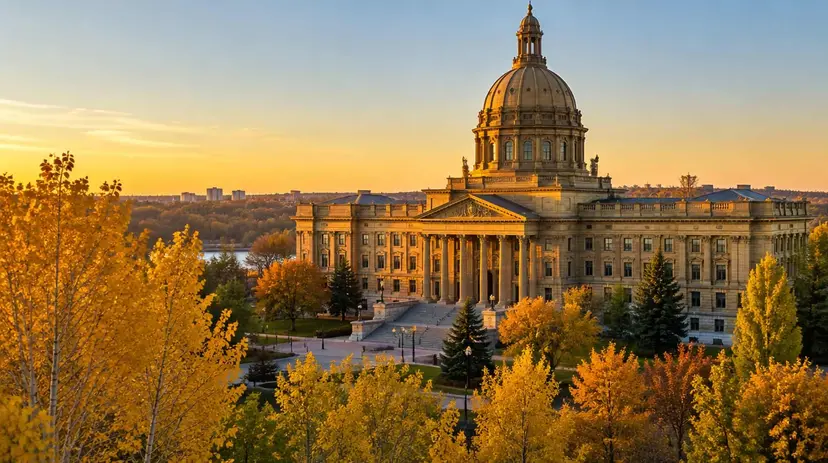
While Americans remain fixated on domestic political drama and President Trump’s provocative annexation rhetoric toward Canada, something remarkable is unfolding north of the border that deserves the attention of every Texan who believes in self-determination. Quebec’s National Assembly is advancing Bill 1—the Québec Constitution Act, 2025—a sweeping piece of legislation that amounts to secession without a referendum.
At the same time, Alberta has officially launched a petition for an independence referendum set for October 2026, and Saskatchewan’s own sovereignty movement is gaining momentum. The Canadian federation is experiencing what may be its most significant constitutional crisis since the razor-thin 1995 Quebec referendum, when federalists prevailed by a mere 50.6 percent.
For those of us who have long advocated for Texas independence through democratic means, these developments offer both validation and valuable lessons.
Quebec’s Constitutional Revolution
Bill 1 is not a declaration of independence in the traditional sense. Instead, it represents something more sophisticated—and potentially more effective. The legislation declares Quebec’s constitution to be “the law of laws” within the province, asserting that it takes precedence over any inconsistent rule of law, including federal law.
As Stephen Thompson, a constitutional law specialist and retired Canadian Armed Forces officer, wrote in The Walrus today, the bill “is not a declaration of secession per se but a systematic effort to hollow out the practical force of the Canadian Constitution—particularly where it constrains Quebec’s legislative autonomy—without formally leaving the federation.”
The legislation consolidates Quebec’s existing language laws, its secularism framework, and its Charter of Human Rights and Freedoms while reasserting the National Assembly’s authority to act in the interest of the “Quebec nation”—a collective identity that remains deliberately undefined. This vagueness is itself a feature, not a bug. It allows the government to claim the mantle of speaking “for the people” while concentrating power and reducing the institutional checks that characterize liberal constitutional democracy.
Bill 1 refashions Quebec as an “autonomous, national State” and grounds its constitutional life in collective rights rather than individual ones. The familiar architecture of responsible government—legislative scrutiny, independent review, legal constraint—becomes thinner under this framework.

Critics fall into two camps. Civil society groups and legal scholars argue the bill sidesteps the Canadian Constitution and risks weakening protections for individual and minority rights. Meanwhile, the sovereigntist Parti Québécois has denounced the bill as a “fantasy,” criticizing it for attempting to create a Quebec constitution without first achieving independence through a referendum.
For the ruling Coalition Avenir Québec, however, Bill 1 represents the codification of Quebec’s historic autonomy within Canada. With no election expected before October and Justice Minister Simon Jolin-Barrette—a leading contender to succeed outgoing Premier François Legault—carrying the bill, its passage appears likely.
Alberta’s Independence Referendum Takes Shape
While Quebec pursues constitutional separation by stealth, Alberta has chosen a more direct path. On January 2, 2026, Elections Alberta approved the citizen initiative petition for a referendum on the question: “Do you agree that the Province of Alberta should cease to be a part of Canada to become an independent state?”
The Alberta Prosperity Project now has until May 2, 2026, to collect 177,732 signatures—a threshold that appears easily achievable given the organization claims more than 200,000 members. If successful, Albertans could vote on independence as early as October 2026.
The movement has gained significant momentum since Prime Minister Mark Carney’s Liberals won a fourth consecutive term in April 2025. According to a January 2026 Research Co. poll, 31 percent of Albertans now support independence—up nine points since June 2023. Among young adults aged 18-34, that figure jumps to 42 percent.
The polling reveals something that should resonate with Texas independence advocates: support for separation is not monolithic. Sixty-five percent of United Conservative Party voters would support separation, while 97 percent of Alberta NDP voters would remain in Canada. Critically, many Albertans say they would lose enthusiasm for separation if the federal government adopted more oil-and-gas-friendly policies—suggesting that for many, the threat of independence serves as leverage for better treatment within the federation.
Premier Danielle Smith has maintained a careful position. While she has stated she supports “a sovereign Alberta within a united Canada” and does not personally advocate for separation, her government passed legislation making it easier for citizens to trigger referendums. She has also embarked on a series of town halls through her “Alberta Next Panel,” where separation—while not directly on the agenda—has colored much of the discussion.
Interestingly, a competing petition—”Forever Canadian”—collected over 456,000 signatures opposing separation and calling for the legislature to affirm Alberta’s place in Canada. This dueling dynamic demonstrates that constitutional questions, once opened, create political momentum of their own.
Saskatchewan Follows Alberta’s Lead
The Saskatchewan Prosperity Project, working closely with its Alberta counterpart, has been holding meetings across the province promoting sovereignty. About 200 people attended a recent gathering outside Saskatoon, and the group plans to continue its organizing efforts in the coming months.
Under Saskatchewan’s Referendum and Plebiscite Act, citizens can petition for a plebiscite if 15 percent of eligible voters sign on. Unlike Alberta’s threshold, this represents a higher bar, but the momentum is building.
Premier Scott Moe has stated his government does not support separation but would not stand in the way of a vote if citizens demand one. “I have not given up on the role and opportunities Saskatchewan can play in our federation,” Moe said, while also emphasizing the province’s need for greater autonomy.
A May 2025 Angus Reid poll found that 34 percent of Saskatchewan residents would support leaving confederation—slightly lower than Alberta’s 36 percent—though only 15 percent said they would “definitely” vote to leave.
The Canadian Context: Why Now?
Three factors have converged to create this moment. First, the 2025 federal election returned the Liberals to power for a fourth consecutive term, leaving western provinces that overwhelmingly supported Conservatives feeling alienated from Ottawa. In Alberta, 63.5 percent of federal votes went to Conservative candidates.
Second, President Trump’s repeated provocations about making Canada the “51st state” have, paradoxically, both strengthened Canadian nationalism in some regions while simultaneously legitimizing the conversation about constitutional alternatives in others. The idea that borders and federations are permanent has been undermined.
Third, long-standing grievances over equalization payments, energy policy, and federal overreach have reached a breaking point. Alberta separatists frequently cite the National Energy Program of 1980 as the original sin of western alienation—a policy that transferred wealth from Alberta to the rest of Canada and left deep scars.
Lessons for Texas
The Canadian experience offers several insights for the TEXIT movement.
First, multiple approaches can coexist and even reinforce each other. Quebec is pursuing constitutional restructuring without a referendum, while Alberta and Saskatchewan are pursuing direct democratic votes. Neither approach is inherently superior—both create pressure and force conversations that wouldn’t otherwise happen.
Second, the threshold for citizen-initiated referendums matters enormously. Alberta’s Bill 54 lowered the signature requirement from 600,000 in 90 days to 177,000 in 120 days—a change that transformed separation from a theoretical possibility into an imminent reality. The mechanics of democracy shape its outcomes.
Third, federal dysfunction creates separatist movements, not the other way around. Albertans didn’t wake up one morning deciding to leave Canada for no reason. Decades of policies that ignored or actively harmed their interests accumulated until separation became a serious option. The same dynamic applies to Texas’s relationship with Washington.
Fourth, demographic trends favor change. In Alberta, 42 percent of young adults support independence compared to 25 percent of those over 55. The older Canadians who remember the 1995 Quebec referendum as a close call to be avoided are being replaced by younger citizens who see independence as a legitimate option rather than a catastrophe to be prevented.
Finally, the international community increasingly accepts self-determination movements as legitimate democratic expressions. The days when separatism was automatically equated with violence and illegality are passing. Brexit demonstrated that even long-established political unions can be peacefully restructured when citizens demand it.
The Bottom Line
Canada in 2026 presents a fascinating case study in how federations respond—or fail to respond—to demands for self-determination. Quebec, Alberta, and Saskatchewan are all testing the boundaries of what’s possible within their constitutional framework, using different strategies but sharing a common belief that their peoples deserve more control over their own destiny.
For Texans, the message is clear: we are not alone. The Era of Independence that the Texas Nationalist Movement has long described is unfolding across North America. Whether through constitutional restructuring, citizen-initiated referendums, or direct legislative action, peoples are demanding the right to govern themselves.
The question is not whether self-determination movements will succeed, but which strategies will prove most effective. Quebec’s Bill 1 may show that separation can occur gradually, through the steady assertion of sovereignty. Alberta’s referendum may demonstrate that direct democracy remains the most powerful tool for expressing the popular will.
Either way, Texans should watch closely. Our moment is coming.
See more of the Partisan in Google’s Top Stories.Add as a Preferred Source on Google
Read Next
Texian Partisan Will Track Alberta’s Referendum Count Live, Division by Division
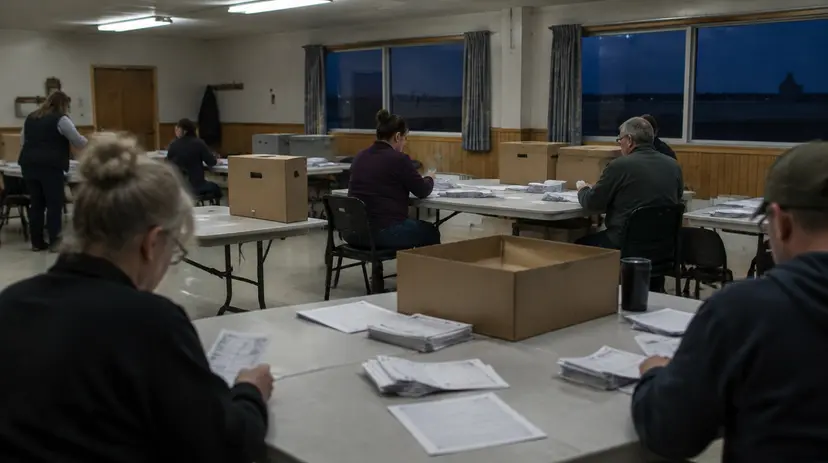
The Texian Partisan's Alberta results page will carry Monday's referendum count from Elections Alberta live, division by division, from the 9 p.m. Central poll close.